In high-humidity environments such as hotel shower rooms, gym locker rooms, and public bathrooms, condensation and glass breakage are two major pain points affecting user experience, safety, and compliance.
Compared with traditional glass mirrors, anti-fog mirrors made from plastic substrates offer clear advantages in terms of lightweight construction and shatter resistance. However, during the actual material selection stage, buyers often face the same decision: how should they choose between anti-fog acrylic and polycarbonate mirror panels?
Using “choose PC for impact resistance and acrylic for superior clarity” as the sole decision criterion is not rigorous enough. Once plastic sheets are combined with mirror coatings and anti-fog functional layers, impact-resistance requirements, compatibility with processing methods, and the cost of routine surface maintenance will jointly determine the service life of the finished product. Here, we will briefly discuss the differences between the two materials across these four core dimensions, helping you make a choice based on your actual application scenario.
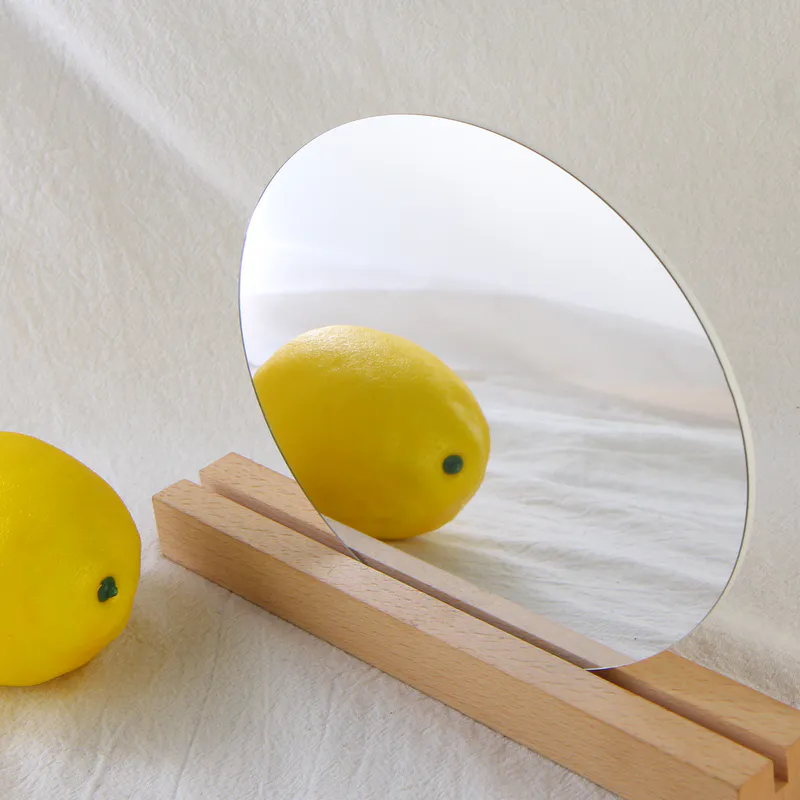
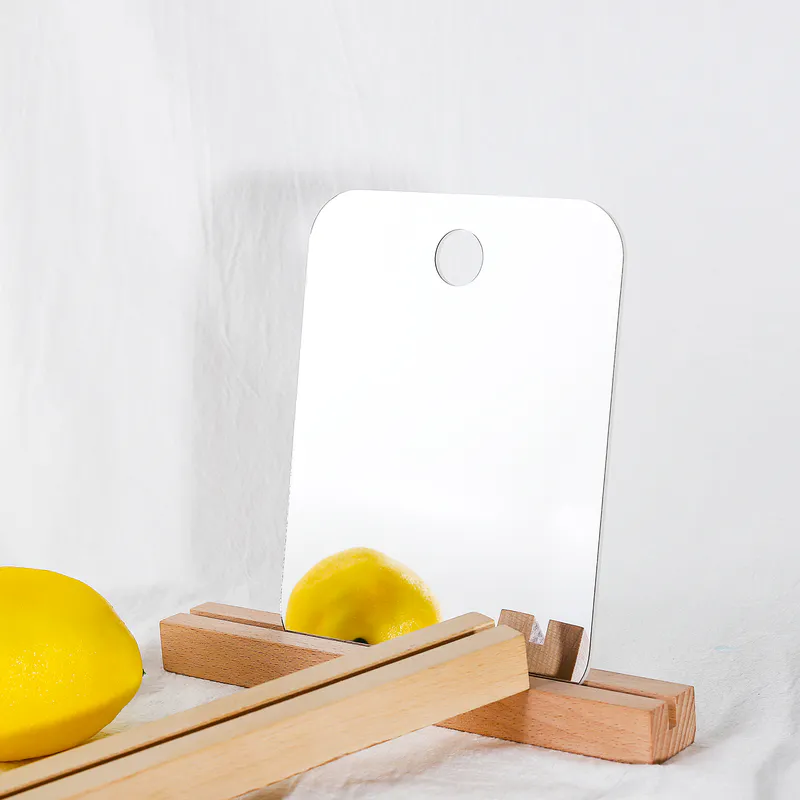
Comparison of Impact Resistance and Optical Clarity
When evaluating anti-fog acrylic mirror panels and anti-fog polycarbonate mirror panels, the primary considerations are the collision risks of the installation environment and the imaging standards required.
Acrylic (PMMA) offers higher surface rigidity (note: surface rigidity does not represent the rigidity of the material as a whole) and better optical flatness.
At the same thickness, acrylic mirror panels produce reflections that are flatter and clearer, and they are less prone to optical distortion in large-size installations. Their impact strength is far higher than that of ordinary glass, allowing them to meet shatter-resistance requirements in conventional residential and commercial spaces. However, they still carry a risk of breaking when subjected to severe external impact.
Polycarbonate (PC), on the other hand, is the preferred shatter-resistant material for high-safety projects. According to the base-material mechanical property data in the MatWeb Materials Property Database, and in comparison with the impact-resistance test performance described in the ASTM International material testing standards, PC has significantly higher impact resistance than acrylic. Even when subjected to high-intensity impact, PC mirror panels typically only become dented or develop stress whitening, and almost never produce flying fragments.
Plastic mirrors have one characteristic: regardless of whether the material is PC or PMMA, if the panel is relatively thin or the backing support is insufficient, image distortion can easily occur. In terms of the surface, an uncoated PC panel has a relatively soft surface and is not resistant to scratching, making it highly dependent on surface-hardening processes. If you choose a glass mirror, its overall rigidity can ensure the flatness of the reflection. However, in terms of safety and impact resistance, it is inferior to plastic materials.
Choosing between glass and plastic involves a trade-off: plastic places greater emphasis on safety, while glass places greater emphasis on appearance and optical performance. Of course, plastic can also be improved to address reflection-flatness issues, and glass can be made safer through tempering. However, in terms of base materials and cost, the differences between different projects can be substantial.
After confirming that the base material meets the on-site safety and imaging requirements, the next step is to evaluate the material’s processing performance. This is because mirror panels are primarily produced by applying a mirror coating to plastic panels, and the panel’s performance during cutting and forming directly affects the project’s processing cost and yield. For personnel involved in purchasing related products, understanding this aspect can help you determine the most cost-effective option.
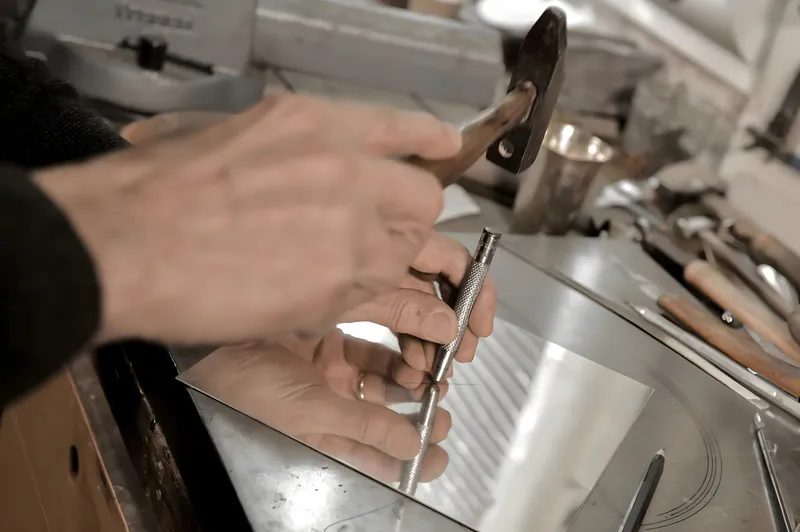
Processing Differences Between Anti-Fog Acrylic and Polycarbonate Mirror Panels
For the same design drawings, the equipment solutions, labor costs, and delivery schedules associated with different substrates may vary drastically. In the processing of plastic anti-fog mirror panels, the process limitations of the two materials are very distinct.
Cutting and Multiple Post-Processing Procedures
In terms of cutting processes, PMMA and PC materials differ significantly.
Anti-fog acrylic mirror panels are highly suitable for carbon dioxide laser cutting. Laser processing can not only efficiently complete complex irregular contours such as rounded corners and arches, but can also polish the cuts simultaneously, leaving the edges clean and bright while greatly reducing the labor time required for secondary sanding.
Anti-fog polycarbonate mirror panels are not recommended for laser cutting. PC is sensitive to heat, and laser cutting can easily cause the edges to yellow, become carbonized and blackened, and generate smoke and dust, while also increasing the risk of embrittlement at the cuts. In actual production, CNC milling, precision sawing, or cold punching is generally used, followed by manual chamfering or polishing.
Between these two materials, PMMA is somewhat more adaptable, while PC requires specific processing methods to better ensure the yield rate. In addition to cutting, other processes such as hole drilling, chamfering, and edge grinding are also weaker in terms of processing performance for PC than for PMMA.
Bending, Forming, and Anti-Fog Coating Protection
PC has good toughness, and some thin sheets can be cold-bent at room temperature; acrylic, however, must be softened by heating before being hot-bent. However, when processing mirror panels with anti-fog functionality, regardless of which substrate is used, the elongation limit of the anti-fog mirror coating must be taken into consideration.
The anti-fog functional layer is an ultra-thin surface coating, and its tensile resistance is lower than that of the plastic substrate itself. If the bending radius is too small, or if the heat is unevenly distributed during hot bending, microcracks can easily appear inside the coating.
Such concealed damage is difficult to detect during factory inspection, but after being placed in a high-humidity environment, the bent areas will often be the first to fog up or even delaminate.
Therefore, for customized projects involving complex bending or dense hole patterns, it is recommended to confirm the process parameters in advance with a supplier that has mature capabilities in customized plastic mirror panel processing.
Even if the mirror panel is processed successfully and installed accurately, the real test still begins after it is put into use. Frequent exposure to water vapor will directly determine the effective service life of the anti-fog coating.
The combination of a plastic mirror panel and an anti-fog coating is not omnipotent; compared with electrically heated anti-fog systems, the vast majority of products do not perform particularly well in terms of anti-fog effectiveness duration. The coating itself is a consumable. From the moment it begins to come into contact with moisture and air, deterioration has already begun. Therefore, we recommend that purchasers, when evaluating anti-fog performance, ask the supplier for genuine experimental test feedback on the actual effective service life. This can be used to verify how good the coating performance claimed by the supplier really is.
Surface Maintenance and Anti-Fog Coating Durability
The ongoing wear of anti-fog coatings has also led to several topics that repeatedly arise in community discussions about anti-fog mirrors: “Why does my anti-fog mirror seem to have stopped working?” and “It feels like the anti-fog effect isn’t as strong anymore.”
In commercial and public spaces, the premature failure of an anti-fog mirror may not necessarily stem from the quality of the substrate; it is more likely that the anti-fog coating has failed. Such coating failure may be caused by improper cleaning, or it may be the result of a product quality issue.
This is also why I suggested above asking suppliers for genuine test data. Claims without evidence are unconvincing; real data is often more persuasive than promises.
At present, most mainstream anti-fog plastic mirror panels use hydrophilic anti-fog technology. According to the explanation of the principle of hydrophilic anti-fog technology on Wikipedia, the coating reduces surface tension so that condensed water vapor cannot form tiny droplets that scatter light. Instead, it rapidly spreads into a uniform, transparent water film, thereby keeping the mirror surface clear. This means that the anti-fog layer is a functional surface structure and is relatively sensitive to both physical scratching and chemical solvents.
Below is the acrylic anti-fog mirror we produce. We use steam from a hot-water kettle (which is different from ordinary fog) to simulate fog and observe how the anti-fog mirror and an ordinary mirror react when exposed to it. You can clearly see that the anti-fog coating on our anti-fog mirror on the right is working, causing the steam to condense into water.
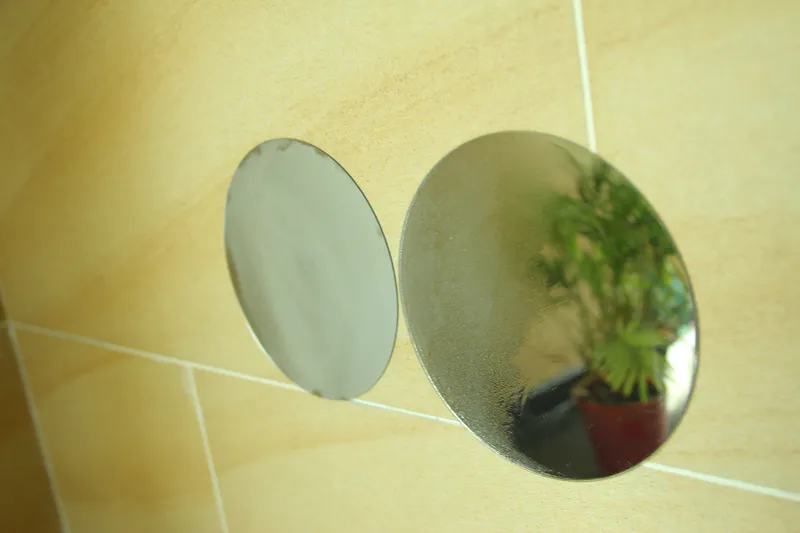
When anti-fog mirrors are cleaned and maintained, the key risks differ depending on the substrate:
- Key maintenance points for anti-fog acrylic mirror panels: The acrylic substrate has relatively high hardness and performs slightly better against scratches during gentle daily wiping; however, its resistance to chemical solvents is limited. Contact with alcohol, acetone, or glass cleaners containing ammonia can easily cause surface damage. This is especially true around the edges of the mirror, where stress cracking (silver streaks) may occur.
- Key maintenance points for anti-fog polycarbonate mirror panels: The PC substrate itself is relatively soft. Without an anti-scratch hard coating and anti-fog composite coating, frequent dry wiping can produce fine scratches within a short period of time, directly affecting clarity. At the same time, PC is sensitive to strongly alkaline cleaners and certain organic solvents; prolonged contact can cause the surface to become hazy and lose its gloss.
To extend the service life of anti-fog mirrors, it is recommended that property managers or end customers be provided with the following standard cleaning guidelines:
- First rinse dust and soap scum from the mirror surface with warm water, and avoid wiping directly while the surface is dry.
- Use only a clean, soft, dedicated microfiber cloth together with a mild, neutral cleaning solution for gentle wiping. The use of scouring pads, paper towels, or rough rags is strictly prohibited.
- Do not use cleaning sprays containing ammonia water, isopropyl alcohol, strong acids, strong alkalis, or abrasive particles.
- Remove fingerprint oils and shower-gel residue regularly. Localized sudden fogging is usually caused by an oil film covering the hydrophilic layer; after proper cleaning, the anti-fog effect can often be restored.
Considering the impact-resistance rating, processing cost, and maintenance requirements together, the applicable boundaries of the two materials become clear.
Selection Comparison: Anti-Fog Acrylic and Polycarbonate Mirror Panels
Based on the information above, the comparison table below can help quickly evaluate suitability: should you choose an anti-fog mirror made of PMMA or one made of PC?
| Comparison Dimension | Anti-Fog Acrylic Mirror Panel (PMMA) | Anti-Fog Polycarbonate Mirror Panel (PC) |
|---|---|---|
| Impact Resistance | Excellent (significantly higher than ordinary glass and meets standard shatter-resistant requirements) | Extremely strong (almost no breakage under high impact; suitable for vandalism-resistant applications) |
| Optical Flatness and Rigidity | Higher rigidity, producing clear and straight images with a low risk of distortion | Highly flexible; large thin panels have higher requirements for backing support |
| Cutting and Processing Efficiency | Supports laser cutting with smooth edges, making it suitable for custom irregular shapes | Laser cutting is not recommended; CNC machining, sawing, or stamping is required |
| Surface Scratch Resistance | The substrate is relatively harder, offering a slight advantage in scratch resistance during routine cleaning | The substrate is relatively softer and highly dependent on scratch-resistant hardening and anti-fog composite coatings |
| Chemical Resistance Risks | Avoid alcohol, acetone, and ammonia-containing cleaners (to prevent silver streaks along the edges) | Avoid strong alkalis, ammonia water, and certain organic solvents (to prevent surface fogging) |
| Overall Procurement Cost | More advantageous raw material and processing costs, offering better cost performance | Raw material and secondary processing costs are generally higher than those of acrylic |
Scenarios Where Anti-Fog Acrylic Mirror Panels Should Be Prioritized
If the project’s core requirements are high image clarity, refined design, and reasonable budget control, and the environment involves only the risk of ordinary impacts, anti-fog acrylic is the more cost-effective solution.
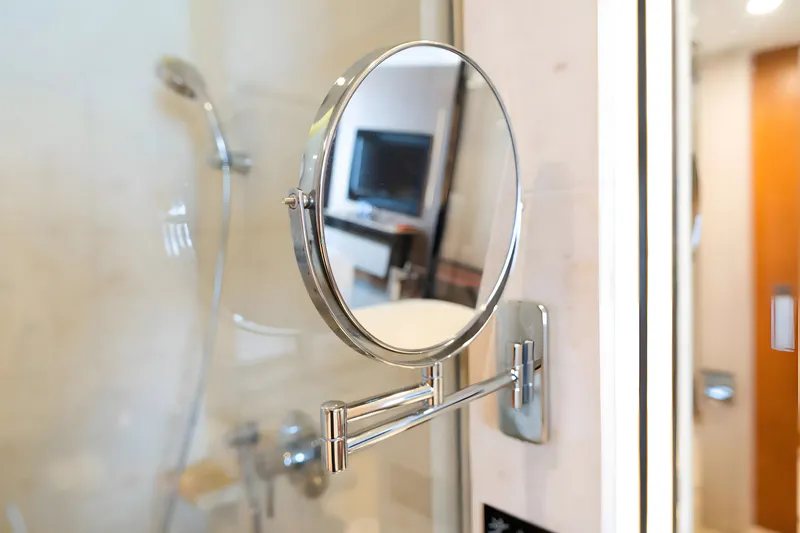
Typical applications include luxury hotel shower rooms, household bathroom mirrors, RVs and bathroom spaces, as well as commercial display and bathroom customization projects requiring laser-cut irregular contours.
Compared with anti-fog mirrors made of PC, acrylic is the more comprehensive choice. In terms of processing performance, acrylic offers a higher potential performance ceiling than PC. Both materials have clear strengths and weaknesses, making each suitable for different applications.
Scenarios Where Anti-Fog Polycarbonate Mirror Panels Must Be Used
If the use environment involves frequent and severe impacts, a risk of intentional vandalism, or strict public shatter-resistant safety regulations, PC should be prioritized.
Common scenarios include school and sports facility locker rooms, gym equipment areas, restrooms in public transportation hubs, and specialized medical care institutions.
In these types of projects, avoiding safety accidents caused by shattering is far more important than the differences between the materials. Although PC does not offer as diverse a range of processing capabilities as acrylic, it can provide enhanced possibilities for certain special requirements.
Final Supplement
Although I have provided some basic recommendations above, I still need to say this: it is best to determine the material required for the project through sample testing.
Among the orders previously completed by our company, almost all customers chose to conduct sample testing. Only after the samples passed testing did they consider placing bulk orders. If you are not familiar with this type of product, we strongly recommend using the actual physical sample as the basis for your decision.
Testing Finished Anti-Fog Mirror Samples Under the Same Conditions
The material specification sheets provided by suppliers usually reflect only the performance indicators of the bare substrate under laboratory conditions and cannot directly represent products customized for different projects.
Some finished products that have undergone vacuum mirror coating, back-paint protection, and anti-fog coating may perform slightly differently from the results obtained under previous test conditions, and these differences may be enough to make the product unusable.
Differences among factories in coating adhesion, moisture-and-heat-resistant sealing, and scratch-resistance processes can only be accurately identified through testing under the same conditions. It should not be assumed that all manufacturers have the same capabilities.
Therefore, before purchasing in bulk, it is recommended that finished samples of anti-fog acrylic and polycarbonate mirror panels be tested comparatively in strict accordance with the following five steps, using the same testing procedures to evaluate products from different manufacturers:
- Standardize the testing specifications: Request finished samples from suppliers with the same thickness, the same dimensions, and the same edge-cutting or hole-drilling processes, in order to avoid thickness differences interfering with judgments of rigidity and image quality.
- Conduct a steam test in the same environment: Place the two samples side by side in the same hot-steam environment, such as a shower room or a constant-temperature steam test chamber. Maintain the same heating distance and angle, and compare their anti-fog performance during the first 60 seconds, the transparency of the water film, and the speed of recovery after removal from the steam.
- Inspect the moisture-and-heat resistance of the cut edges and back paint: Failures in high-humidity environments often begin with penetration from the edges. After conducting multiple continuous cycles of hot, cold, and humid conditions, focus on checking whether blistering, blackening, or delamination of the back paint appears around the cut edges and screw holes.
- Simulate actual cleaning and wiping cycles: Use the microfiber cloth and neutral cleaning solution actually provided for on-site cleaning to wipe the designated area back and forth dozens of times, and then conduct another steam test. This step can effectively screen out samples with insufficient coating adhesion or surfaces that are easily scratched.
- Verify image quality using the actual installation method: Secure the samples to the wall according to the project’s actual fixing method—adhesive bonding, frame slot installation, or screw mounting—and inspect the overall flatness and reflection distortion from the actual viewing distance. Particular attention should be paid to confirming whether the PC sample is sufficiently stable under the existing support structure.
After testing is completed, select the appropriate manufacturer based on the quality of the results. This may take some time, but if you want the results to be closer to your actual requirements, you should have this level of patience.
You can also ask the other party to provide the relevant materials or a TDS before receiving the samples, allowing you to gain a quick understanding of the product. However, this usually also requires you to have a certain level of understanding of the product itself.
Choosing acrylic or PC for an anti-fog mirror is essentially a matter of balancing the requirements of the application scenario.
Acrylic excels in optical flatness, the efficiency of irregular-shape processing, and cost control; PC excels in maintaining a safety baseline against shattering under extreme impact.
By comparing finished samples under the same testing conditions, you can efficiently identify the mirror solution best suited to the project.