
If you’re trying to decide between an acrylic mirror and a glass mirror, the marketing copy on most supplier sites won’t help much. Both sides oversell. Glass-mirror sellers will tell you acrylic warps and scratches; acrylic-mirror sellers will tell you glass shatters into dangerous shards. Neither is wrong. Neither is the whole picture, either.
This guide is written for people making an actual buying decision. We’ll walk through the real differences in weight, impact resistance, reflection quality, cost, and a few things most comparison articles skip — then give a recommendation by use case.
What These Two Materials Actually Are
A glass mirror is a sheet of soda-lime float glass with a thin layer of silver (or sometimes aluminum) deposited on the back, then sealed with paint. The reflective coating sits on the rear surface, which is why glass mirrors give such crisp reflections — the light passes through clear glass before bouncing off a perfectly smooth metal layer.
An acrylic mirror starts with a sheet of polymethyl methacrylate (PMMA), the same plastic sold under brand names like Plexiglas, Perspex, and Lucite. According to Wikipedia’s PMMA article, the material transmits roughly 92% of visible light at 3mm thickness and has a refractive index of 1.4905. A reflective layer (usually vacuum-deposited aluminum) is applied to one face, then sealed with a protective backing.
Both produce a mirror. They behave very differently after that.
Weight: The Most Obvious Difference
PMMA has a density of about 1.17–1.20 g/cm³, roughly half that of standard mirror glass, per material data published by SyBridge Technologies. That single fact drives more practical decisions than anything else on this page.
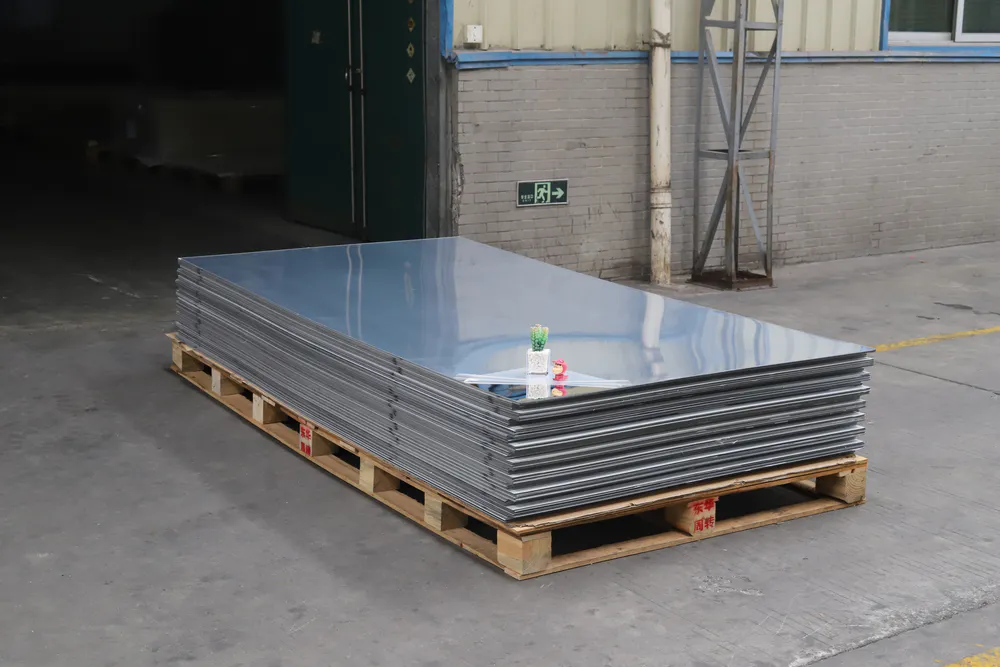
A 4ft × 8ft glass mirror at 6mm thickness weighs around 65–70 lbs. The acrylic equivalent comes in closer to 32–35 lbs. If you’ve ever tried to hang a full-wall mirror in a home gym, you understand the difference instantly. Glass at that size needs at least two people, sometimes three, plus serious wall anchors. Acrylic is a one-person job in most cases.
The weight difference compounds elsewhere. Shipping a 4×8 glass sheet usually requires crating, freight, and insurance. Acrylic of the same dimensions ships ground service in a fraction of the packaging. For anyone ordering more than a single mirror, the freight savings alone can outweigh the unit cost difference.
Impact Resistance: Where Acrylic Wins Cleanly
This is the headline figure most acrylic mirror suppliers cite, and they’re right to. PMMA has roughly 10 to 17 times the impact resistance of soda-lime glass, depending on which test method and grade you use. SpecialChem cites the 10x figure for general PMMA. Acme Plastics and several plastics distributors put it at 17x for mirror-grade acrylic specifically.
What that means in practice: drop a small dumbbell on a glass mirror in a home gym and you’re vacuuming up shards and ordering a replacement. Drop the same dumbbell on an acrylic mirror and you’ll usually get a small mark, sometimes nothing at all. Anywhere a child, a workout, a forklift, or a piece of moving equipment might come into contact with the surface, acrylic is the safer specification.
This is also why acrylic is the standard choice for school gymnasiums, daycare facilities, and dance studios across most of North America. The cost of a single broken-glass injury claim makes the price comparison irrelevant.
Reflection Quality: Where Glass Has the Edge
Honesty section, because most acrylic mirror suppliers gloss over this one.
Glass mirrors give a slightly crisper, flatter reflection than acrylic — particularly at larger sizes. The reason is straightforward: glass is naturally rigid, so a 4ft × 8ft glass sheet sits dead flat against a wall. Acrylic of the same dimensions can develop very slight bowing or waviness, sometimes from manufacturing tolerances, sometimes from temperature changes, sometimes from how it was mounted. House of Mirrors, a Canadian glass supplier, points to this distortion in larger acrylic panels as one of the main reasons most architectural and high-end residential installations still default to glass.
For mirrors under about 24 inches in any direction, the difference is essentially imperceptible. For a 6ft × 4ft wall mirror, you can sometimes spot it if you look closely. For a vanity mirror where someone is checking close-up makeup or shaving, glass is the right specification. For a gym or studio mirror where the user is standing six feet back, acrylic looks identical.
Scratch Resistance and Surface Care
Glass wins this one, and it’s not close. Acrylic surfaces scratch more easily than glass — even with care, an acrylic mirror in a high-touch area will accumulate fine scratches over five to ten years. Glass largely doesn’t.
This affects cleaning, too. You can use almost any glass cleaner on a glass mirror: Windex, vinegar, isopropyl alcohol, the lot. You cannot use those on acrylic. Ammonia-based cleaners (which includes most blue glass cleaners) will craze the acrylic surface, leaving a network of fine cracks that ruin the finish permanently. Acrylic mirrors should be cleaned with a microfiber cloth and either plain water or a mild dish-soap solution, then dried with a second clean cloth.
In a commercial setting where a cleaning crew rotates through, this matters more than people expect. Acrylic mirrors get damaged within months by well-meaning janitorial staff using the wrong product. If the cleaning routine in your space is hard to control, factor that into the decision.
Cost: The Real Numbers
Per-square-foot pricing varies enormously by thickness, finish, and supplier. For 3mm material in standard sizes, the rough range as of 2026, using figures published by Turbo Plastic:
- Acrylic mirror sheet: roughly $20–$40 per square foot
- Glass mirror sheet: roughly $35–$80 per square foot
Acrylic typically runs 30–50% cheaper at the sheet level. Once installation is added, the gap widens — glass installation in larger sizes often costs 20–40% more in labor, since it’s slower work and needs more hands.
There are exceptions. A high-end framed glass mirror from a furniture brand can cost more in framing and finishing than the glass itself, which makes the underlying material price almost irrelevant. And for very small mirrors — compact mirrors, craft pieces, jewelry components — the per-unit prices converge.
Here is another situation:
The cost of acrylic is higher than that of glass, which is mainly reflected in the comprehensive cost of acrylic mirrors in the production of diversified projects. Once the project design involves various customized productions, the cumulative cost will naturally be higher than that of glass.
Cutting, Drilling, and Customization
If you ever need to cut, drill, or shape the mirror after it arrives, or if you’re ordering a custom dimension, acrylic is far easier to work with.
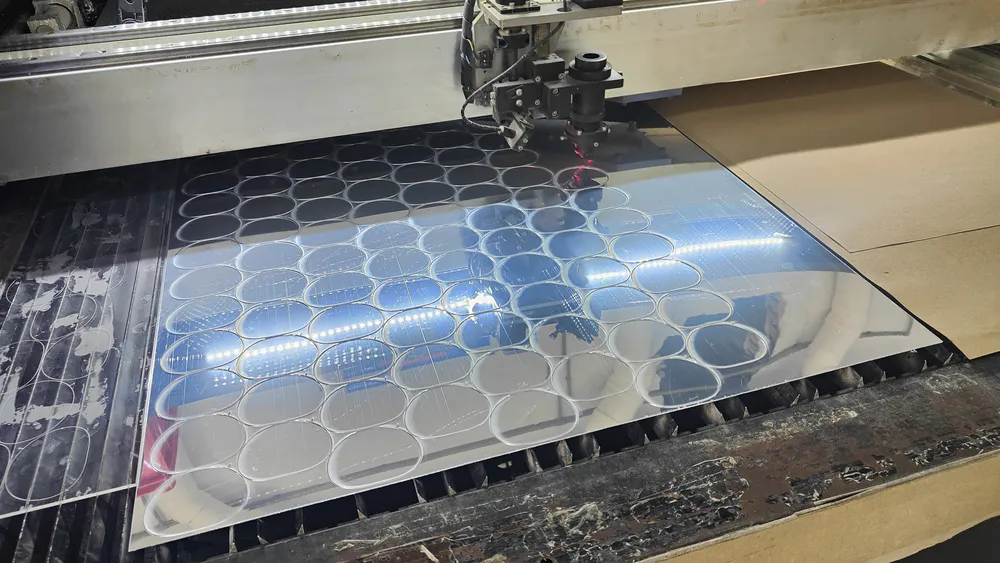
A standard hand jigsaw with a fine blade will cut acrylic mirror cleanly. Holes can be drilled with normal drill bits, provided you go slowly to avoid heat buildup that melts the cut edge. Acrylic can also be laser-cut, which is why so many Etsy makers, signage shops, and craft sellers use mirror acrylic for jewelry, ornaments, and bespoke shapes.
Glass mirrors require diamond-blade tools, glass-specific drill bits, and edge polishing if you want to cut to a custom size. Most homeowners don’t attempt this; they order pre-cut sizes and accept what’s available, or pay a glazier for custom work.
For any project that involves curves, irregular shapes, multiple holes, or non-standard sizes, acrylic isn’t just easier. It’s often the only realistic option.
Heat, UV, and Weather
Glass tolerates higher temperatures. PMMA has a glass transition temperature of about 106°C and a Vicat softening temperature in the 84–111°C range, depending on the specific grade (Koplast technical data). In practice, acrylic mirrors should be kept under sustained temperatures of about 70–80°C — fine for any normal indoor environment, but a problem near oven hoods, fireplaces, or industrial heat sources.
Outdoors, both materials hold up reasonably well. Acrylic is naturally UV-resistant and won’t yellow significantly over years of exposure. Glass mirrors used outdoors will eventually develop edge corrosion as the silver backing degrades from moisture; acrylic mirrors don’t have that failure mode at all. Coastal and humid environments slightly favor acrylic for that reason, though large outdoor mirrors of either material need proper sealing along the perimeter.
Where Each One Belongs
Pulling this together by use case:
Choose acrylic for schools, daycare centers, any installation involving children or impact risk, full-length mirrors mounted on doors, retail fixtures that get moved, custom-cut shapes, and most DIY projects.
Choose glass for vanity mirrors where reflection accuracy matters, framed decorative mirrors as design objects. Low-traffic spaces where weight and breakage aren’t real concerns, and applications where the surface will be cleaned with standard glass cleaners by people who may not know the difference between materials.
There’s also a middle category: bathrooms. The usual recommendation is acrylic — specifically anti-fog acrylic — for shower-enclosed mirrors, kids’ bathrooms, and rentals, but glass for the primary vanity mirror in a personal home bathroom. The reflection-quality argument matters most when someone is actually using the mirror up close.
A Few Things Most Comparisons Skip
Two practical points that come up regularly:
First, acrylic mirrors are available in a wide range of colors — gold, rose gold, silver, bronze, smoked black, and others. Glass mirrors are produced almost exclusively in standard reflective silver. If a project calls for a colored mirror finish, acrylic isn’t just the better choice; it’s effectively the only one.
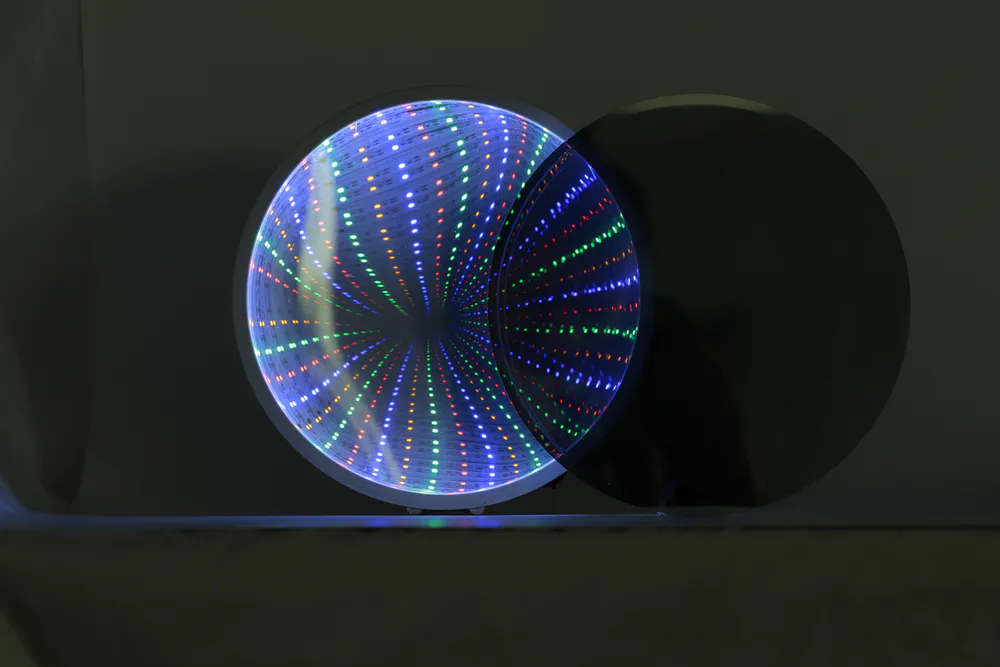
Secondly, acrylic mirrors have a two-way (one-way) variant. But their use in the market is not as widespread as glass due to material limitations. Acrylic two-way mirrors are typically more suitable for specific two-way mirror applications, such as tunnel lights. In such applications, the panel size is much larger than that of typical two-way glass. (For more on how these work, the Wikipedia entry on one-way mirrors is a decent technical primer.)
So, Acrylic or Glass?
The honest answer is that the question matters less than people sometimes think. For most installations under 24 inches, in low-traffic indoor spaces, glass is fine and looks marginally better. For everything else — anything large, anything in motion, anything where someone could get hurt. Anything custom-shaped — acrylic is the more practical specification.
If you’re still on the fence, weight is the deciding factor more often than people expect. Picking up a 4×8 glass sheet at the hardware store and trying to get it home is a small but informative experience. After that, the comparison usually answers itself.