
After the previous introduction, we all know that the anti-fog effect of acrylic anti-fog mirrors is achieved through a coating. So, when a mirror no longer has an anti-fog effect, can we repair this anti-fog coating?
Many people’s first reaction is to search online for “how to repair an anti-fog coating.” But before you rush to buy anti-fog spray, apply dish soap, or vigorously scrub with polishing compound, stop for a moment: the “fogging” or “failure of the anti-fog function” you see may have nothing to do with the coating itself being damaged.
In actual use in homes and commercial settings, the optical performance of acrylic mirrors depends heavily on the condition of the acrylic material. The difference between stock material and brand-new material can directly affect the mirror’s optical performance.
If you blindly treat the mirror without first identifying the root cause of the problem, you may not only fail to repair the anti-fog coating, but may also completely ruin a mirror that could originally still have been adjusted or improved.
This article will guide you step by step in investigating the true causes of mirror fogging, objectively analyze which situations can be salvaged and which are already irreversible, and tell you when the mirror should be cared for and when you should decisively contact the manufacturer or seller for a replacement.
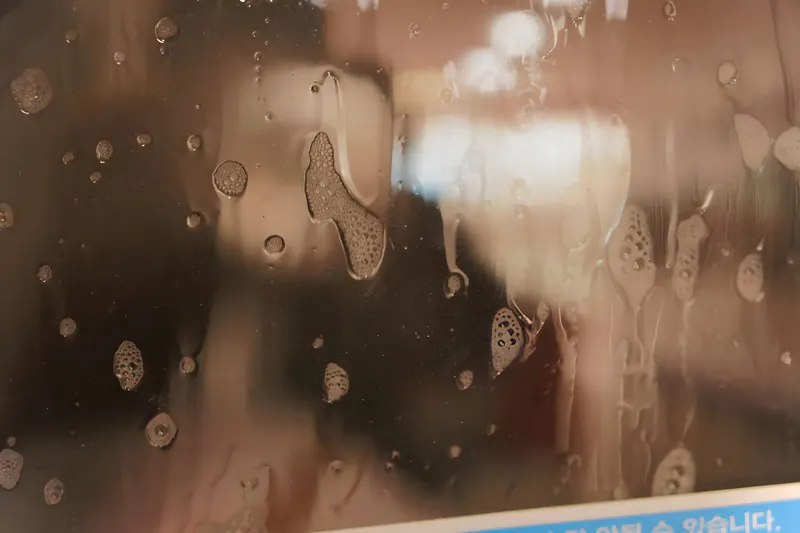
Before You Try to Repair Anti-Fog Coating: Check for Residue, Scratches, or Coating Wear
Many people interpret a foggy anti-fog mirror as meaning that “the anti-fog coating on the surface has failed.” This is actually a very typical misconception. Before deciding whether you need to repair the anti-fog coating, you should first inspect it yourself and determine which condition is actually causing the mirror to appear foggy. Here, I have listed three different situations. Their causes are completely different, and so are the ways to deal with them.
1. Surface Residue Buildup
In a high-humidity environment, water vapor is not pure water. Shampoo splashes, body wash residue, calcium and magnesium scale from hard water, and even dust and skin oils in the air can gradually adhere to the surface of the mirror.
High-quality anti-fog acrylic mirror sheets generally use a hydrophilic nano-coating. The principle is to make water vapor quickly spread across the surface into a uniform transparent water film, rather than condense into tiny droplets that scatter light. In essence, however, the surface still comes into contact with these contaminants.
Once the surface is covered by grease, hard-water mineral deposits, or soap scum, the water contact angle increases, and the anti-fog effect naturally appears to “temporarily fail.” These substances adsorb moisture and form a thin film on the mirror that is difficult to notice with the naked eye, thereby causing the mirror to fog up and appear hazy frequently.
Another possibility is that a cleaning agent has been used. Residue from cleaning agents, such as ammonia- or vinegar-containing sprays, can leave streaky cloudy areas on the mirror after evaporation. In the high-humidity environment of a bathroom, these residues may be reactivated by water vapor, making the mirror look whitish and blurry. If you wipe the mirror with warm water and a microfiber cloth and it returns to its original condition, this indicates that the problem is cleaning-agent residue.
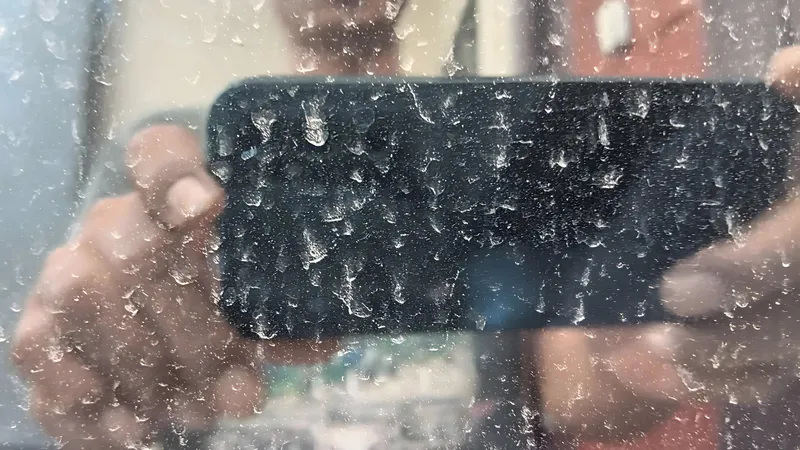
2. Fine Scratches and Desilvering
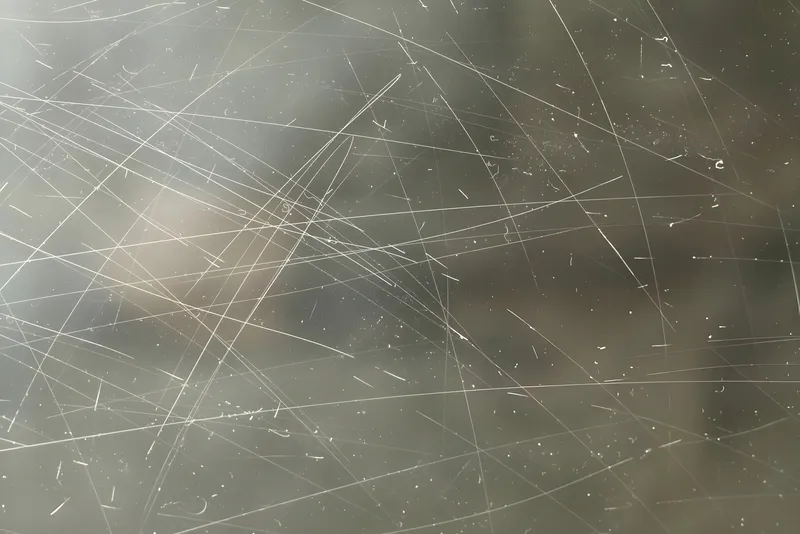
Although acrylic (PMMA) has far greater impact resistance than glass, its surface hardness is lower than that of traditional glass mirrors. Dry wiping or using a rough cloth in daily use can easily leave dense fine scratches.
The accumulation of scratches is easy to notice with the naked eye, but scratches alone are not enough to make the mirror look blurry, and you would generally notice the scratches clearly before the mirror became foggy.
The reflective layer of an ordinary mirror is a layer of pure metallic silver film on the back of the glass, protected only by a backing paint. Acrylic mirrors use the same process; the only difference is that one uses glass and the other uses acrylic.
The result is essentially a three-layer structure combined into one: the backing adhesive protective layer at the bottom, the metallic coating in the middle, and the acrylic material on top.
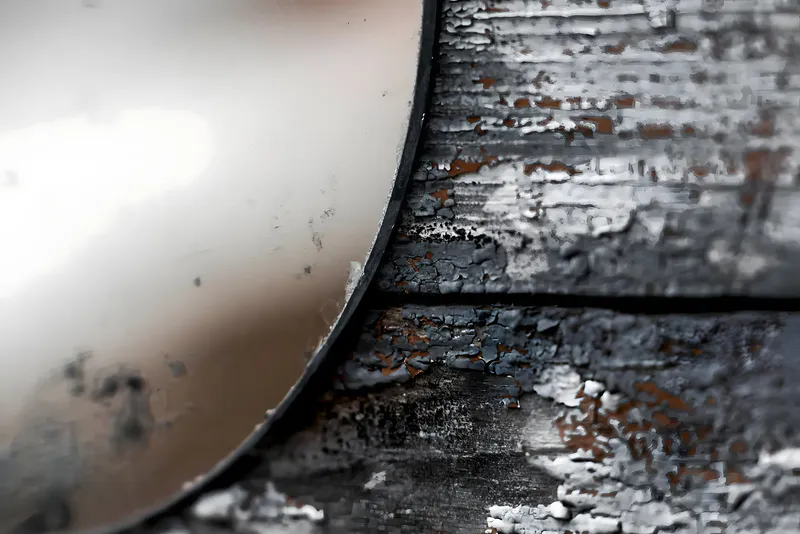
When water vapor or corrosive cleaning agents seep into the back of the mirror from its edges, once the backing adhesive protective layer at the bottom fails, it can affect the metallic coating, causing the silver layer to oxidize and corrode. In the industry, this is called Desilvering.
The accumulation of scratches may not be the real culprit behind the mirror becoming blurry. The actual cause may be desilvering: if someone accidentally wipes the mirror surface with an ammonia-containing glass cleaner or alcohol, the solvent may penetrate into the interior of the polymer chains, forming a dense network of microcracks that looks like a “white haze” to the naked eye. This white haze remains even after the surface has completely dried and is especially noticeable under light.
3. Anti-Fog Coating Aging or Wear
Every surface coating has a service life. Long-term use under cycles of high temperature and high humidity, frequent forceful wiping, or contact with strong acid or strong alkaline cleaners will gradually cause a hydrophilic anti-fog coating to peel off or lose its activity.
The typical characteristic is that the mirror remains clear and bright when dry, but as soon as it encounters hot steam, part or all of the surface begins to fog up and develop water droplets like an ordinary mirror.
This type of aging essentially means that the anti-fog mirror has passed its “service life.” Mirrors that rely on a coating for anti-fog performance generally provide a three-year guarantee of anti-fog effectiveness.
Frequent use will shorten this guaranteed period, which constitutes accelerated aging or wear. In cases like this, repairing the coating is not recommended. The best method is to replace it directly with a new one.
Simple Summary
Here, we summarize the differences among the three situations in which an anti-fog mirror may appear blurry. You can use this table to make a quick assessment:
| Blurry Condition | Appearance When Dry | Appearance When Exposed to Water Vapor | Can It Be “Repaired”? | Repair Recommendation |
|---|---|---|---|---|
| Surface residue buildup | Slight greasy film, water stains, or localized darkening | Water droplets form locally, and the water film spreads unevenly | Can be restored (cleaning is sufficient) | Gently clean with warm water and neutral dish soap |
| Fine scratches and desilvering | Whitish, hazy scattered light spots remain after drying completely | Scratches or silver streaks remain blurry, with diffuse reflection | Irreversible (both the coating and substrate are damaged) | Stop using chemical solvents; assess and replace |
| Anti-fog coating wear/aging | The mirror surface is clear when dry, with almost no abnormalities | Quickly develops a white haze when exposed to hot steam and loses its ability to spread water into a film | The original factory coating cannot be restored; only temporary alternatives are possible | Use a compatible anti-fog agent as a temporary remedy or replace it |
Once we understand the differences among these three conditions, we can naturally introduce the next core question: If it is confirmed that the coating has genuinely worn out, how reliable are the various anti-fog coating repair methods circulating online?
Can You Actually Repair Anti-Fog Coating on Acrylic Mirrors?
Before discussing specific procedures, we must establish an objective and correct core viewpoint: Once a factory-applied polymer hydrophilic anti-fog coating has undergone physical wear or chemical peeling, it cannot truly be restored to its original factory condition in a household or ordinary commercial environment.
Here, we will combine this with the many online tutorials that claim you can easily repair anti-fog coatings and take a practical look at whether they can really achieve that.
First, we need to understand the basic manufacturing process of anti-fog acrylic mirrors.
The Difference Between Factory Processing and Spray-On Coverage
In a proper manufacturing process, the anti-fog layer of anti-fog acrylic or polycarbonate (PC) mirror sheets is not simply a layer of liquid sprayed onto the surface. Instead, in a cleanroom, precision coating, plasma treatment, magnetron sputtering, or other processes are used to create a high-adhesion bond between the hydrophilic polymer and the surface of the plastic substrate, keeping the water contact angle consistently at a very low level—typically less than 10°.
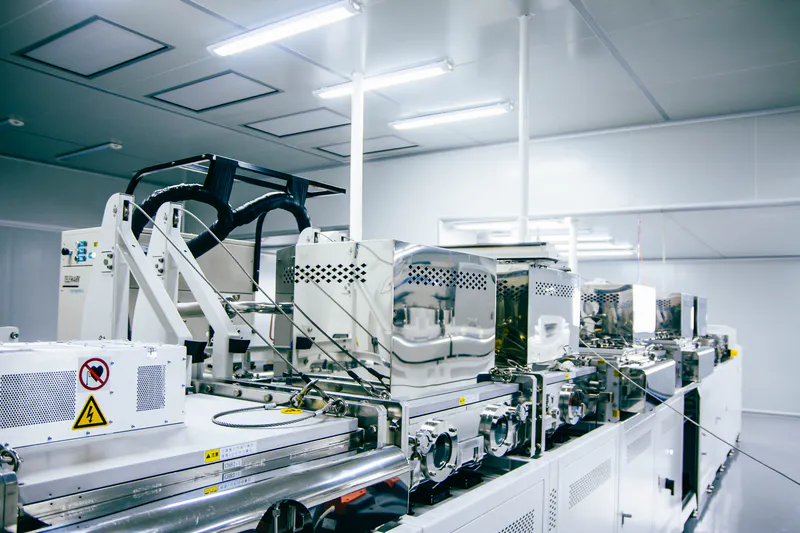
By comparison, anti-fog spray products available to ordinary users on e-commerce platforms, whether surfactants or household sprays, only form a temporary “water-repellent” film through physical adsorption on the surface of the mirror. They have neither the molecular-level bonding strength of a factory coating nor the ability to withstand more than a few rinses under running water.
A polymer hydrophilic coating is a type of anti-fog coating that is bonded to the material. Its compatibility with the material is determined during the early stages of the production process, which is why it can provide a more lasting anti-fog effect. Temporary water-repellent film spray products, however, generally do not take into account compatibility with the surface of your mirror. They may distinguish between products intended for glass and those intended for plastic, but if these materials have also undergone other treatments, such as scratch resistance or high-gloss finishing, those chemical coatings may be damaged.
Therefore, for products that create a temporary water-repellent film through spray-on application, our correct understanding should be this: for an anti-fog mirror whose original factory coating has already worn away, what we can do is provide a temporary anti-fog substitute, rather than treat it as a permanent solution and assume that the original factory-applied coating has been restored. We cannot assume that simply buying a bottle of anti-fog liquid and wiping it on, or polishing with toothpaste, will “repair” the anti-fog coating so that it is exactly the same as when the mirror was new.
Why Is “Polishing Repair” a Fatal Procedure for Anti-Fog Mirrors?
When dealing with scratches on ordinary transparent acrylic, many woodworkers or DIY enthusiasts are accustomed to sanding the surface and then using plastic polishing compound to restore its shine. This method is effective on ordinary, uncoated acrylic, but using it on an anti-fog acrylic mirror is a major mistake.
The essence of polishing is to wear away the old surface layer and expose a new one beneath it. As soon as you apply polishing compound and begin polishing, the hydrophilic anti-fog layer—which is originally only a few micrometers thick—will be quickly polished away. As a result, the scratches may become slightly shallower, but the anti-fog coating on the entire mirror will also have been polished off! Uneven pressure may even cause wave-like distortion in the mirror’s reflected image.
Earlier, I briefly discussed the layered structure of mirrors. When you polish the acrylic material located at the top of the structure, the first surface you come into contact with is the coating surface. This coating surface may contain an anti-fog coating or other coatings; essentially, they are all extremely thin films. Many anti-fog mirrors add a scratch-resistant coating on top of their anti-fog function. Its purpose is precisely to prevent accidental scratches during everyday use from affecting the anti-fog coating.
Since a genuinely damaged coating cannot be perfectly restored, does that mean the only option is to throw away the mirror as soon as it starts fogging? Of course not. As long as we determine that the problem is caused by “surface residue” or “mild coating degradation”, there are still safe and effective ways to salvage and maintain it.
When You Can Restore Anti-Fog Coating Performance
Referring to the table summarizing the three causes above, if your acrylic mirror has not yet developed severe silver deterioration or deep scratches, the following methods may help you simply restore mirror clarity or provide temporary anti-fog protection.
Remove Surface Residue to Reactivate a “Temporarily Failed” Coating
Many users assume that the coating is damaged, when in fact the hydrophilic layer is merely being “covered” by surface limescale and soap scum.
According to professional anti-fog mirror care recommendations, here we refer to Mirrorvana’s guide to cleaning fogless shower mirrors with an anti-fog coating. Cleaning a mirror with an anti-fog coating must follow the principles of “minimal wiping, no chemical irritation, and natural air-drying.”
You can proceed in the following order:
- First rinse the surface with warm water: Rinse the mirror with lukewarm clean water (do not use boiling hot water; the long-term temperature resistance limit of PMMA is generally around 70°C–80°C) to soften and wash away surface dust and water-soluble soap scum.
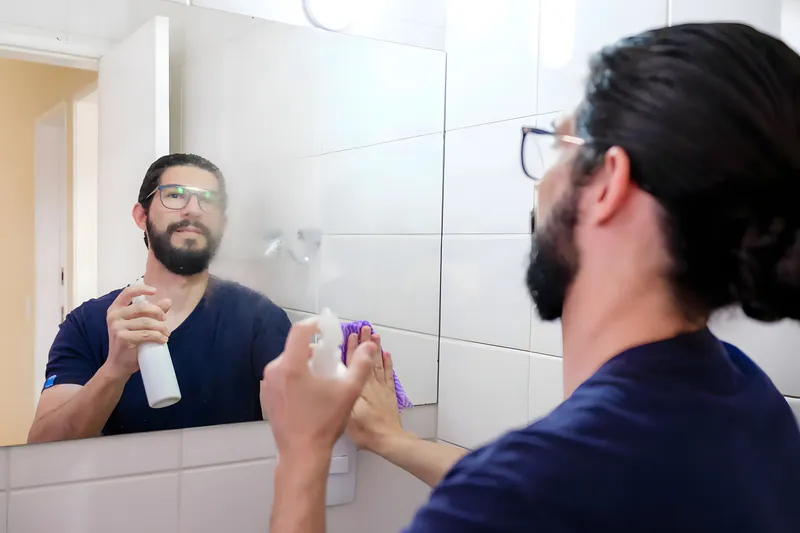
- Prepare an extremely mild neutral cleaning solution: Add one or two drops of ordinary neutral dishwashing liquid to clean water (with no ammonia, alcohol, or abrasive particles), and gently stir.
- Gently wipe with a clean microfiber cloth: Soak a brand-new microfiber soft cloth, then wipe the mirror extremely gently in one direction. Avoid rubbing back and forth with force.
- Rinse with clean water and air-dry naturally: Rinse away the foam with clean water once more, then allow the mirror surface to air-dry naturally. Do not dry it with dry paper towels or rough towels, as this may cause secondary micro-scratches or accelerate coating wear.
“Temporary Solutions” After the Coating Has Truly Failed
If the mirror is very clear when dry after thorough cleaning but still fogs up whenever it encounters water vapor, this indicates that the original factory coating has indeed aged or been washed away. If you still want to continue using it, you can adopt the following objective and effective temporary remedies:
- Use a water-based anti-fog spray clearly labeled “safe for acrylic/plastic”: Choose a water-based anti-fog spray that contains no alcohol or organic solvents (commonly used for swimming goggles or safety goggles), spray it on, and leave it to air-dry. These products can generally last anywhere from several days to several weeks and require regular reapplication.
- Apply a professional PET anti-fog film: If the mirror is not large and is completely flat, applying a bathroom mirror anti-fog film is less troublesome than repeatedly using spray. Before applying the film, ensure that the mirror is free of dust and oil. Once properly applied, it can provide a relatively durable physical anti-fog layer.
- Improve ventilation and control temperature differences: The simplest method, and the one least likely to damage the mirror—turn on the exhaust fan while showering, or keep the air circulating near the mirror to reduce the condensation load of water vapor on the cold mirror surface.
These temporary solutions can help you resolve the problem, but the best solution is still to replace the mirror. Whether you continue using this type of mirror with an integrated coating or switch to an electrically heated anti-fog mirror, there are several common mistakes to watch out for when trying any solution.
Common Mistakes That Ruin Your Mirror When Trying to Repair Anti Fog Coating
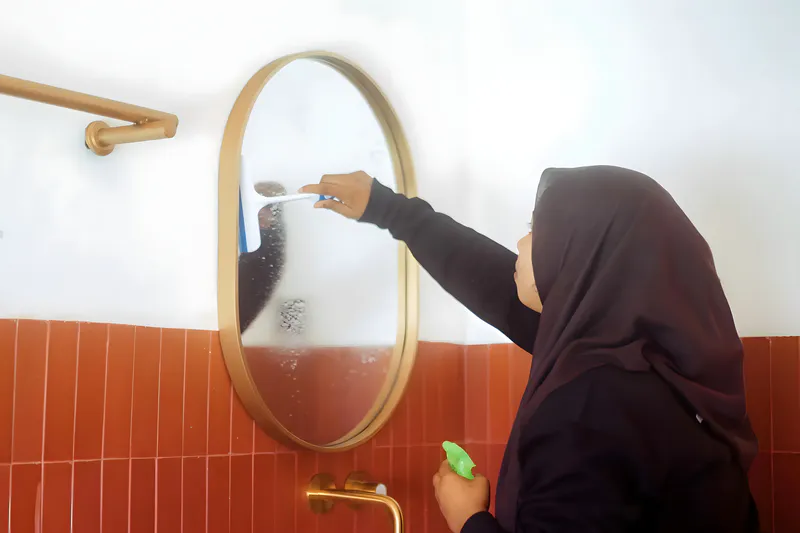
On various home-improvement forums and short-video platforms, people often share “five-minute, low-cost anti-fog coating repair” hacks. To remain objective, we need to lay out these misconceptions and the destructive mechanisms behind them clearly, so you can avoid unnecessary losses.
Misconception 1: Cleaning with Glass Cleaner or Alcohol Disinfecting Wipes
This is the most common example of “trying to help but making things worse” in commercial settings and homes. Ordinary glass mirrors are highly resistant: wipe them with glass cleaner, white vinegar, or even high-concentration alcohol, and they will immediately look shiny again. But acrylic is a polymeric organic material.
According to the authoritative plastic-processing industry guide VIP Plastics’ acrylic cleaning instructions, ammonia-containing glass cleaners, acetone, and alcohol-based solvents can directly attack the surface of PMMA, causing permanent cracking and silver delamination, leaving the mirror with hazy white spots that cannot be wiped away.
What makes matters worse is that in commercial spaces such as hotels and gyms, if cleaning staff are accustomed to using the same bottle of glass cleaner or commonly used cleaning wipes on all mirrors, anti-fog acrylic mirrors can become completely damaged within just a few months.
For more information about the differences between acrylic mirrors and glass mirrors, please refer to the previous article: A Comparison of Daily Care Differences Between Acrylic Mirrors and Glass Mirrors.
Misconception 2: Applying Toothpaste, Shaving Cream, or Automotive Water-Repellent
People online often recommend using toothpaste or automotive glass water-repellent products to “make your own anti-fog layer,” but this involves two serious problems:
Abrasives in toothpaste: Most toothpastes contain fine abrasive particles, such as calcium carbonate or silica. During wiping, they are essentially like using extremely fine sandpaper to polish the acrylic surface, directly damaging the gloss of the mirror.
Solvent risks in automotive water-repellent products: Many automotive glass rain-repellent or anti-fog products contain alcohols or silicone solvents. They are specifically designed for inorganic glass. When applied to acrylic or PC substrates, they may not only corrode the surface but can also easily leave behind a greasy rainbow glare, significantly reducing the reflective effect.
Misconception 3: “Dry-Wiping” a Fogged Mirror with Kitchen Paper Towels or Old Cotton Cloth
When people see watermarks or dust on a mirror, many instinctively grab a sheet of kitchen paper towel and wipe it dry. Under a microscope, the wood fibers in paper towels are extremely rough. During dry wiping, tiny dust particles on the mirror surface act like abrasives, scratching countless fine lines into the relatively soft plastic surface. Over time, the mirror becomes dull, like frosted glass.
Since there are so many pitfalls that are either “impossible to repair” or “made worse by attempted repairs,” how should users or purchasers make a rational judgment: continue following the manufacturer’s original care guidelines and make do with the mirror, or simply replace it with a new one?
Follow Care Instructions or Replace? Making the Right Call Beyond Trying to Repair Anti-Fog Coating
Whether you are a household user or procuring for a commercial project, the dilemma of “whether to continue repairing the anti-fog coating” often stems from a lack of clear criteria for weighing costs against the user experience. In this situation, you can refer to the following considerations to decide whether to continue maintenance or replace it directly:
1. When should you strictly follow the manufacturer’s care instructions and continue using it?
Still crystal clear when the mirror is dry: There are no obvious whitening or silvering patterns, no deep scratches that affect visibility, and the anti-fog performance remains effective. In this case, simply maintain the status quo and follow the basic care guidelines.
Only minor localized degradation is present: For example, the anti-fog performance has weakened only in areas along the edges that are frequently splashed with water, while the center remains effective. In this case, simply correct your cleaning habits (stop using chemical cleaners and switch to clean water and a microfiber cloth), or use gentle ventilation. The mirror can still remain in stable service for a long time.
2. When should you stop trying to fix it and directly ask the manufacturer for a replacement?
Large areas of silvering loss or surface whitening appear: When the mirror surface looks as though it is covered with a layer of plastic film under direct light, this indicates structural damage to the substrate that cannot be remedied by any cleaning or spray product.
Dense scratches cause distorted or dim images: Especially in scenarios requiring close-up shaving, makeup application, or display in public areas, the worn mirror surface has already lost its basic usability.
Frequent recurring fogging makes recoating too expensive: For commercial restrooms, gym locker rooms, or medical washing areas, if cleaning staff need to spray anti-fog agent every week just to maintain clear visibility, the long-term labor and consumables costs have already exceeded the cost of replacing it with a brand-new anti-fog mirror panel.
If you confirm that the mirror has reached the replacement threshold, or if you are looking for a more durable alternative for a new project, it is advisable to first understand the differences in materials and manufacturing processes before placing an order.
For example, in high-temperature, high-humidity environments or areas requiring frequent cleaning, in addition to conventional PMMA substrates, polycarbonate (PC) substrates combined with a wear-resistant hard coating can often better protect the anti-fog layer and extend the overall service life. A standard thickness of 3 mm is also commonly used by manufacturers for factory-applied anti-fog coatings.
If the mirror you have on hand has already developed irreversible clouding, silvering, or coating peeling, instead of wasting time on ineffective remedies, it is better to directly contact a professional acrylic mirror manufacturer. Provide your usage environment, dimensional specifications, and installation method, and consult the original manufacturer’s care recommendations or request a customized replacement with a brand-new anti-fog mirror panel. This is often the optimal solution for balancing cost and clarity.