
Traditional wall mirrors are generally a mirror frame plus a mirror panel, serving as a complete decorative piece that embellishes a room or space. However, with the changes of the times, mirror decorations mainly made from acrylic have changed this situation.
Acrylic mirror wall decals are an alternative to traditional wall mirrors. In terms of decoration, they have the advantage of a high degree of customization. They can be cut into circles, arches, leaves, letters, waves, or modular geometric patterns. Compared with glass, acrylic is lighter in weight, and this advantage also allows it to be used directly without a frame.
Based on our experience, customer demand for acrylic mirror wall decals has gradually increased in recent years, and most customers have their own online stores. They purchase custom-produced acrylic mirrors from us, including acrylic mirror tiles and acrylic mirror wall decals. At present, searches for them on e-commerce platforms are often mixed together, but this does not mean they are the same type of product. At the same time, acrylic mirror wall decals should not be confused with acrylic mirror stickers.
I have discussed both mirror tiles and mirror stickers in previous blogs, which you can refer to here: Acrylic Wall Mirror Planning Guide, Can You Roll an Acrylic Mirror Sticker?. For the convenience of helping everyone better understand the differences, I will use three pictures to distinguish them.
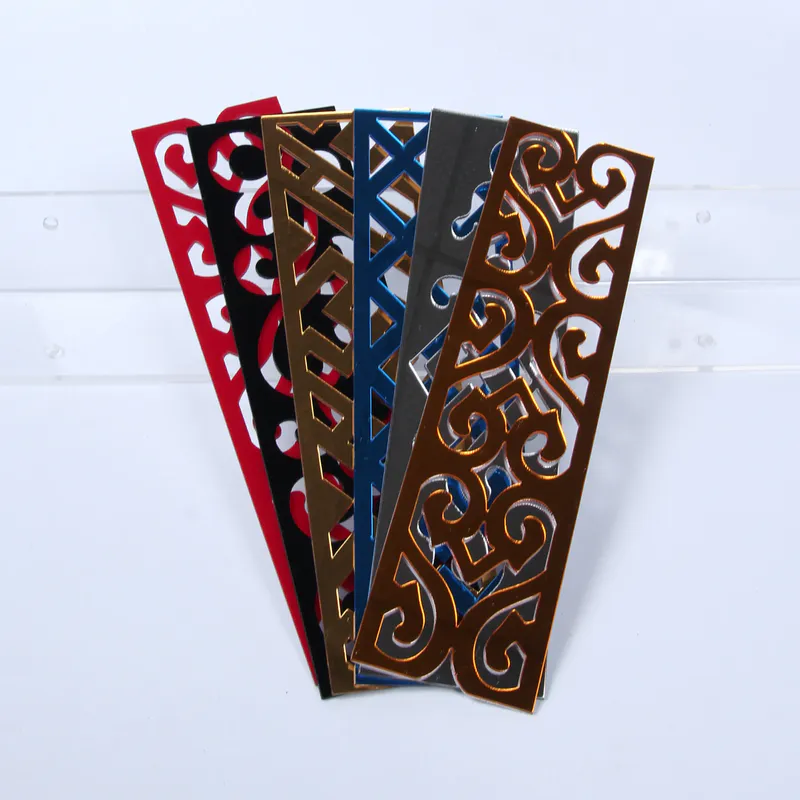
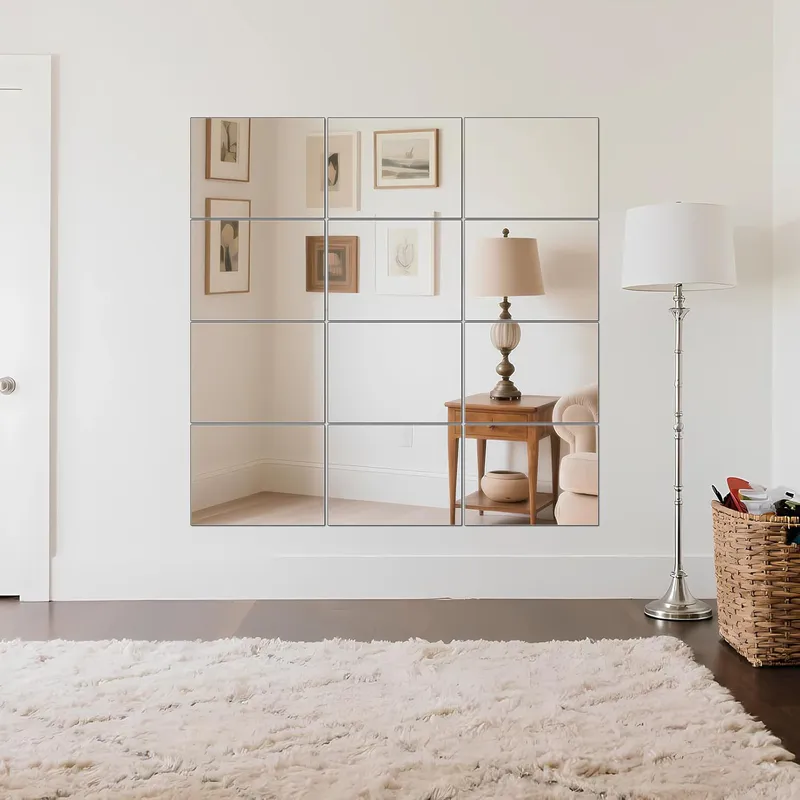
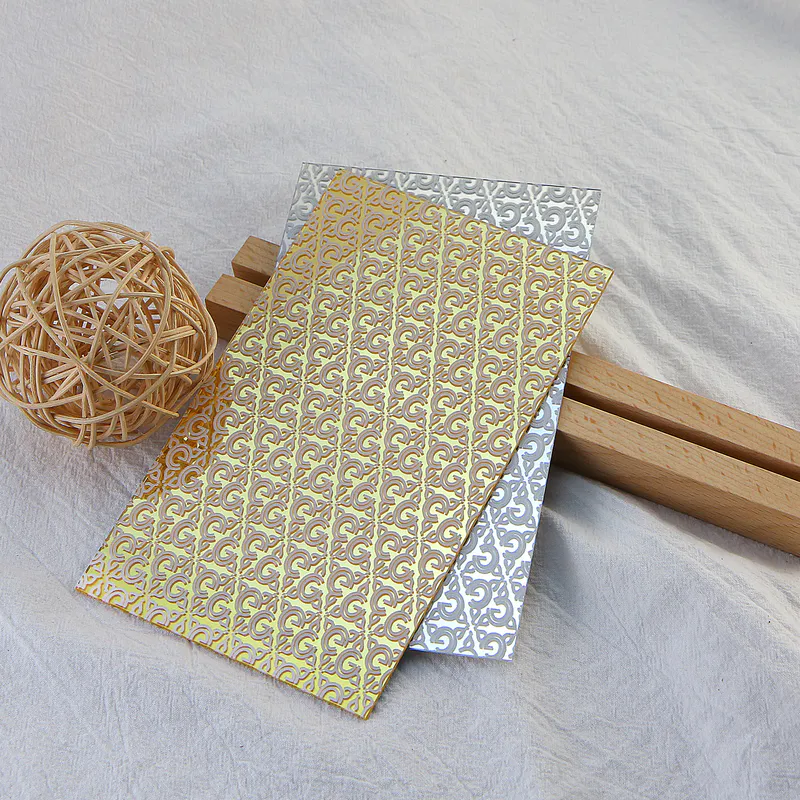
So what are the characteristics of acrylic mirror wall decals? Let me talk about them below.
Common Types of Acrylic Mirror Wall Decals
According to the shape of the mirror pieces, the combination method, and the processing form, acrylic mirror wall decals can generally be divided into the following three types:
1. Regular Mosaic Type
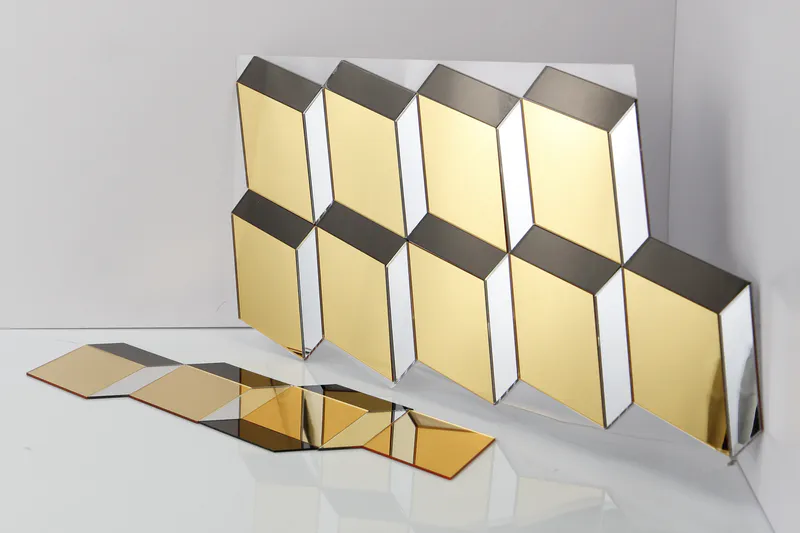
This type of mirror wall decal is composed of many small mirror pieces with the same shape and size, such as circular, square, hexagonal, or diamond-shaped mirrors. During installation, they are arranged and assembled according to a certain pattern, eventually forming a complete geometric design or wall decoration effect.
Because the structure of each individual mirror piece is relatively uniform, this type of product is more suitable for repetitive arrangements, symmetrical designs, and large-area combinations. As shown in the image below, when these small mirrors are combined together, they can form a three-dimensional honeycomb pattern on the wall;
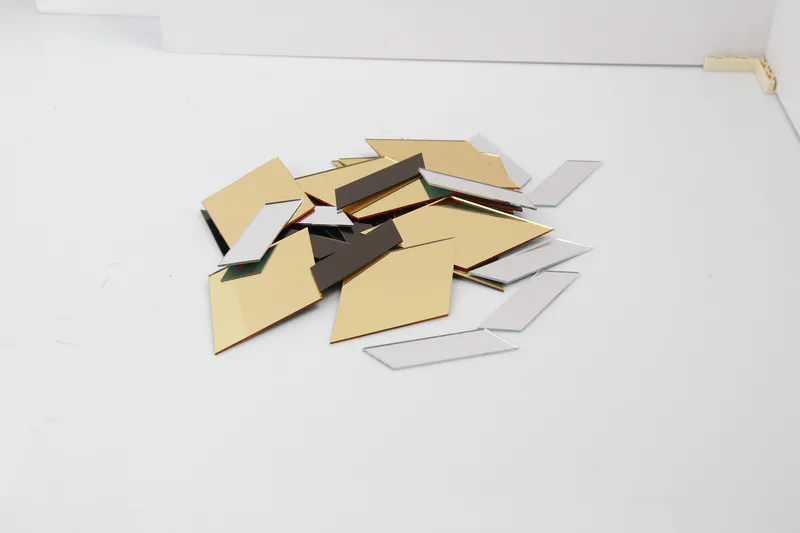
2. Irregular Combination Type
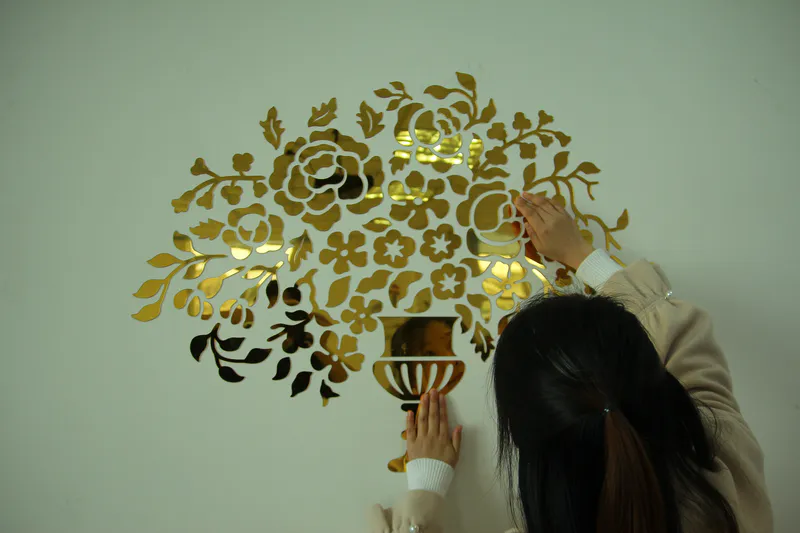
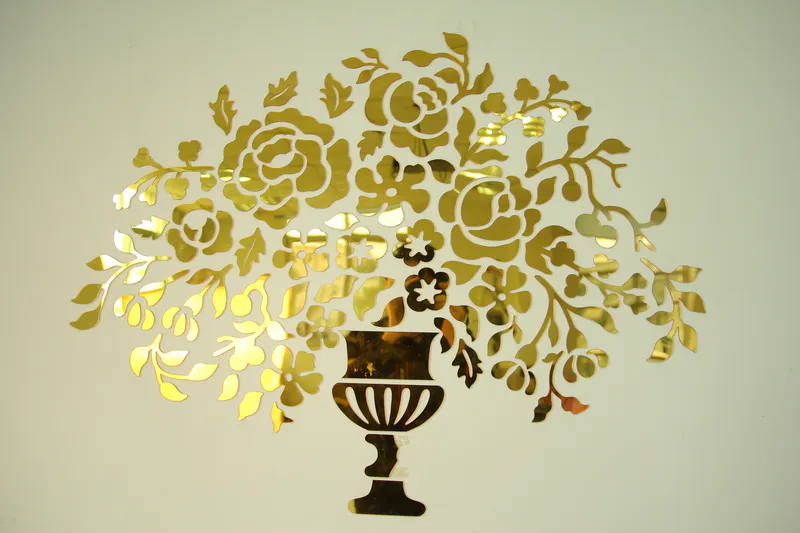
The irregular combination type is also composed of multiple small mirror pieces, but the shape or size of each mirror piece can be different. During the design process, different mirror shapes are combined according to specific positions based on the final pattern, thereby creating more diversified decorative styles.
Compared with the regular mosaic type mentioned above, this kind of combination offers greater freedom in production. Buyers can even purchase several sets of mirrors with different themes to create their own designs.
3. Integrated Shape Type
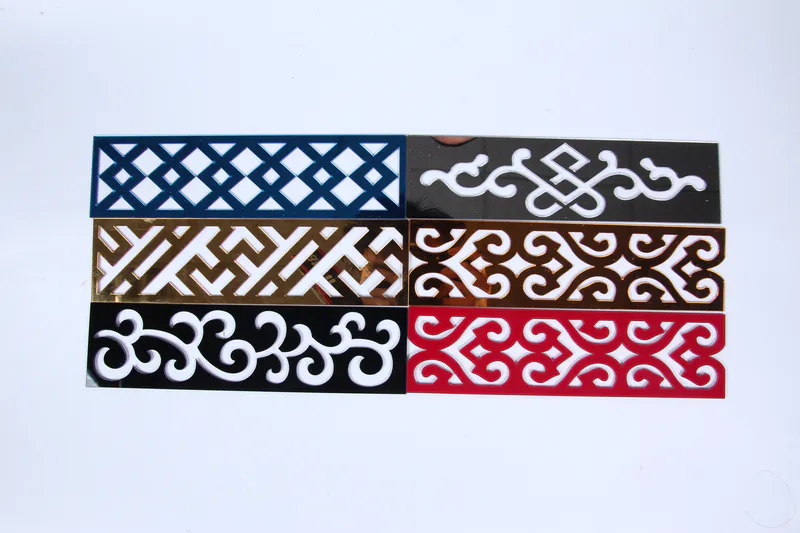
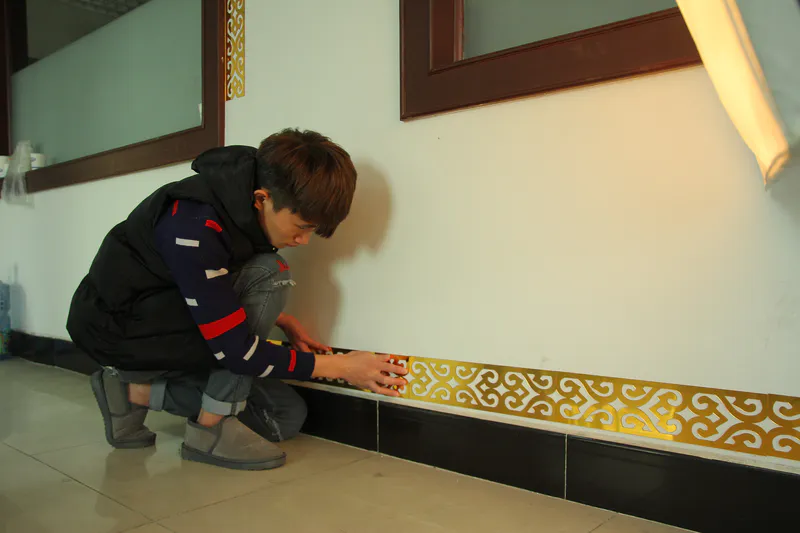
This type of product no longer relies on assembling a large number of small mirror pieces, but instead directly processes the acrylic mirror sheet into the final decorative appearance required, such as text, outlines, geometric shapes, or other custom patterns.
After the mirror sheet is cut and the edges are processed, double-sided tape or other adhesive backing materials can be added to the back. During use, users only need to peel off the release film and stick it onto the wall, making the overall structure stronger and the installation easier.
4. Bubble Mirrors
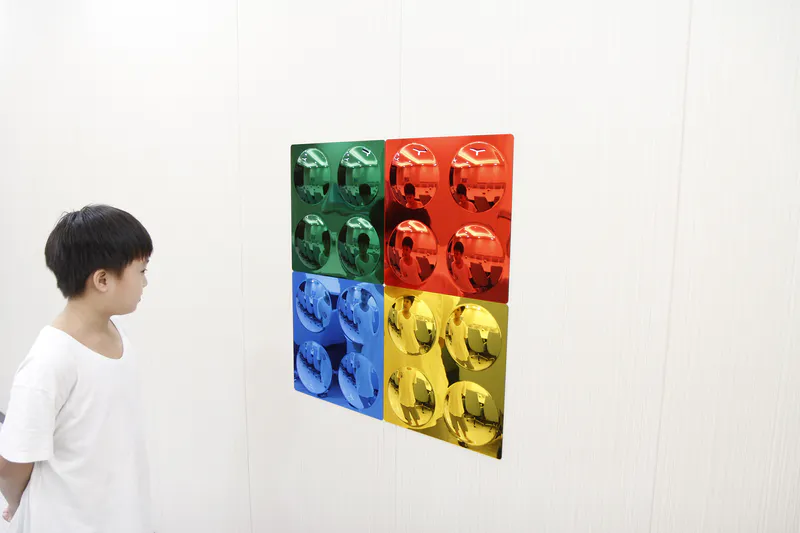
Acrylic mirror wall decals also include bubble mirrors. What is a bubble mirror? We can first look at the image below. This kind of mirror, which has a convex mirror in the middle and raised edges around it, may have its own specific product name, but it is actually also a type of wall decorative mirror. The reason it is classified separately is mainly because it is considered a type of curved mirror.
Why Should Acrylic Mirror Wall Decals be Designed and Sold as a “Set”?
Usually, acrylic mirror wall stickers are not sold by individual piece or single sheet, but rather with “set” as the main unit of measurement.
Why is this the case? The reason is that this type of product places greater emphasis on the combined decorative effect, and is often composed of multiple mirrors of different sizes, shapes, or patterns that together form a complete wall design.
A single piece alone is usually unable to reflect its decorative value, so manufacturers and sellers sell them as complete sets according to predetermined combination designs, using “one set” as a more reasonable product specification unit.
This is very similar to mirror tiles. Mirror tiles are also usually not used individually to complete a decoration, but instead create a complete wall effect through the arrangement, splicing, and combination of multiple pieces.
The difference is that acrylic mirror wall stickers are more flexible in terms of shapes and combination methods, and can create richer decorative effects through different elements such as circles, squares, and geometric patterns.
How to Plan the Layout Before Installing Acrylic Mirror Wall Decals
First measure the available wall area, then take a front-facing photo with as little distortion as possible. Mark the furniture width and wall decal boundaries on the photo, or print or cut all shapes to their actual sizes as paper templates. Temporarily attach the templates to the wall and observe them during both daytime and nighttime, so you can identify issues such as unbalanced dimensions, overly high placement, or undesirable reflected content before peeling off any release paper.
A modular layout requires a unified reference point, which can be the centerline of furniture, the edge of a shelf, or an axis marked with a level. The position of every mirror piece should be measured from this reference point, while also recording the panel dimensions and gap widths. Even compositions that appear free-form should follow internal rules, such as equal spacing, repeated angles, controlled gradients, or clear left-right balance.
At this stage, it is also necessary to determine whether the project is primarily decorative or practical. Scattered small shapes can beautifully diffuse light, but they cannot provide the continuous reflection of a single large acrylic mirror sheet. If reflection accuracy is important, the size of each individual panel should be increased, seams reduced, and continuous backing support provided behind the mirror pieces.
How to Install Acrylic Mirror Wall Decals Smoothly
Installation begins with checking the wall surface. A smooth, sealed, dry, and flat substrate is usually the most reliable; rough textures reduce adhesive contact area and may also transfer unevenness into the mirror image. Newly painted surfaces must be fully cured, and the curing time should follow the instructions provided by both the paint and adhesive manufacturers.
James Bryant’s Acrylic Mirror Installation Guide emphasizes a flat backing surface, even support, and testing solvent-free adhesives before installation. These principles are equally important for smaller wall decals. Mirror surfaces magnify substrate imperfections, so a wall that appears flat under matte paint may still show obvious distortion once mirror panels are applied.
Prepare and Test the Wall Surface
Use only cleaning methods compatible with the wall finish and the selected adhesive. After removing dust, grease, and loose paint, allow the area to dry completely. Especially when dealing with wallpaper, low-VOC paints, chalking surfaces, or delicate finishes in rental properties, first test with a spare sample piece or adhesive sample in a concealed area. Self-adhesive does not mean removable without damage.
Align and Press the Mirror Panels in Stages
Mark light reference points with a level, and arrange all mirror pieces on the floor in numbered order first. Peel back only a small section of the release liner, align the exposed edge, then continue peeling gradually while pressing evenly outward from the fixed edge. Do not sharply bend rigid PMMA wall decals for easier application; the Acrylic Mirror Sticker Material Guide explains that although thin PMMA can flex slightly, it cannot be used like rollable PET mirror film.
Apply even pressure where the back is supported, and wait until the entire arrangement is installed before removing the front protective film. 3M’s VHB Tape Application Guide also identifies surface preparation and final pressure application as key steps for reliable bonding. After installation, follow the resting time specified by the actual adhesive supplier before cleaning or placing additional load on the mirror pieces.
Applications of Acrylic Mirror Wall Decals in Different Rooms
The same set of mirror shapes will not suit every space. Size, spacing, edge styling, and color should all respond to the room’s function; therefore, the suggestions below are based on actual usage scenarios rather than simply listing patterns.
Living Room: Create a Clear Visual Focal Point
Above an entry console, sideboard, or low buffet cabinet, you can combine one main arch or circular shape with two to three smaller shapes. The furniture provides a visual base for the composition, allowing the wall decals to appear as a complete arrangement rather than scattered stickers. For long narrow blank walls, slim vertical strips can also be used to create rhythm, echoing the lines of wainscoting without carrying the visual weight of a full wall mirror.
Bedroom: Add Vertical Emphasis Without Creating Clutter
Installing rounded-rectangle mirrors beside a wardrobe, vanity, or dresser can guide the eye upward. A pair of narrow vertical mirror panels can provide a quick appearance check before leaving while occupying less wall space than a framed full-length mirror. If installed above the bedhead, lighter and smaller decorative strips should be used, and the supplier’s installation limitations must be strictly followed; “self-adhesive backing” does not mean every product is suitable for overhead installation areas.
Children’s Room: Keep Shapes Simple and Attachment Secure
Clouds, stars, animal silhouettes, and large letters can brighten a play area while avoiding the use of glass. Rounded shapes should be prioritized, sharp inner corners avoided, and any small removable pieces installed out of reach of young children. Acrylic is more impact-resistant than glass, but it is not unbreakable. Secure adhesion, smooth edges, and age-appropriate installation height remain essential.
Entryway and Hallway: Extend Sightlines in Narrow Spaces
Hallways are well suited for repetition. Installing vertical diamonds, half-circles, or narrow rectangles at a consistent height can guide the eye along the wall. In entryways, a compact arrangement above a key shelf can provide visitors with a quick mirror for checking their appearance without crowding the standing area. Before fixing the decals in place, always check the reflection from the doorway: a good position should reflect light or attractive parts of the space, not coat racks or cluttered storage areas.
Dining Room and Kitchen: Reflect Details Rather Than Magnify Clutter
Dining areas can use bronze, gold, or smoky gray mirror pieces to give chandeliers and tabletop arrangements a warmer effect than standard silver mirrors. Repeating curves already present in chair backs or lighting fixtures helps the wall decoration visually connect with the interior. In kitchens, wall decals can be applied to smooth cabinet side panels or breakfast nook walls, but they should be kept away from direct heat sources, constant steam, grease, and splash zones; such areas should only be used when the mirror surface, backing coating, and adhesive system are all explicitly rated for those environments.
Bathroom: Use Mirror Wall Decals as Accents
Acrylic mirror wall stickers can be used to frame a main vanity mirror, continue the lines of a backsplash, or add small reflective accents to a guest bathroom. When a composition contains many seams, it is usually not suitable as the only close-range vanity mirror. Humid environments also require confirmation that the mirror backing, exposed edges, and adhesive are appropriate for such conditions; unless the supplier explicitly approves use in wet areas, decorative wall decals should not be installed inside shower enclosures.
Salons and Retail Spaces: Make Brand Graphics Part of the Wall
Custom lettering, segmented logos, or repeated colored mirror pieces can extend brand language into reception walls, display areas, and product photography zones. Silver reflections are the most neutral and clear, while gold, rose gold, bronze, and black provide stronger visual identity. Color coordination can be achieved through the Colored Acrylic Mirror Sheet Collection, while brand outlines can be created with Custom Cutting and Printing Services. However, if the mirror is intended for checking hairstyles, makeup, or clothing, at least one sufficiently large, flat, and continuous mirror surface should still be retained.
FAQ
Do acrylic mirror wall decals look like real mirrors?
High-quality PMMA wall decals can produce clear reflections when the base surface is flat, properly supported, and appropriately sized. However, overly thin sheets, uneven walls, and highly fragmented layouts may cause ripples or seams, so decorative sets should not automatically be regarded as substitutes for vanity mirrors.
Can wall decals be removed without damaging paint?
It is possible, but the result depends on the adhesive, coating system, wall preparation, bonding duration, and removal method. Testing should be done first, and clear adhesive usage instructions should be obtained. Even though the mirror pieces are lightweight, strong permanent foam tape may still pull away paint or the paper surface of drywall.
Can wall decals be cut into custom shapes?
Yes. PMMA mirror panels can be cut into letters, circles, arches, organic patterns, logos, and modular combinations. When preparing artwork, consideration should be given to narrow connection points, sharp inner corners, minimum feature sizes, and edge finishing.
Are acrylic mirror wall decals suitable for bathrooms?
When the mirror backing and adhesive are explicitly rated for humid environments, they can be used as decorative accents. Unless the product is specifically designed for direct wet areas, it should be kept away from splash zones; when close-range image quality is important, a continuous, flat primary mirror is still required.
How should acrylic mirror wall decals be cleaned?
Use a clean microfiber cloth and a cleaner explicitly suitable for acrylic, avoid abrasive pads, and do not assume that ordinary glass cleaners are necessarily compatible. When wiping small mirror pieces, support the surface to prevent cleaning force from twisting the piece or gradually lifting the edges.