
MATERIAL-BASED MIRROR SOLUTIONS
PETG Flexible Mirror
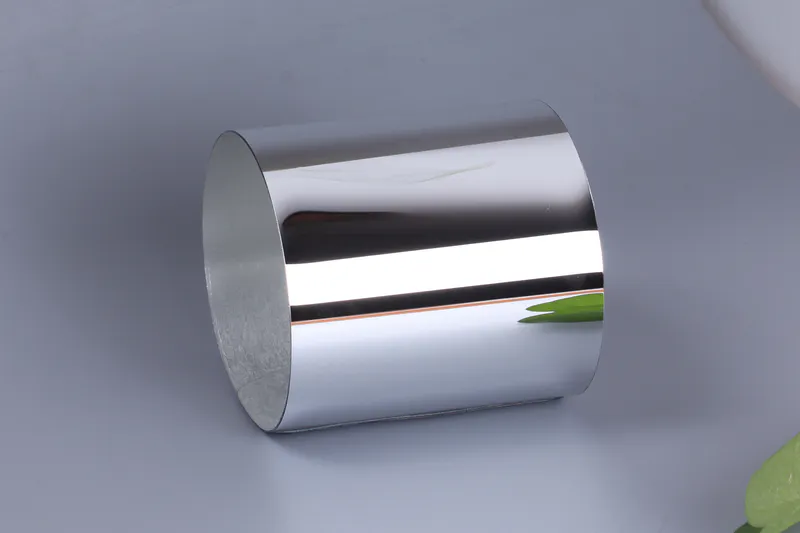
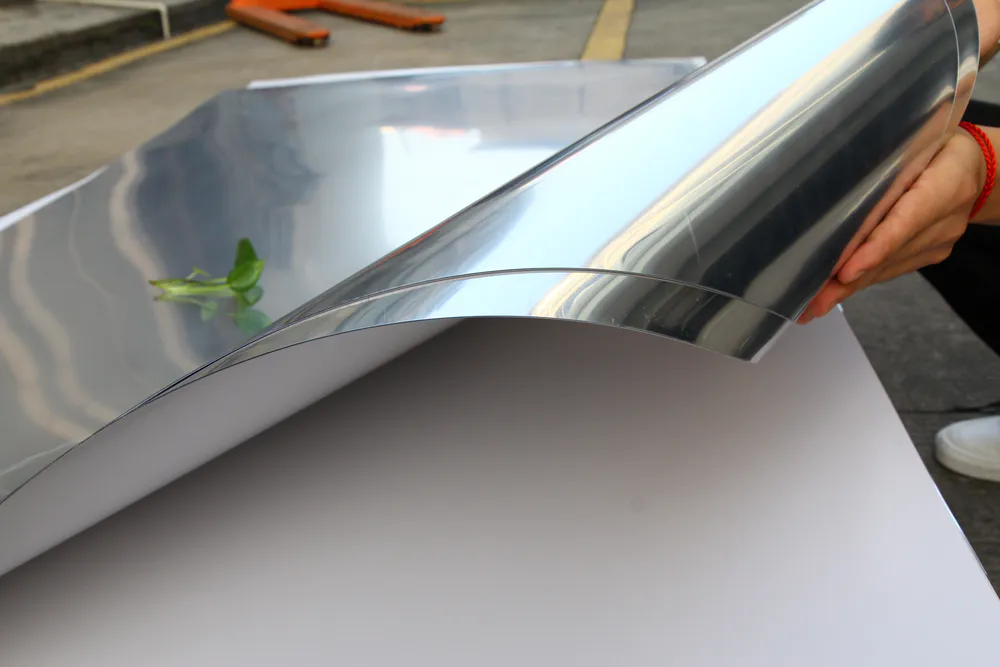
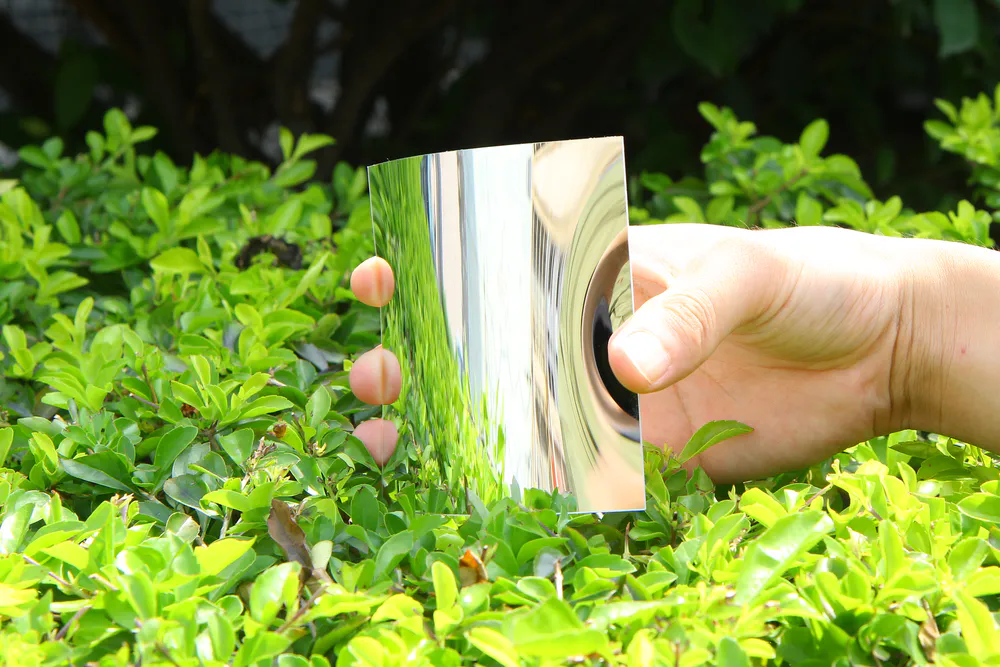
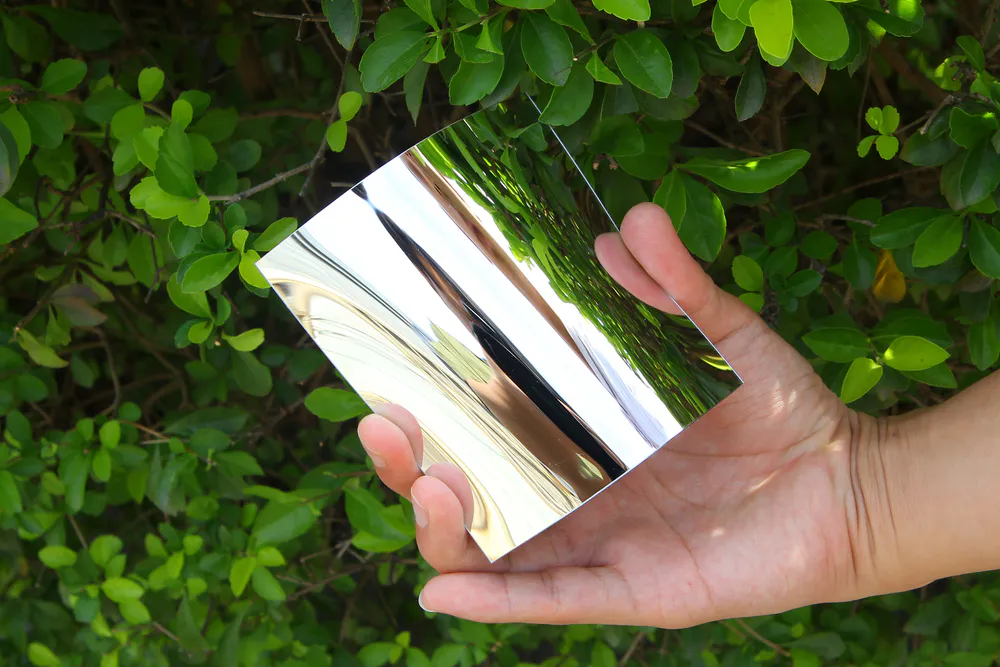
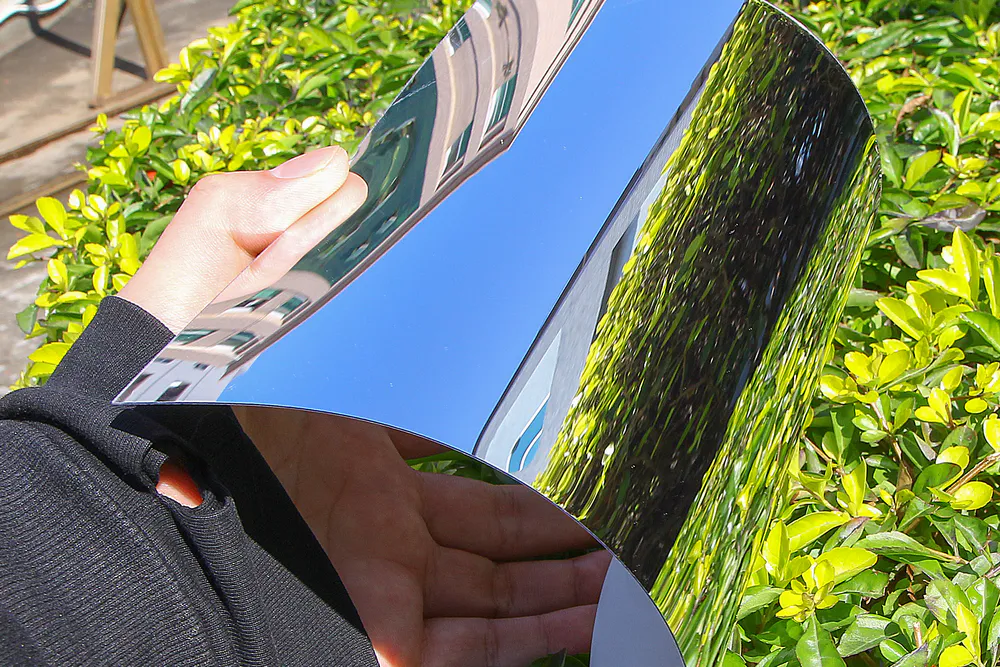
PETG mirror panels offer excellent flexibility and can be moderately cold-bent to create curved surfaces, providing greater freedom in design. They are also lightweight, impact-resistant, and easy to process, supporting cutting, punching, and die cutting.
- Home
- Material Guide
- PETG Mirror
KNOW THE MATERIAL
What is PETG Mirror?
PETG (glycol-modified polyethylene terephthalate) is a transparent copolyester used to manufacture plastic mirror sheets. A reflective layer is applied to the PETG substrate and covered with a protective backing. The finished mirror combines the lightweight properties of plastic with good flexibility and impact resistance.
Compared with PMMA and PS mirrors, PETG mirrors offer greater flexibility and good impact strength, particularly in thinner sheets. PETG mirror sheets can be die-cut, punched, and trimmed into different shapes.
PETG mirrors are usually not made thick; they’re generally less than 1 mm thick. Children’s toys with mirrors often use mirrors made of PETG. Their flexibility, impact resistance, and shatterproof properties make them uniquely advantageous for this application.
Why Consider PETG Material for Mirror?
Highly Flexible
PETG mirror sheets offer good flexibility, particularly in thinner specifications. They can accommodate gentle bending without breaking like rigid glass. The degree of bending depends on sheet thickness, reflective coating, and processing conditions.
Impact & Shatter Resistance
PETG mirror offer excellent impact resistance and are unlikely to produce sharp fragments when damaged. The material’s flexibility helps absorb impact stress, making the lenses less prone to cracking.
Easy Product Assembly
PETG mirror panels can be supplied with a double-sided adhesive backing for installation onto compatible curved surfaces. Buyers can choose different backing options according to the product structure and assembly requirements.
Versatile Fabrication
Thin PETG mirror sheets can be die-cut, punched, and trimmed into different shapes. Buyers can specify dimensions, thicknesses (limited), cutting tolerances, and protective films according to their product drawings and assembly requirements.
Exploring Mirror Types Suitable for PETG
PETG material can be used to produce conventional mirrors and two-way mirrors.
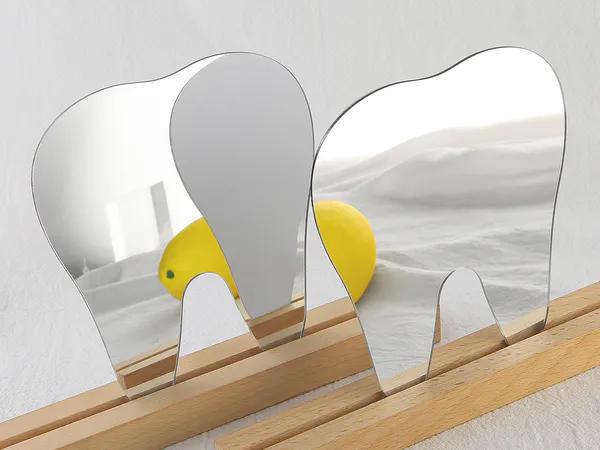
Mirror Sheet
Conventional mirrors made from PETG typically aren’t produced in very thick sheets; in most cases, the thickness is under 1 mm.
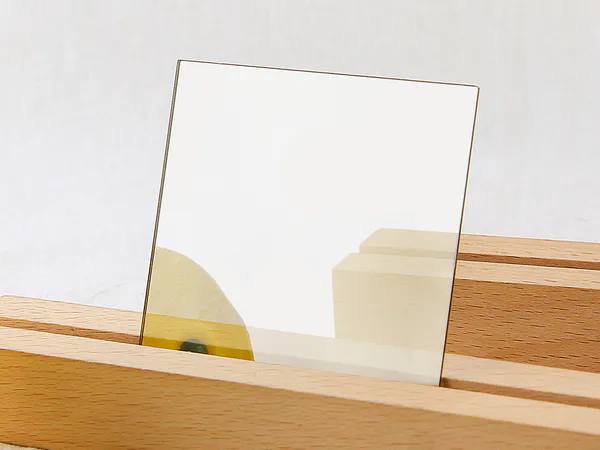
Two Way Mirror
The two-way mirror made of PETG material supports a reflectivity range of 50% to 70% and a light transmittance range of 50% to 30%.
Specify Your PMMA Mirror
Size
Standard sheet sizes or custom dimensions to meet your needs.
Thickness (Limited)
The thickness is generally within 1 mm; exceeding 1 mm is not recommended.
Shape
Rectangular, circular, and custom shapes cut to your needs.
Printing
Custom logos, patterns, and graphics printed on mirror sheets.
Drilling
Custom hole sizes and positions for different mounting needs.
Edge Finish
Straight-cut, polished, or rounded edges to your need.
Mirror Type (Limited)
Limited to regular mirrors and two-way mirrors.
Share your drawing and mirror function for a project-specific specification.
FAQ
Q: Can PETG mirror sheets be bent without damaging the reflective coating?
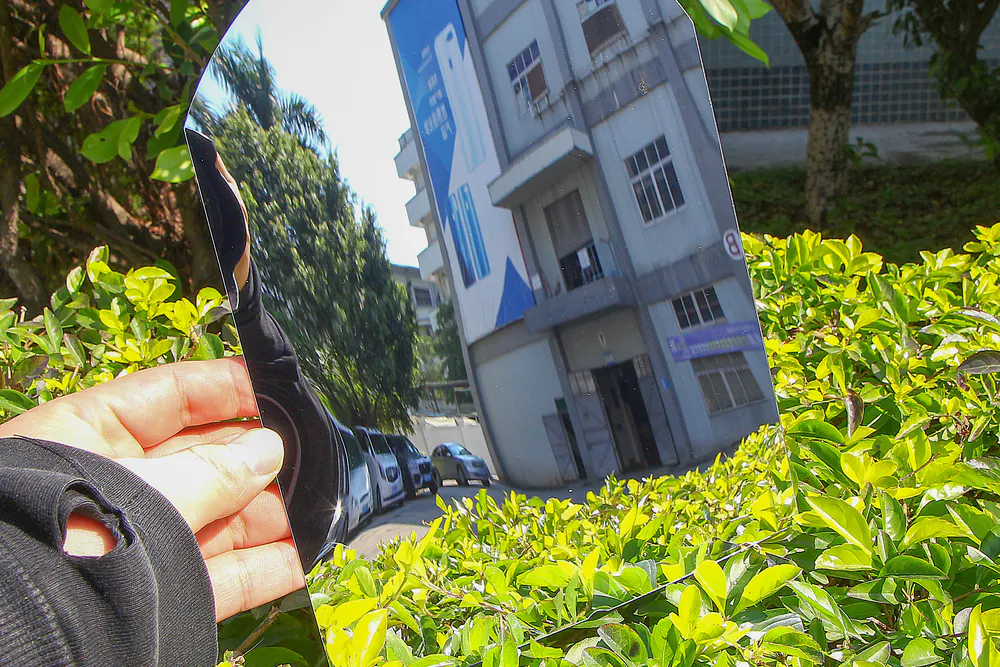
A: PETG mirrors can be cold-bent, but the bending limit depends on the sheet thickness, bending radius, and reflective backing. Excessive bending may cause coating damage or visible reflection distortion.
Q: What factors affect the price and MOQ of PETG mirror sheets?
A: Pricing and MOQ depend on thickness, sheet dimensions, order quantity, and processing requirements. Custom die-cut shapes, tooling, adhesive backing, and packaging may involve additional costs. Standard sheets and custom mirror components may have different minimum order quantities.
Q: Can large PETG mirror sheets maintain a flat reflection?
A: PETG mirror sheets may show reflection distortion when they are too thin, improperly supported, or mounted on uneven surfaces. Larger mirrors generally require a smooth, rigid backing.
Q: Can PETG mirror sheets be used for outdoor applications?
A: Standard PETG mirror sheets are generally intended for indoor use unless specifically designed and tested for outdoor conditions. Extended exposure to sunlight, moisture, and temperature changes may affect the substrate and reflective backing.
PROCUREMENT INQUIRY
Get a Quote for PETG Mirror Sheets
Tell us the required specifications and quantity, and we will confirm the price, minimum order quantity, and estimated lead time with you. You can also inquire even if the specifications have not been finalized yet; just provide the requirements you currently have.
Dimensions, thickness, and purchase quantity
Mirror color and processing requirements
Delivery location and expected lead time
After Submission, What Information Will You Learn?
01. Requirement Review
We review your specifications, quantity, and intended application.
02. Technical Assessment
We evaluate suitable materials and customization options.
03. Quotation & Follow-up
Our team discusses pricing and the next steps with you.