
Most people think of two-way mirrors in only two ways: interrogation rooms and smart mirrors. Those are real uses, but they are not the whole category. In actual projects, two-way mirrors show up in observation rooms, research facilities, retail displays, exhibition installations, infinity lights, stage effects, camera rigs, and small creative builds.
The mistake is assuming that all of these applications need the same sheet.
They do not.
A small acrylic sheet that works well over a 24-inch smart mirror screen may be the wrong material for a professional observation room. A panel that works for a retail reveal display may not be suitable for a teleprompter. A mirror used for a Pepper’s Ghost effect may not even need to be a standard two-way mirror sheet at all.
That is the useful way to think about two-way mirror uses: not as a list of things the product can do, but as a list of situations where partial reflection and partial transmission are useful — provided the lighting, ratio, size, and material are chosen correctly.
If you need the basic optics first, our two-way mirrors guide explains why the mirror effect depends on lighting rather than on the sheet being truly “one-way.” This article focuses on where the material is actually used.
One sheet does not fit every use
A two-way mirror is a partially reflective, partially transparent surface. That sounds simple, but it creates a different specification question for every application. To meet specific applications, aspects such as size, thickness, and light transmittance all require careful consideration.
Before we recommend a sheet, we normally want to know three things.
- First, what should the viewer see from the bright side? If the surface needs to look almost like a normal mirror, the sheet usually needs higher reflectance. If the viewer needs to see a bright display behind the mirror, the sheet may need more transmission.
- Second, what is behind the mirror? A dark observation room, an LCD screen, LED strips, a product display, a camera lens, and a hidden stage area all behave differently.
- Third, how large is the panel? This is where acrylic and glass begin to separate. Acrylic two-way mirror is light, shatter-resistant, and easy to cut, but it is still acrylic. At larger sizes, it can flex and distort because the sheet cannot usually be bonded to a rigid backing without blocking the see-through side. We covered this in more detail in the two-way acrylic mirror sheet guide.
So the right question is not simply “what are two-way mirrors used for?”
The better question is: “For this use, what ratio, size, material, and lighting setup will actually work?”
The acrylic material is completely different from the glass material, and each has its own advantages. The two cannot replace each other. Depending on your actual use, whichever one is suitable is the one you should choose. Don’t think about changing the material, as this will instead cause more trouble.
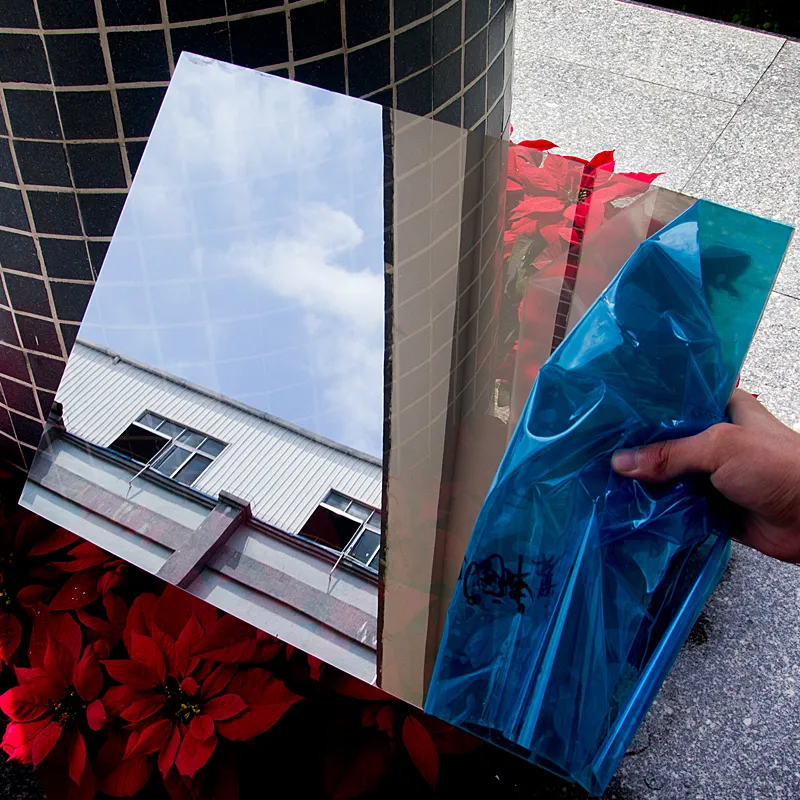
Observation and controlled-room uses
1. Focus group and market research observation rooms
This is one of the classic one way mirror applications. A focus group facility may place participants in a brightly lit discussion room, while researchers or clients sit in a darker observation room behind the mirror.
Drive Research describes an observation room as a space used in qualitative market research where researchers and clients can watch focus groups or interviews through a one-way mirror. That is the important point: the mirror is not just decoration. It supports a research method where observers can watch without entering the room and changing the conversation.
For this use, the lighting setup is more important than the product name. The participant room must be brighter. The observation side must be darker. Any light leak behind the mirror weakens the effect.
For permanent professional rooms, glass two-way mirror is often the better material because the panels are usually large and flatness matters. Acrylic can be useful for smaller training rooms, temporary panels, portable research setups, or cost-sensitive builds, but it should not be specified casually for large observation windows.
When a customer asks us for a large acrylic two-way panel for an observation room, we do not start with the quote. We ask for the visible size, the wall opening, the lighting plan, and whether the mirror needs to look like a normal wall mirror from close range. Those answers decide whether acrylic is reasonable or whether glass is the safer specification.
In most cases, acrylic two-way mirrors cannot meet this type of requirement, so they are generally not recommended. Even if the thickness exceeds 10 mm, their performance in practical applications is still not considered satisfactory.
2. Psychology, training, and behavior observation rooms
Two-way mirrors are also used in psychology labs, child-behavior observation rooms, training facilities, and assessment spaces. The logic is similar to focus group research: one side is used for the activity, while the other side is used for observation.
The difference is that these projects often have stricter requirements around consent, room comfort, acoustics, and privacy. A sheet of two-way mirror does not make a room suitable for research or training by itself. The room design matters.
In these settings, the mirror is only one part of the system. Audio, lighting, wall construction, seating position, and disclosure procedures all affect whether the setup is appropriate.
A practical point we see often: people underestimate how dark the observation side needs to stay. If observers use laptops, phone screens, indicator lights, or open doors behind the mirror, the subject side may begin to see shapes or movement. The mirror gets blamed first, but the problem is usually the room.
We have not yet encountered customers with demand for this type of product. The reason may be that practitioners in this kind of industry may have higher specification requirements. From the beginning, they are clearer about the type of two-way mirror their industry requires, and they also have a better understanding of the underlying principles.
3. Security observation panels, where legally permitted
Two-way mirrors are sometimes used for security observation, control rooms, and monitored spaces where a concealed or less visible viewing position is required.
This category needs careful wording.
The product itself is not illegal. The use case may be. Privacy-sensitive installations should be checked before the mirror is specified. For example, California Penal Code §653n prohibits installing or maintaining a two-way mirror permitting observation of spaces such as restrooms, bathrooms, showers, locker rooms, fitting rooms, motel rooms, or hotel rooms, with certain institutional exceptions. Massachusetts law also states that a retail clothing establishment may not maintain a two-way mirror or similar image-projecting device in a dressing room.
This article is not legal advice. The practical point for buyers is simpler: if the installation involves privacy, consent, employees, customers, students, patients, or the public, the legal and ethical framework comes before the mirror specification.
We would rather lose an inappropriate inquiry than supply a mirror into the wrong use case. For legitimate security or controlled observation, the same technical rules still apply: bright observed side, dark observer side, proper framing, correct ratio, and a realistic material choice.
Display and reveal-effect uses
4. DIY smart mirrors
Smart mirrors are probably the most common modern two-way mirror use outside observation rooms.
The basic build is simple: a screen sits behind a two-way mirror. The screen content shines through the mirror where it is bright, while the rest of the surface remains reflective. The MagicMirror² documentation describes the concept clearly: a display is placed behind a two-way mirror so the screen shines through while the rest stays reflective. Raspberry Pi’s smart mirror tutorial uses the same principle and specifies an A3-sized 3mm two-way acrylic mirror sheet in its build.
This is one of the best applications for acrylic two-way mirror because the sizes are usually moderate. A smart mirror built around a 15-inch, 24-inch, or 32-inch screen is still within the range where acrylic can perform well if framed properly.
The ratio matters. A higher-reflectance sheet gives a better mirror appearance but makes the screen harder to see. A higher-transmission sheet makes the screen brighter but weakens the mirror look when the display is off.
When customers ask for a smart mirror sheet, we usually ask where it will be used before recommending a ratio. A hallway smart mirror, a bedroom smart mirror, and a bathroom smart mirror do not have the same lighting conditions. The screen can be identical and the mirror can still look different in each room. When dealing with such customers, multiple rounds of sampling and testing are indispensable; only through repeated testing can it be ensured that the final product can adapt to more usage environments.
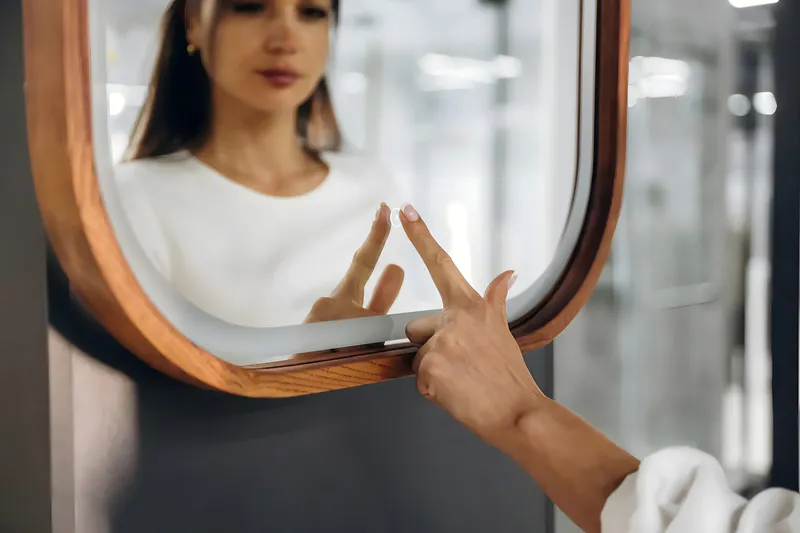
5. Retail hidden-screen and product reveal displays
Retail displays use two-way mirrors for a different reason. The goal is often not to create a normal mirror, but to create a reveal effect.
A product display may look like a reflective panel until lights or a screen behind it turn on. Then text, video, a logo, or the product itself appears through the surface. This is common in cosmetics displays, jewelry showcases, promotional boxes, luxury packaging, and interactive shop fixtures.
For these projects, acrylic has real advantages. It is lighter than glass, easier to cut into non-standard shapes, and safer for displays that may be moved, shipped, or rebuilt between campaigns.
The risk is choosing too much reflectance. If the front surface looks beautiful but the screen behind it cannot overcome the coating, the display fails. For reveal displays, we normally want to know the brightness of the screen or light source behind the mirror. A 70/30 mirror may look premium when it is off, but a 50/50 or 60/40 sheet may reveal the content more clearly.
We often encounter customers who only describe their needs but do not provide us with specific instructions. This situation often leads to some deviations during the actual sample-making process. When customers test the samples, it is not that they cannot be used, but they always feel that there are oversights in the details. In order to deal with the cost losses caused by this situation, we are currently more strict with customization for such requirements. Before actually carrying out production and sample-making, there will be more issues that need to be confirmed.
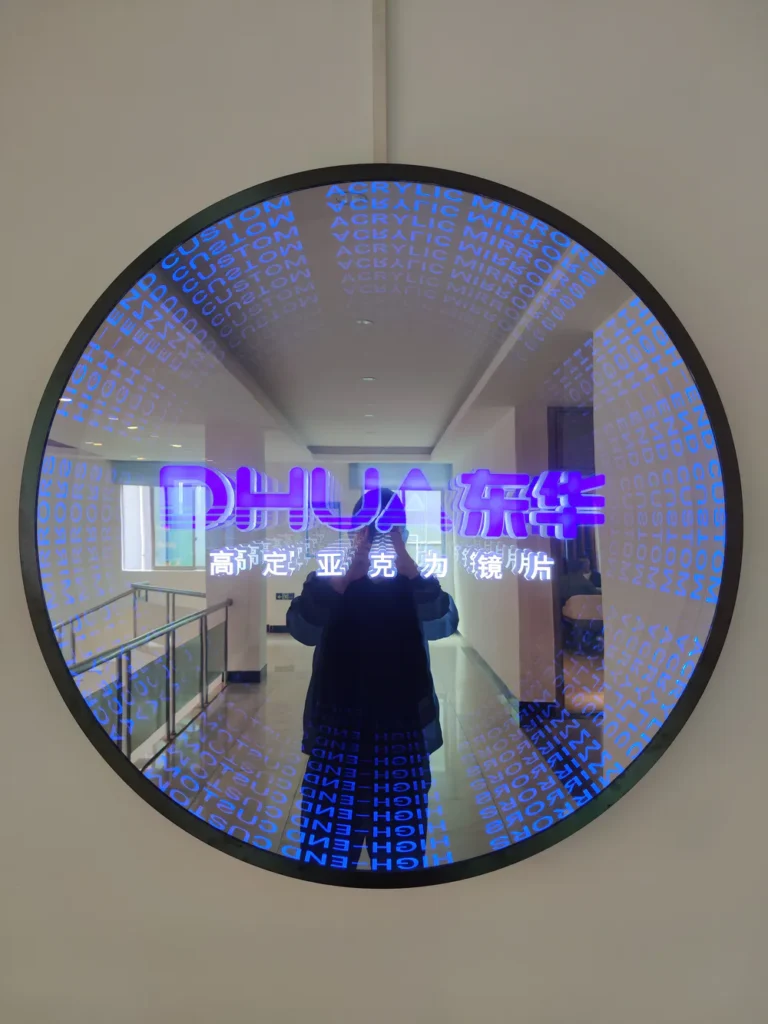
6. Infinity mirror lights and tunnel-effect products
Infinity mirrors use a two-way mirror in front, a regular mirror at the back, and lights between them. The light bounces back and forth between the two reflective surfaces, creating the impression of a deep tunnel.
This is a very suitable use for acrylic two-way mirror, especially in small and medium sizes. The panels are usually flat, the light source is strong, and the product does not require the same reflection accuracy as a vanity mirror or observation window.
We see this type of request often for LED tunnel lights, gift items, decorative wall pieces, event props, and small display products. In many cases, the front two-way acrylic sheet can be laser cut to size, shaped around the housing, or supplied with a colored tint to match the design.
The ratio changes the final look. More reflectance gives a stronger mirror face and a deeper black appearance when the lights are off. More transmission makes the LEDs brighter and more visible. There is no universal best ratio; it depends on the design.
The sample stage matters here. A small change in LED brightness, spacing, mirror distance, or front ratio can change the effect noticeably. For infinity products, we would rather test a small sample than guess from a drawing.
Infinity mirrors are one of the projects we have worked with the most, and we have considerable experience with them. We even have a large infinity mirror with our company logo on it in our office area.
7. Museum, exhibition, and interactive installations
Museums and exhibitions use two-way mirrors for hidden screens, changing displays, visitor-triggered reveal effects, interactive information panels, and illusion-based installations.
These projects usually care about the visitor experience more than the mirror as a standalone product. A surface might need to look reflective when idle, become transparent when activated, and then return to a mirror state when the display turns off.
Acrylic can work well for temporary exhibitions, portable display structures, and installations where weight and breakage are concerns. Glass may be better for permanent museum installations, large panels, or image-critical displays where optical flatness is part of the experience.
The question we would ask is not “Do you need a two-way mirror?”
It is: “What should the visitor see before, during, and after the effect?”
That answer decides the ratio, tint, material, and lighting plan.
Performance, camera, and optical-effect uses
8. Pepper’s Ghost stage and magic effects
Pepper’s Ghost is one of the oldest and most recognizable mirror-based illusion effects. It uses an angled transparent or partially reflective surface to combine a visible scene with a reflected hidden scene. COMSOL’s ray-optics explanation of Pepper’s Ghost describes the classic setup: a glass sheet is placed at an angle between the audience-facing stage and a hidden room, and lighting changes make the reflected “ghost” appear or disappear.
This is related to two-way mirrors, but it is not always the same product.
For some Pepper’s Ghost setups, clear glass, clear acrylic, or specialized transparent film is used rather than a standard two-way mirror sheet. A semi-reflective sheet can strengthen the reflected image, but it can also reduce transparency and make the panel more visible to the audience. That may or may not be acceptable.
For small props, display boxes, Halloween effects, retail windows, museum cases, and lightweight installations, acrylic can be useful. It is easy to cut, safer than glass, and easier to support in small structures.
For large stage work, permanent attractions, professional projection effects, or installations where the illusion must stay invisible under strong lighting, glass or specialized film systems are usually the better answer.
The key to this type of requirement depends on the specific effect desired. Based on industry experience, this type of requirement is actually more suitable for a glass two-way mirror; a two-way mirror made of acrylic, which is a plastic material, is not suitable. Angle, lighting, background, line of sight, and the concealed scene are the main factors.
9. Teleprompters and camera rigs
Teleprompters also use a partially reflective surface, but this is a category where buyers should be careful.
A teleprompter places text on a screen so the presenter sees the reflected script, while the camera records through the mirror. The surface is usually positioned at an angle in front of the lens. Professional teleprompters normally use optical beam splitter glass rather than ordinary two-way acrylic mirror.
TwoWayMirrors.com explains that teleprompter mirror glass, also known as beam splitter glass, reflects text while allowing the camera to record through it; the back side often uses an anti-reflective coating to prevent ghosting or double images. That anti-reflective back side is the part many hobby buyers overlook.
Acrylic two-way mirror can work for hobby teleprompters, school projects, small prototypes, or non-critical camera rigs. It is light and easy to cut. But we would not present it as the best material for professional video production.
If the camera is recording through the sheet, optical quality matters. Any waviness, tint, ghost reflection, or surface scratch can become visible in the footage. For professional filming, livestreaming, broadcast setups, and close camera work, beam splitter glass is usually the correct choice.
10. Photography, video, and creative studio effects
Two-way mirrors are also used in photography and video for creative reflections, hidden-camera angles, overlay effects, product shots, and experimental compositions.
These are usually small-format uses, which makes acrylic more practical. A photographer may not need a perfect architectural mirror; they may need a lightweight reflective panel that can be clamped, angled, moved, or cut into a specific shape.
Acrylic two-way mirror can work well when the camera is not recording through the sheet in a critical way, or when the distortion is part of the visual effect. It is also useful for test rigs where the final concept is still being developed.
For final image capture through the mirror surface, glass becomes safer. The camera is less forgiving than the human eye. A small tint shift or second reflection that is barely noticeable in person can become obvious in a high-resolution image.
This is a good example of how the same material can be right for one version of an application and wrong for another. Acrylic is good for creative exploration, props, and lightweight setups. It does not provide better assistance for camera work with strict optical requirements.
Which uses are best for acrylic two-way mirror?
Acrylic two-way mirror is strongest where the panel is small to moderate in size, the application benefits from light weight or shatter resistance, and the optical tolerance does not need to match glass.
Good fits include:
- DIY smart mirrors
- Small retail reveal displays
- Infinity mirror lights
- Gift boxes and LED tunnel products
- Event props
- Portable exhibition elements
- Small museum displays
- Creative photography props
- Prototype teleprompter or camera rigs
- Temporary observation or training panels at modest sizes
Use caution with:
- Large observation rooms
- Permanent research facilities
- Professional teleprompters
- Large retail installations
- Stage-scale Pepper’s Ghost effects
- Any use where the viewer stands close to a large panel
- Any use involving privacy-sensitive spaces
Choose glass or specialized optical material when the job requires a large flat panel, high optical clarity, camera-through-glass performance, or permanent professional installation.
This is not because acrylic is a poor material. It is because acrylic solves a different set of problems. It is light, safe, workable, and cost-effective. It is not the flattest or most optically precise option at large sizes.
What to confirm before ordering
Based on our experience, orders for two-way mirrors should not start only with the length and width. Some necessary information is best synchronized with the supplier first to avoid mistakes. The drawings tell us the dimensions, while the application scenario determines the specifications.
Before ordering, confirm these points with the supplier:
Application. A smart mirror, observation room, infinity light, teleprompter, and Pepper’s Ghost effect may all use partial reflection, but they do not need the same sheet.
Reflection/transmission ratio. Do you want the surface to look more like a mirror, or do you need more light to pass through from behind?
Lighting setup. Which side is bright? Which side is dark? Is the lighting controlled, or will daylight change the effect during use?
Visible size. Acrylic is more practical at smaller sizes. For large panels, ask whether glass would be better before committing to acrylic.
Material choice. Acrylic is better for lightweight, shatter-resistant, custom-cut, and portable applications. Glass is better for large, flat, optical-critical, and permanent professional uses.
Frame and mounting method. Two-way acrylic usually needs edge support rather than full back bonding, because the back side must remain open for light transmission. Our two-way mirror installation guide covers the practical mounting details.
Edge protection. Two-way coatings are thinner and more sensitive than standard mirror coatings. Exposed edges should be protected from moisture and rough handling.
Privacy and consent. If the mirror allows observation of people, confirm the legal and ethical requirements before specifying the product.
For uncertain projects, a sample is often the cheapest serious answer. A small test panel under the real lighting conditions will tell you more than a long email exchange about ratios.