
Ask most people what a convex mirror is for and they’ll describe the one at the end of a driveway — the round mirror on a pole that lets you see oncoming traffic before you pull out. That’s a genuine and common use, but it’s a small slice of what the product actually does. We sell convex mirrors into far more applications than driveway safety, and a fair number of customers arrive looking for a solution to a problem without realizing a convex mirror is the obvious answer.
This is a tour through fifteen of those applications. Some are safety-related, some are security-related, some are just practical problem-solving. The point isn’t to be exhaustive — it’s to show the range, because once you understand what a convex mirror fundamentally does (compress a wide field of view into a single glance from a fixed position), you start seeing situations where it applies everywhere.
If you want the technical background on sizing, materials, and how to specify one, our acrylic convex mirror buying guide covers that in detail. This post is about the where and why rather than the how.
Safety and Collision Prevention
1. Warehouse aisle intersections
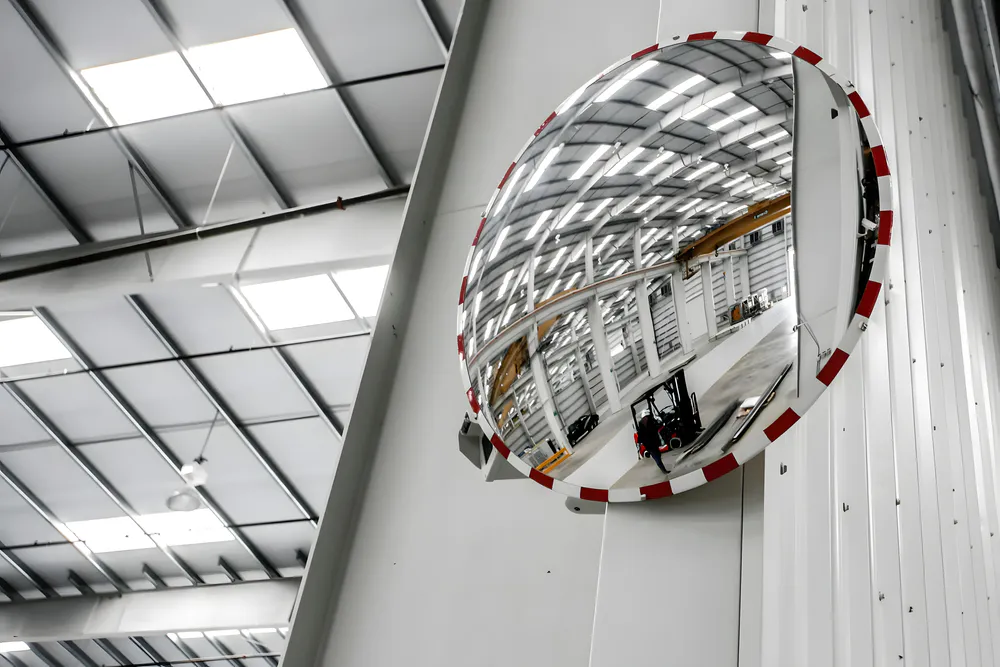
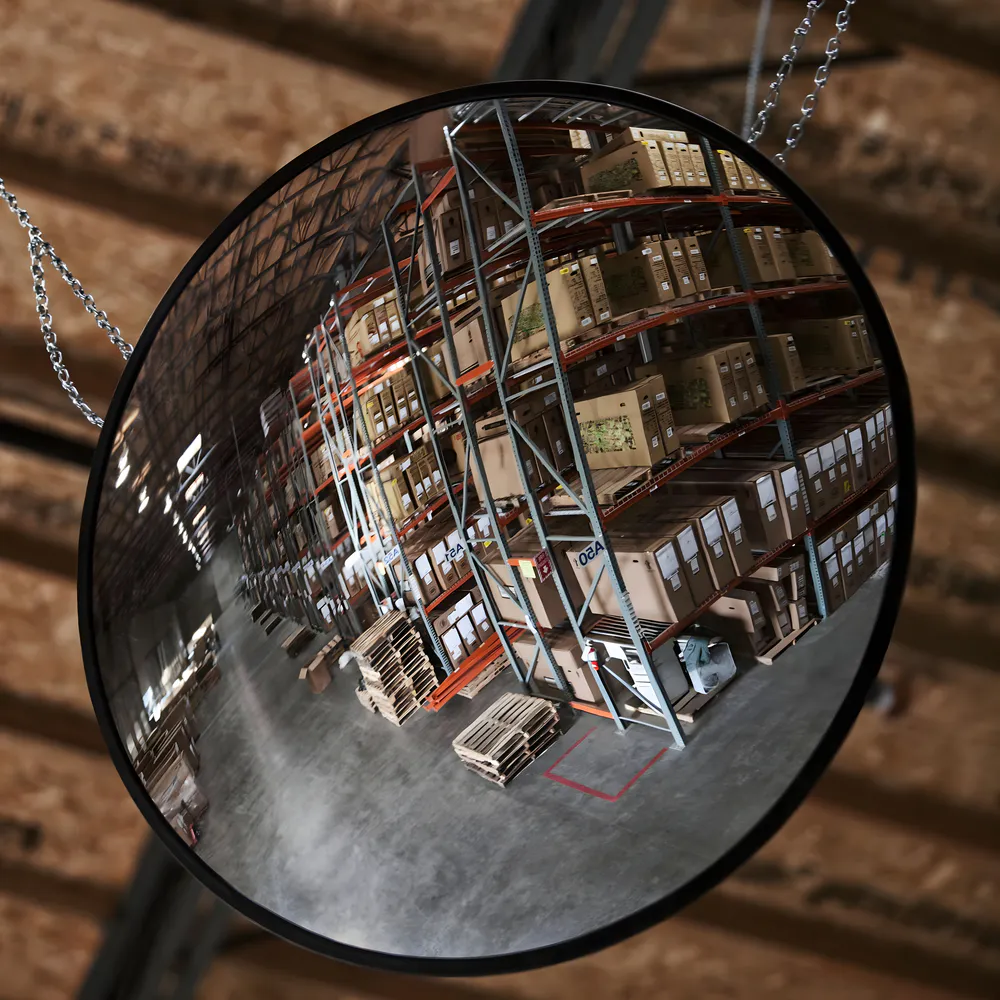
This is probably the single largest commercial application. Warehouses are full of blind corners where forklifts, pallet jacks, and pedestrians cross paths, and the consequences of a collision in that environment are serious. A convex mirror at the end of an aisle lets a forklift operator see cross-traffic before entering the intersection.
Industrial safety writers have noted that this approach is now standard practice — a piece in Manufacturing.net on blind-spot accident prevention describes convex mirrors and domes as “already widely accepted in many workplace safety programs,” valued specifically because they’re simple, affordable, and customizable to a facility’s layout.
For genuinely multi-directional intersections, a dome mirror is often the better choice — we cover that distinction in our dome mirror vs convex mirror guide — but for the common case of one aisle meeting another, a flat-mounted convex does the job.
Almost all warehouses are highly dynamic areas for factories or enterprises, and using convex mirrors in such scenarios is of great significance for safety.
2. Loading docks
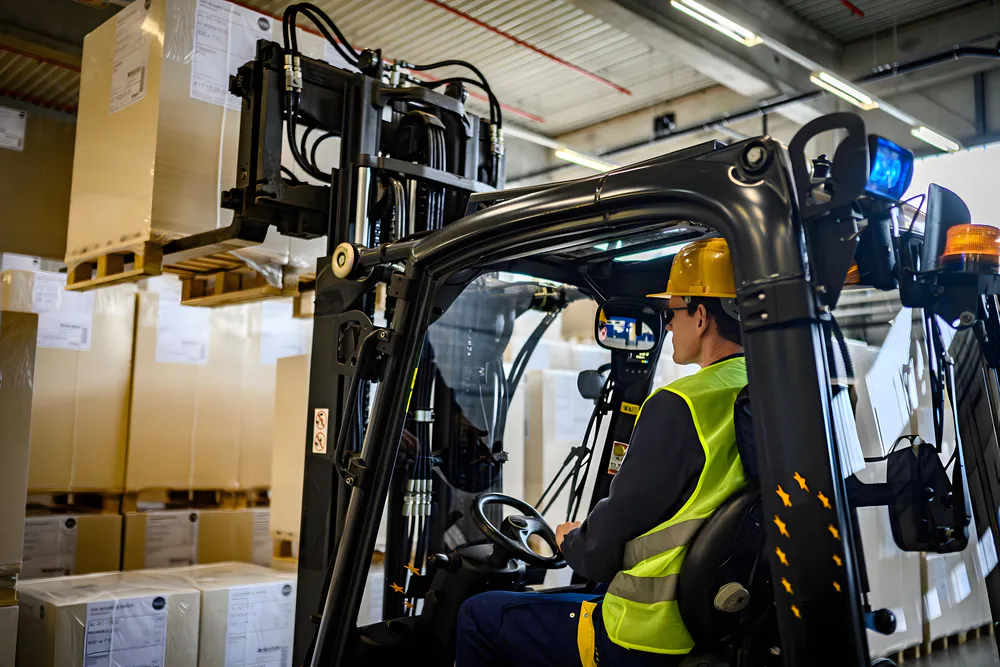
Loading dock areas combine slow-moving heavy vehicles, pedestrians, and frequent reversing — a difficult mix for visibility. One detail worth knowing: according to safety equipment supplier commentary reported in EHS Today, a standard flat mirror tends to “blend into the background” when a forklift exits a trailer, which is why convex mirrors with high-visibility safety borders are preferred for dock environments — the border draws the eye to the mirror itself. This is a small specification detail with a real safety consequence.
The loading and unloading dock is, to some extent, like a “warehouse” in another place. The difference is that the number of forklifts in such a place will definitely be greater than in a warehouse. Therefore, the application of convex mirrors on forklifts is also equally important.
3. Blind driveways and rural road exits
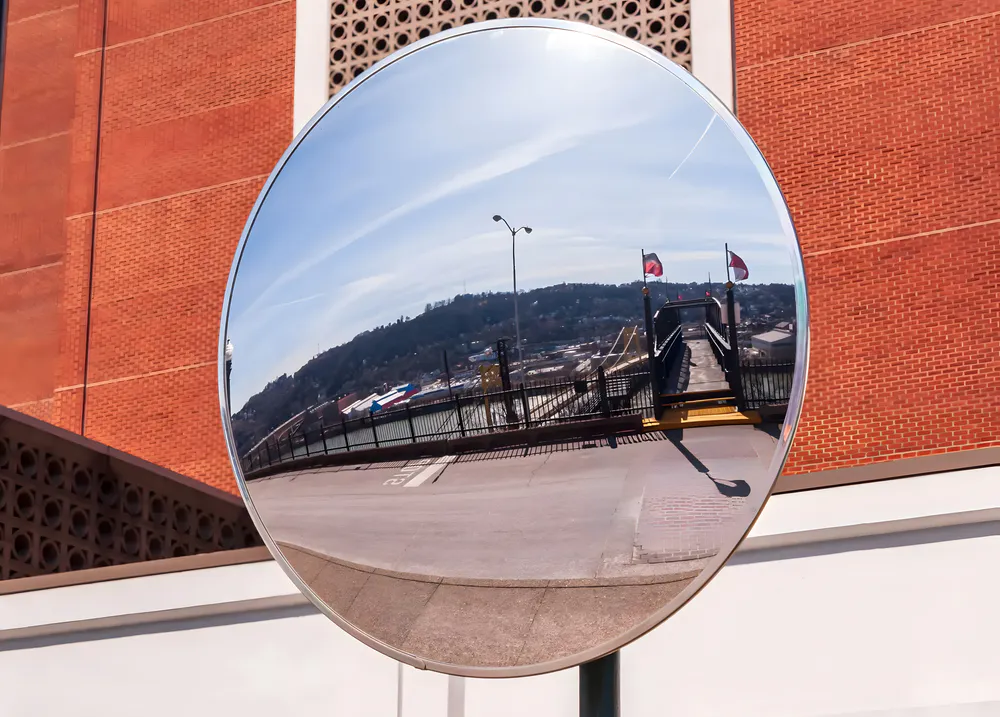
The classic use, and still a major one. Where a driveway meets a road at a bad angle, or where vegetation, walls, or terrain block the sightline, a convex mirror mounted across the road gives the driver a view of oncoming traffic. We covered the sizing math for this in the convex buying guide — the short version is roughly one inch of mirror diameter per foot of viewing distance, with traffic situations warranting a slight oversizing for extra reaction time.
The loading and unloading dock is, to some extent, like a “warehouse” in another place. The difference is that the number of forklifts in such a place will definitely be greater than in a warehouse.
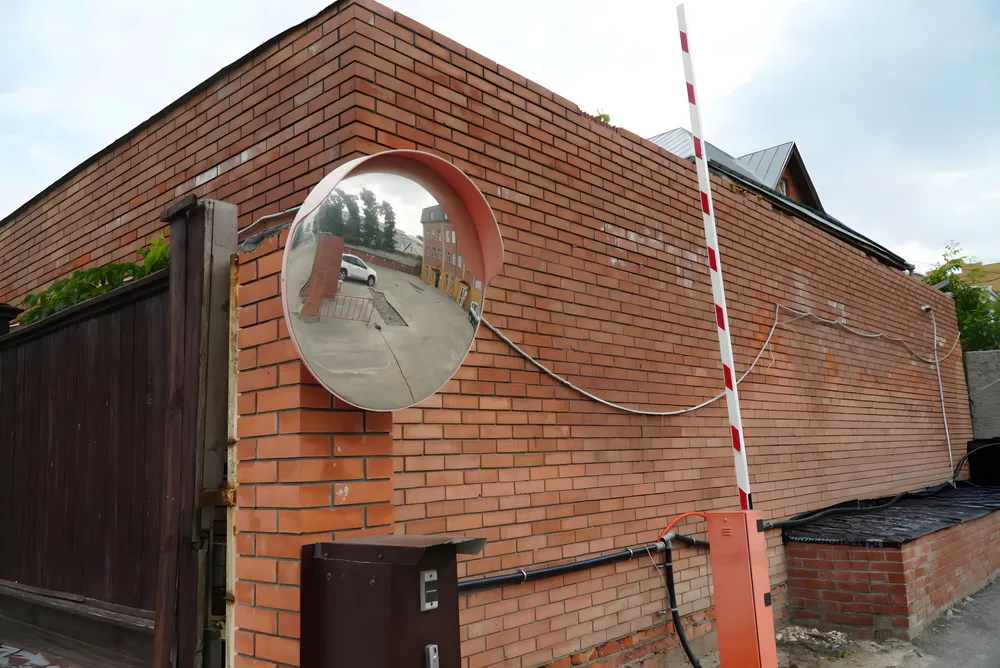
4. Parking garage corners and ramps
Multi-level parking structures are full of tight blind corners, especially on the ramps between levels. Convex mirrors at these corners let drivers see whether a vehicle or pedestrian is approaching from the cross direction. The lightweight, shatter-resistant nature of acrylic matters here — these mirrors occasionally get clipped by vehicles, and a glass mirror failing in a parking structure creates a hazard for everyone below.
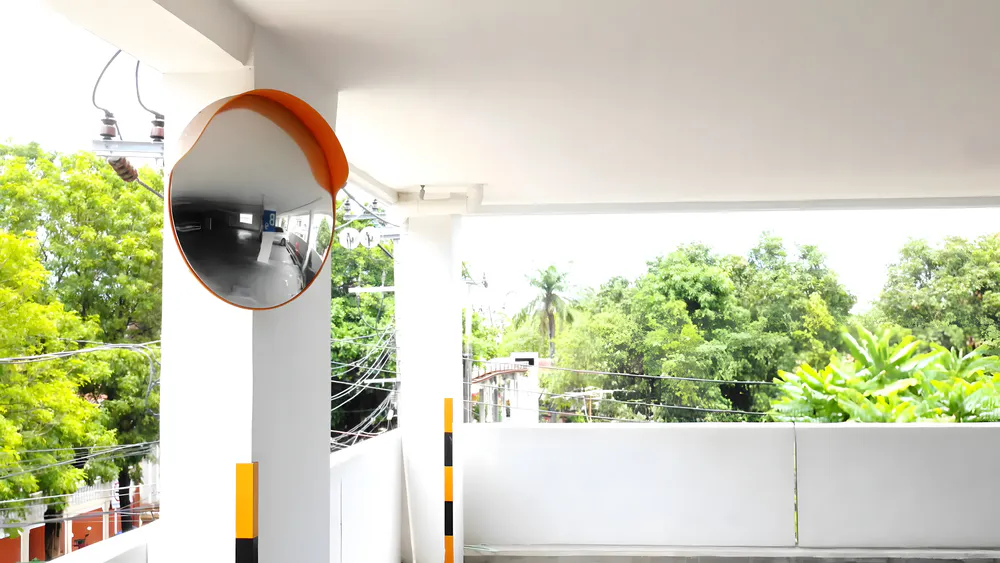
5. Hospital and care facility corridors
Healthcare environments have a specific version of the blind-corner problem: staff moving quickly with carts, gurneys, and equipment, often around corners where a collision could injure a patient. Convex mirrors at corridor junctions reduce these near-misses. The shatter-resistance is non-negotiable in this setting — a broken glass mirror in a patient care environment is unacceptable, which is part of the broader safety case we made in our shatterproof acrylic mirrors guide.
It is important to clarify that using a convex mirror in such situations is not common. This is explained only as an extension based on the safety issues that this type of mirror can help prevent.
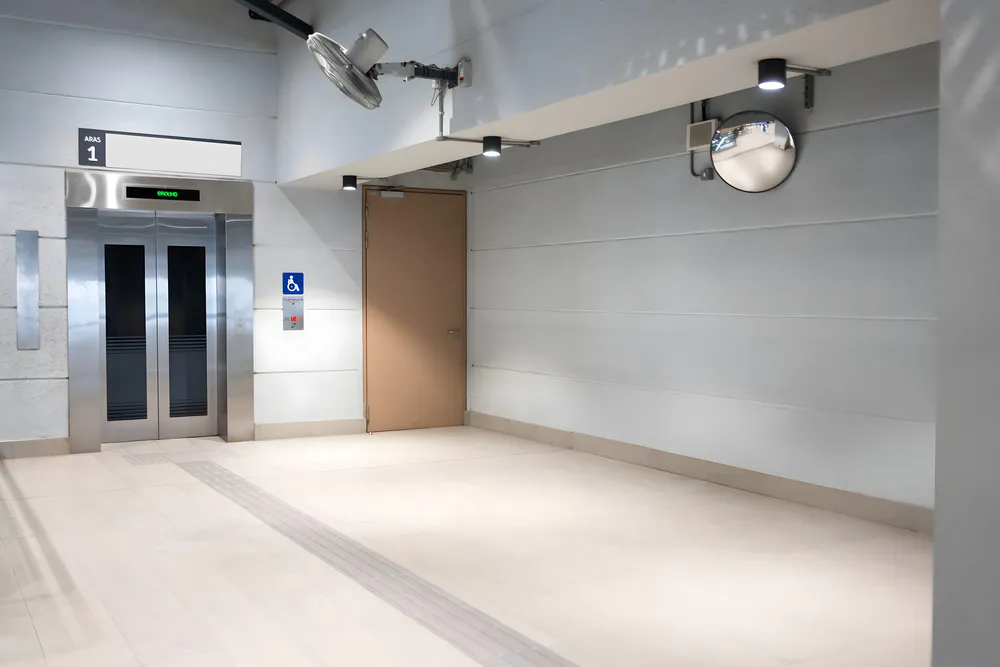
6. School hallway intersections
Schools deal with sudden, high-volume foot traffic in bursts — and students rounding corners at speed don’t anticipate collisions the way adults do. Convex mirrors at hallway intersections give both students and staff a moment of warning. Safety and durability both drive the acrylic specification here for the same reasons they do in healthcare.
Security and Surveillance
7. Retail loss prevention
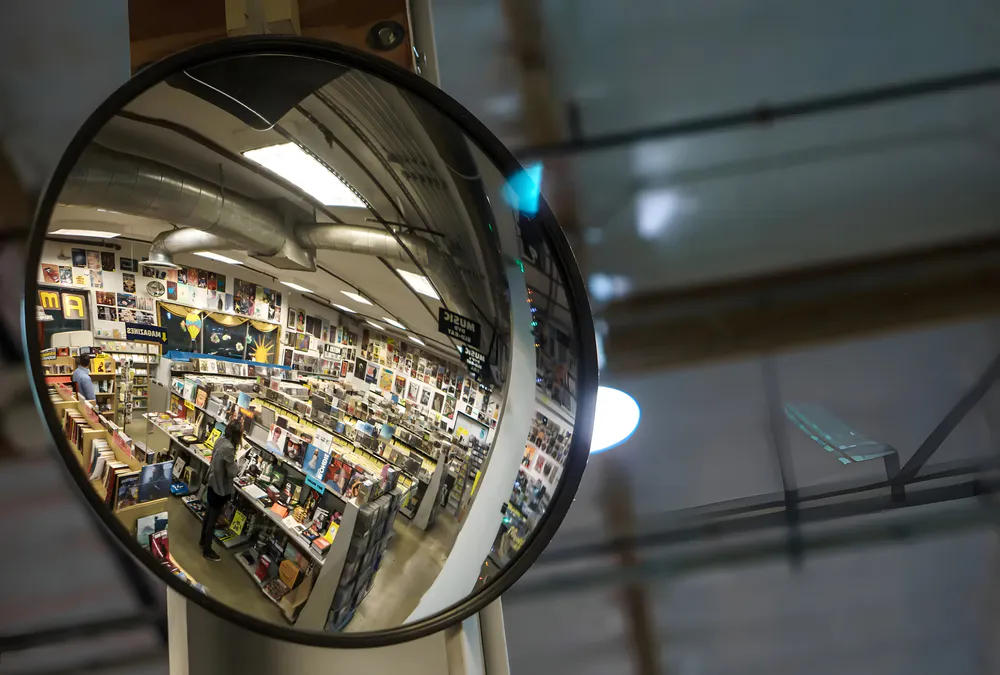
Convex mirrors have been a retail security staple for decades. Mounted high in a corner, a convex mirror lets a single staff member monitor multiple aisles and the spaces behind tall shelving.
As one indoor mirror specialist, DuraVision, puts it, convex mirrors are “probably the most cost effective and powerful deterrent available against shoplifting” — they work both as an actual monitoring tool and as a visible signal to potential shoplifters that the space is watched. They don’t replace cameras, but they’re a fraction of the cost and they work without electricity.
8. Behind retail counters and cash registers
A smaller-scale security use: a convex mirror positioned so the cashier can see the area behind them, or so a customer service position can monitor an entrance they’d otherwise have their back to. This is a low-cost fix for a specific blind spot that comes up constantly in small retail. Unlike using convex mirrors for security throughout the entire store, in such places they are used more to monitor the actions of employees.
9. Shared residential building entrances
Apartment lobbies, shared mailroom areas, and the entry points of multi-unit buildings often have blind corners where residents can’t see who’s around the corner before they commit to walking into a space. A discreet convex mirror improves both the actual security and the sense of security in these shared spaces. Usually, such mirrors are only needed where there are obvious blind spots in and out of the field of view for the residential building in question.

10. ATM and self-service kiosk areas
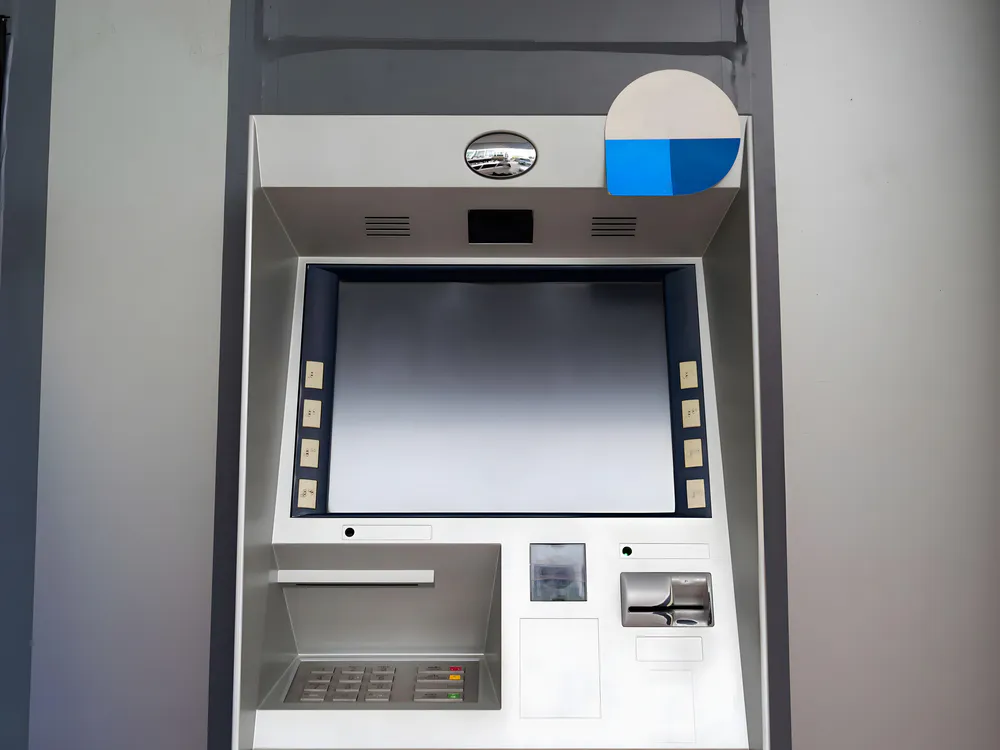
People using an ATM are, by necessity, focused on the machine and have their back to their surroundings. A convex mirror mounted above or beside an ATM lets the user see behind them without turning around — a meaningful personal-security improvement in an inherently vulnerable moment.
Vehicle and Transportation Uses
11. Blind-spot mirrors on vehicles
Small stick-on convex mirrors attached to a car’s side mirrors expand the rear-quarter view and help cover the blind spot that flat side mirrors miss. These are a different physical product from the wall- and pole-mounted mirrors — small, adhesive-backed, sold in pairs — but the optical principle is identical. For larger vehicles, the case is even stronger, which is why trucks and buses run multiple convex mirrors as standard equipment.

12. Child observation mirrors for car seats
A meaningful product category in its own right: a convex mirror that lets a driver keep visual contact with a rear-facing infant. The wide-angle curve captures the whole child-seat area, and the acrylic construction is essentially mandatory — a glass mirror near a child in a vehicle is a safety risk no manufacturer will take. We covered this product and its installation considerations in the convex buying guide.

13. Bicycle and motorcycle helmet mirrors
A small convex mirror mounted to a helmet or handlebar gives cyclists and motorcyclists a rearward view without the head-turn that costs them their forward attention. The compact convex shape packs a usefully wide field of view into a mirror small enough to mount on a helmet edge.

Everyday and Specialty Uses
14. Workshop and machine-shop visibility
In a workshop, a convex mirror lets you see around the side of a machine, check what’s happening at a doorway while your hands are occupied, or keep an eye on a second work area from a fixed position. Small convex mirrors solve a surprising number of these little line-of-sight problems in a working shop.
This is related to the size and operating orientation of the equipment. Large equipment is usually more likely to have this kind of convex mirror, and if the equipment has a continuous operation line, it generally will also have such mirrors.
15. Decorative and architectural use
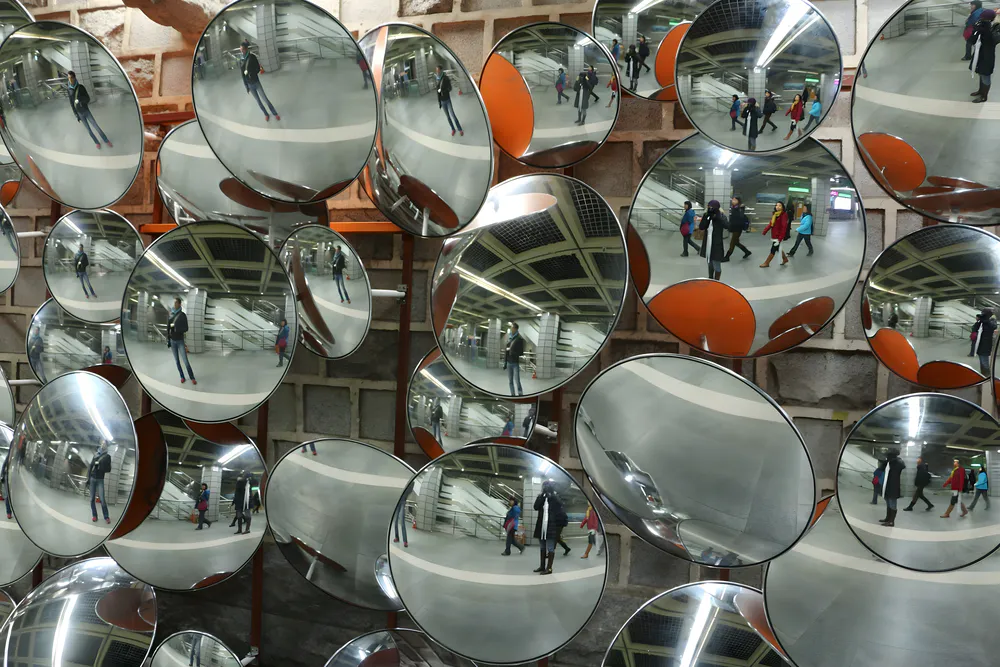
Not every convex mirror is a safety device. The convex curve produces a distinctive compressed reflection that has genuine aesthetic appeal — it’s been used in interior design for centuries, going back to the convex “bullseye” mirrors of the 18th century. Modern decorative versions, including the small colored bubble mirrors used in clusters as wall installations, treat the convex distortion as a visual feature rather than a functional one. The same optical behavior that makes a convex mirror useful for warehouse safety makes it interesting to look at on a living room wall. In addition to bubble mirrors, directly placing multiple convex mirrors together to form a decorative style is also common.
The Common Thread
What ties these fifteen applications together is a single optical property: a convex mirror lets one person, from one fixed position, take in a wider view than their eyes alone could manage. Whether that view is a warehouse intersection, a retail floor, the road past a blind driveway, or the back seat of a car, the underlying job is the same.
That’s also why specification matters more than buyers sometimes expect. A convex mirror sized for a 12-foot viewing distance won’t perform at 40 feet; an indoor-rated mirror won’t survive an outdoor mounting; a flat-mounted convex can’t do the multi-directional job that a dome mirror is built for. Matching the mirror to the specific situation is the whole game. The optical principle is simple and reliable — the mistakes happen in specification, not in the product.
If one of these fifteen uses matches a problem you’re trying to solve, the convex mirror buying guide has the practical detail on sizing and materials, and our broader curved mirror overview covers how convex mirrors compare to concave and dome variants if you’re not certain which type you need. The convex mirrors product range covers both the mirrors-by-diameter and the finished products — traffic mirrors, bubble mirrors, and car-seat observation mirrors — and the dome mirrors range covers the multi-directional applications where a flat convex isn’t enough.
Convex mirrors are one of those products that, once you understand what they do, you start noticing everywhere — and start finding uses for in places you hadn’t considered.