
If you’ve searched for “anti-fog acrylic mirror” recently, you’ve probably seen plenty of pages selling the idea that anti-fog acrylic mirrors are an option for bathroom vanities, shower walls, gym installations, and other large mirror applications. The marketing language is consistent: shatterproof, lightweight, fog-resistant, ideal for humid environments. The implication is that you can replace a fogged-up glass bathroom mirror with an anti-fog acrylic equivalent and solve two problems at once.
In practice, this isn’t how the product works. Anti-fog acrylic mirrors are a small-format product — typically around 30cm and capped at around 60cm in any dimension before the inherent size-distortion limitation of acrylic makes them unsuitable. They genuinely solve a small-mirror fogging problem well, in the contexts where small mirrors are what’s wanted. They are not a substitute for a bathroom vanity mirror, a shower wall mirror, or a gym mirror. Anyone arriving at this product expecting a large-format fog-free replacement for those applications needs to know upfront that the material can’t do that.
For this, we’ll cover how anti-fog coatings actually work, why the size limit exists, the legitimate applications where anti-fog acrylic mirrors do their job well, and what to specify instead for the bathroom and gym installations where the wrong product gets ordered most often.
How Anti-Fog Coatings Work
Fog on a mirror isn’t really fog — it’s condensation. When warm, moist air contacts a cooler mirror surface, water vapor in the air condenses out as tiny droplets on the surface. Those droplets act as miniature lenses that scatter incoming light in random directions, which is what makes the surface appear cloudy. The mirror underneath is unchanged; the visibility loss is entirely about the way light interacts with the layer of water droplets.
Anti-fog coatings prevent this in one of two ways. The more common approach is a hydrophilic (water-attracting) coating that reduces the surface tension of water on the mirror, so condensation forms as a continuous thin film rather than as discrete droplets. As one technical reference on the chemistry explains, the coating changes how water molecules interact with the surface — instead of beading up, water spreads into a layer thin enough that light passes through with minimal scattering, and the mirror remains visually clear.
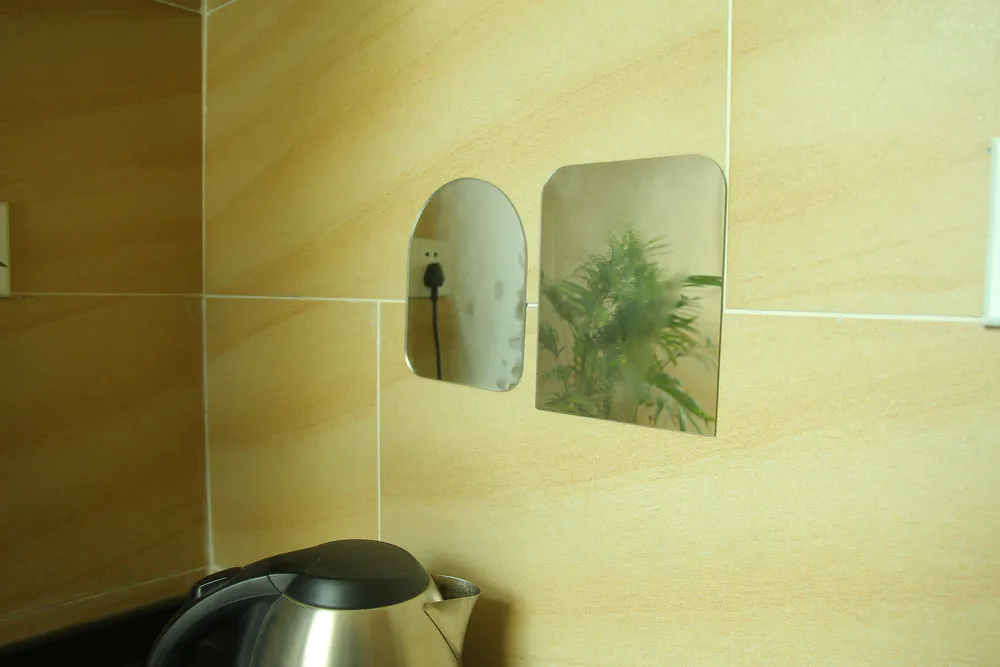
Our anti-fog mirror uses a hydrophilic coating. We tried an anti-fog experiment using water vapor, and the result was satisfactory. The picture below is the result of our experiment (the left is an ordinary mirror, the right is our anti-fog mirror.)
The other approach is active heating. Electric anti-fog mirrors use a thin transparent conductive layer behind the glass to keep the mirror surface slightly warmer than the surrounding air, which prevents condensation from forming in the first place. This is the technology in higher-end heated bathroom mirrors. It works well but requires electrical installation and a continuous power draw, which is why most consumer anti-fog products use the coating approach instead.
Coating-based anti-fog treatments aren’t permanent. As surface coating specialists generally note, hydrophilic coatings degrade over time through normal cleaning, contact with surfactants in soap and bath products, and gradual wear. A well-formulated coating on a quality mirror should last several years before noticeable degradation; lower-quality coatings can fail within months. The specifics depend on the formulation, the application method, and how the mirror is used. Some coatings can be reapplied; others can’t.
For acrylic mirrors specifically, the coating chemistry has to account for the substrate. Acrylic is softer than glass and more sensitive to certain solvents, so the anti-fog formulation has to bond to the surface without damaging it. According to coating specialists ACC Coatings, topical anti-fog coatings for plastic substrates create a hydrophilic layer that bonds to the plastic without compromising the underlying material — but the bond is generally less durable on acrylic than the equivalent treatment on glass.
Why the Size Limit Matters
This is the part most product pages skip, and it’s the most important thing to understand before buying.
Anti-fog acrylic mirrors are subject to the same fundamental limitation as any other acrylic mirror: above a certain size, the natural flexibility of the material produces visible surface waviness in the reflection. We’ve covered this limitation in nearly every post in this series because it determines so much of what acrylic mirrors can and can’t do — the introduction to acrylic mirrors explains the underlying material reason, and the acrylic mirror thickness guide covers why even thicker stock only mitigates the problem rather than eliminating it.
For anti-fog applications, this size limit becomes a hard constraint. The coating itself is fine at any size — there’s no chemistry reason an anti-fog treatment can’t be applied to a 1-meter sheet. But the underlying acrylic mirror becomes optically unusable as a serious viewing mirror well before that size, regardless of any surface treatment. A 100cm anti-fog acrylic mirror in a bathroom would show the same wavy distortion as any other 100cm acrylic mirror — the anti-fog property would work, but you wouldn’t want to use the result as your vanity mirror.
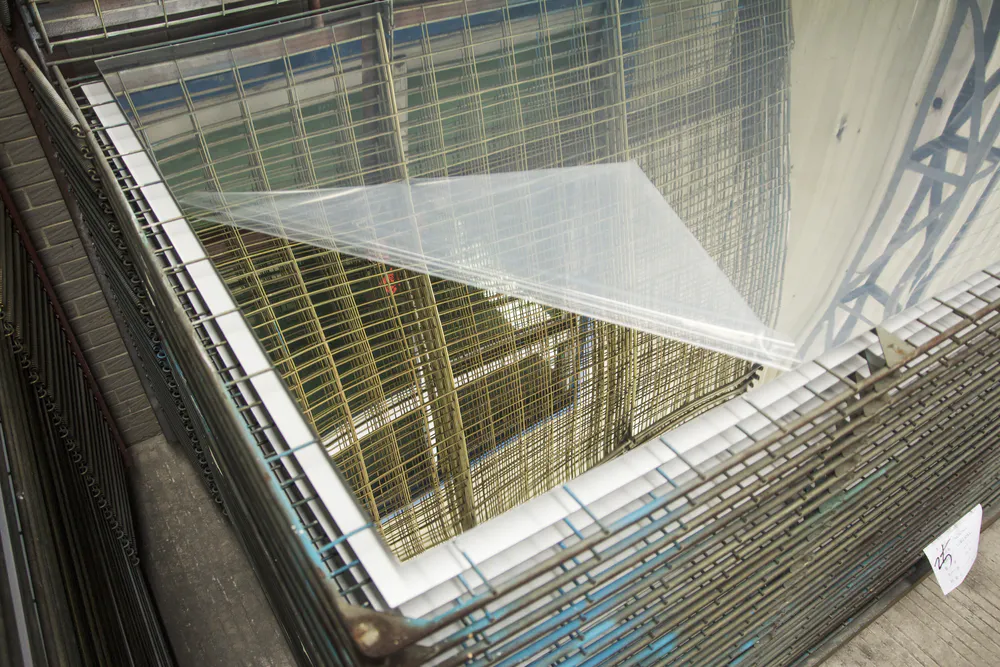
The picture below shows the acrylic mirror sheets we produce. The size of each single sheet is not standard but custom-made, and all sizes already exceed 100 cm. On close inspection you will find some distortion on the mirror surface.
This is why we cap anti-fog acrylic mirrors at around 60cm and produce most of them at around 30cm. The product genuinely works at those sizes — the optical quality holds up at typical close viewing distances, and the anti-fog treatment delivers what it promises. Going larger is technically possible but produces a mirror nobody actually wants to use.
For large-format mirror applications in humid environments — bathroom vanities, shower-enclosed wall mirrors, gym wall mirrors, dance studio installations — the practical options are glass with a heated backing, glass with an anti-fog film applied, or a glass vanity mirror with the user accepting that occasional fogging is the trade-off for the reflection quality glass provides. Acrylic, with or without anti-fog treatment, isn’t the right material for these applications.
Where Anti-Fog Acrylic Mirrors Actually Work
Of course, it does not mean that the product is useless. There’s a meaningful set of applications where a small-format anti-fog acrylic mirror is the right specification, and those applications are why the product exists.
The pattern across the legitimate use cases: a situation where a small mirror is needed, fogging would be a real problem, and the safety or weight advantages of acrylic genuinely matter. Some of the natural fits:
Handheld and personal-care mirrors used in steamy environments
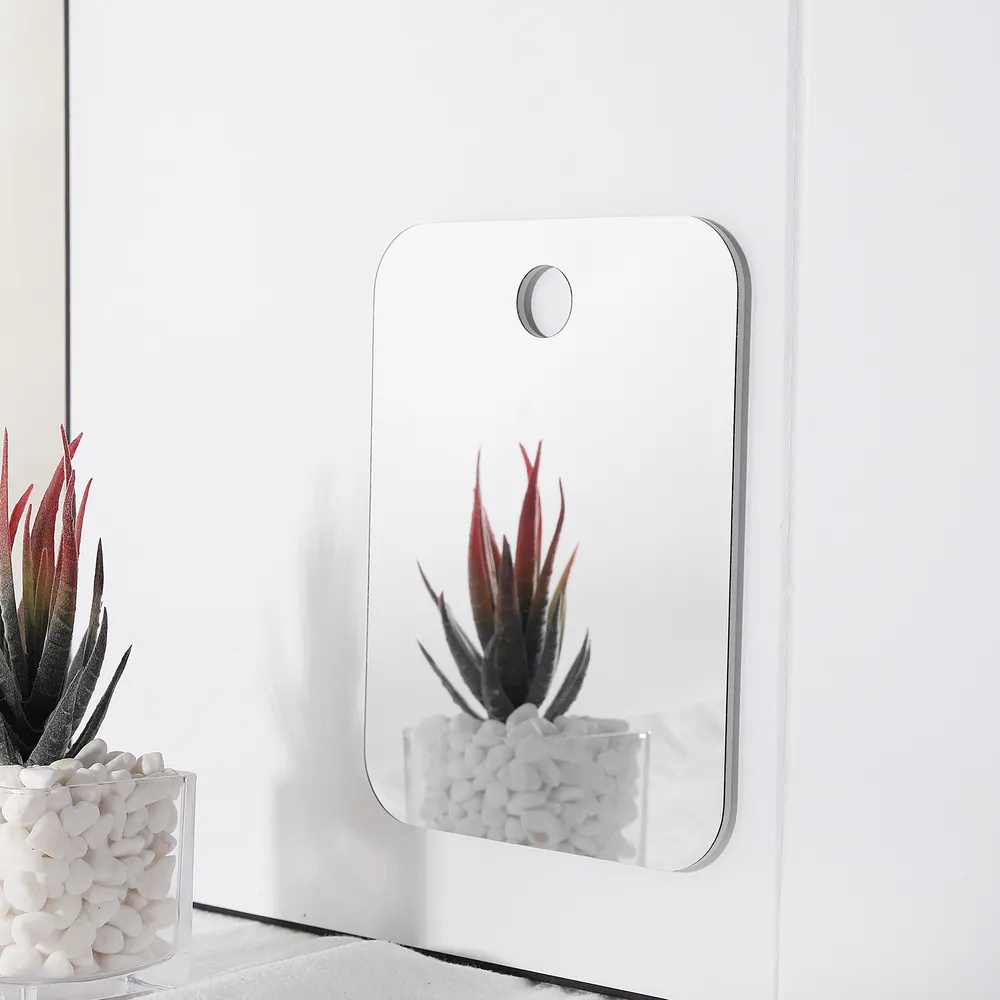
A small mirror you bring into a shower or a steamy bathroom area for shaving, applying makeup, or other close-up tasks. The size is naturally small (typically 15–25cm at the largest), the user is close to the surface so the size limit isn’t tested, and a fogged mirror in this moment is more than just inconvenient. The shatter-resistant nature of acrylic also matters — a glass handheld mirror in a wet bathroom is a known injury risk.
Children’s and travel mirrors
Similar reasoning, with the added consideration that breakage matters more in these contexts. A small acrylic anti-fog mirror in a child’s bathroom bag, a travel kit, or a dorm shower caddy combines the right size, the right impact resistance, and the right fog protection. Glass mirrors at this size and use case are common and they’re the wrong product for the situation.
Small swimming pool and spa applications
Pool decks, spa changing areas, and aquatic facility staff areas use small mirrors for various purposes, and the high-humidity environment means fogging is constant. Acrylic’s shatter resistance is essentially mandatory in any environment where people walk barefoot — a broken glass mirror near a pool is a serious cleanup and injury risk.
Industrial inspection mirrors
Small handheld inspection mirrors used in food processing facilities, sterile manufacturing environments, and similar industrial settings face both humidity and breakage concerns. Anti-fog acrylic mirrors are common in these applications precisely because the environment is hostile to both glass and untreated mirror surfaces.
Specialty equipment mounting
Some equipment — certain types of microscopes, cameras, optical instruments, and dental tools — use small mirrors as components. Where those components operate in conditions where fogging would interfere with the function, anti-fog treatment matters. The mirror sizes involved are uniformly small.
Cosmetic and compact mirrors
A small folding compact mirror with anti-fog treatment is a niche product but a real one. Travel-sized cosmetic mirrors used in hotel bathrooms, gym locker rooms, and similar steam-exposed environments benefit from both the shatter-resistance and the fog protection.
What’s consistent across these applications is the size. Small mirrors used close to the user, where the fogging problem is real and acrylic’s other properties (impact resistance, light weight, customization) add value. The product fits this category well.
What to Specify for Bathroom and Gym Installations Instead
Since this is where most of the wrong-product purchases happen, it’s worth covering what the right specifications are for the large-format humid-environment applications people often arrive at this product looking for.
For a bathroom vanity mirror, the standard specification is glass — typically silvered glass with an applied protective backing rated for humid environments. Premium installations sometimes use heated mirrors with a transparent conductive layer behind the glass that keeps the surface warm enough to prevent condensation. Mid-range solutions include glass mirrors with edge-sealed perimeters to prevent moisture intrusion behind the silvering, and entry-level solutions use ordinary mirror glass with the homeowner accepting occasional fogging. None of these are acrylic.
For a shower-enclosed wall mirror (the kind installed inside or directly facing a shower stall), the same principles apply but with higher humidity exposure. Tempered glass with anti-fog treatment is the standard premium specification. The size involved — typically anywhere from 40cm to 100cm or more — exceeds what acrylic can deliver acceptably.
For a gym wall mirror or dance studio installation, the size is the dominant factor. These installations are typically 2–4 meters in any dimension, far beyond the size limit for acrylic mirrors of any kind. Glass is the standard material despite the weight, mounting, and safety considerations, because nothing else delivers the reflection quality the application requires. Where safety concerns are paramount (commercial gyms, children’s facilities), the trade-off is sometimes resolved by using glass mirror with safety film backing — which holds shattered glass together if the mirror is broken. This isn’t acrylic, but it’s the closest the glass category gets to acrylic’s safety profile.
The conversation we sometimes have with customers looking for anti-fog acrylic for these applications is to clarify what the actual problem is. If the goal is fog prevention in a small-mirror context, anti-fog acrylic is genuinely the right answer. If the goal is fog prevention in a full-bathroom or gym context, the specification needs to change to glass-based products, and anti-fog acrylic isn’t the right starting point.
Specifications That Matter
For the legitimate small-format applications where anti-fog acrylic mirrors do work well, a few specifications are worth understanding.
The coating type affects durability. Topical applied coatings are typical for consumer-grade products and last from several months to a few years depending on use. Permanent or semi-permanent coatings — typically applied during manufacturing using plasma deposition or similar processes — can last considerably longer but cost more. For inspection mirrors, equipment components, and applications where the mirror will be in service for years, the higher-end coating is usually worth the cost premium.
The substrate thickness matters less for anti-fog mirrors than for larger applications, but it’s still relevant. For mirrors under 30cm, 3mm is the standard thickness. Thinner stock (1.5mm) is sometimes used for ultralight or curved applications, but the rigidity loss isn’t worth the weight savings for most uses.
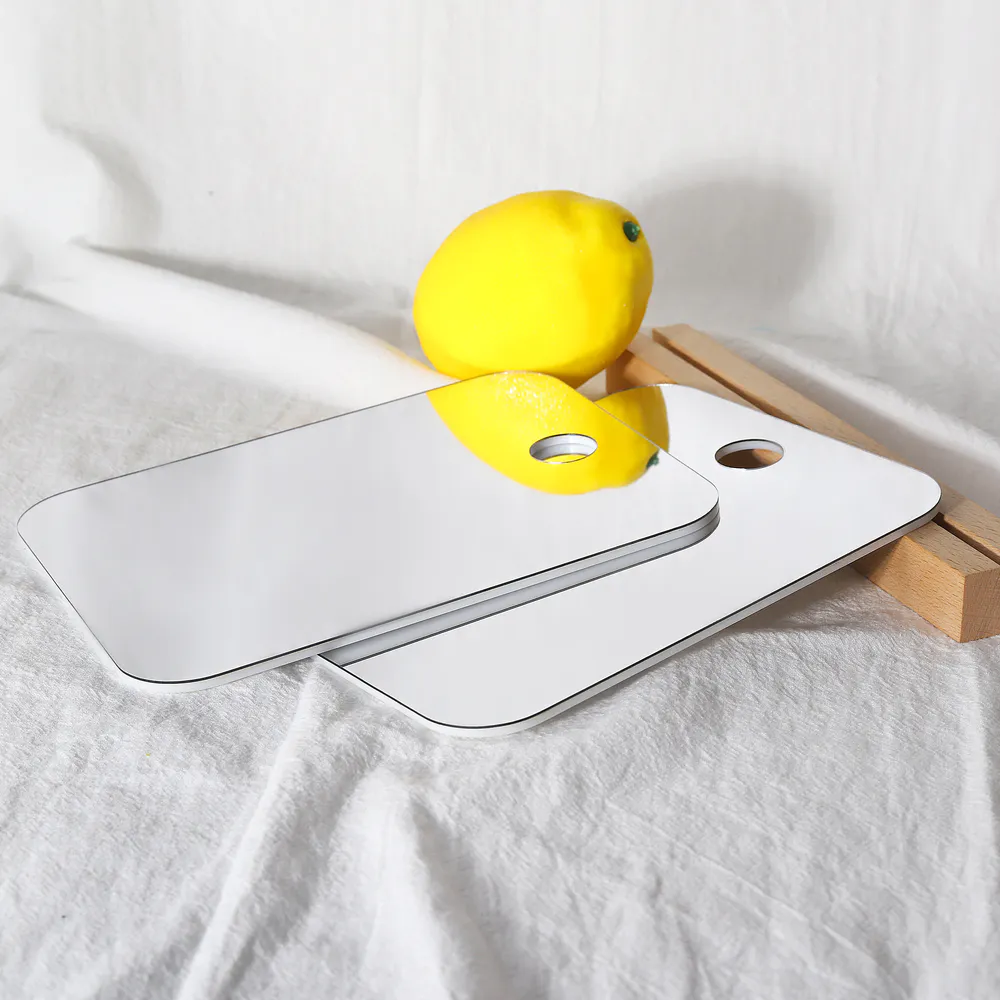
Edge treatment matters more for anti-fog mirrors than for typical acrylic mirrors because the coating chemistry can be vulnerable at exposed edges. Edge-sealed or fully-framed mirrors hold their anti-fog performance longer than mirrors with bare edges exposed to humidity.
The coating’s compatibility with cleaning products is worth confirming with the manufacturer. Some anti-fog formulations degrade quickly when exposed to standard glass cleaners or detergents. The manufacturer should specify which cleaning agents are safe; typically the answer is mild soap and water with a soft cloth, and nothing else.
Related Products
Anti-fog treatment can be combined with other features for specific applications, though these combinations are less common than the standard small-format anti-fog mirror.
Two-way mirrors with anti-fog treatment exist for specialty applications — typically security or observation installations in humid environments. The two-way coating and the anti-fog coating are applied as separate steps; the underlying optical principle of the two-way mirror is unchanged by the anti-fog addition. We covered the optics of two-way mirrors in the two-way mirrors explained post, and the same lighting requirements apply regardless of any surface treatment.
Curved acrylic mirrors with anti-fog treatment are uncommon but available for specific applications. The curve itself doesn’t interact with the anti-fog chemistry, but the surface geometry can affect how water films behave on the surface. For most curved mirror applications — covered in the broader curved mirrors guide — anti-fog isn’t standard and usually isn’t needed, since the typical use cases (traffic safety, security, decoration) don’t put the mirrors in steamy environments.
A Note on Coating Lifespan
Because this is a question we get regularly: how long does anti-fog treatment actually last in normal use?
The answer is that it depends substantially on conditions. A small anti-fog acrylic mirror used in a personal bathroom environment, cleaned carefully with appropriate products, and not subjected to harsh cleaning agents can hold its anti-fog performance for several years. The same mirror used in a commercial swimming pool environment, exposed to chlorine, cleaned aggressively, and subjected to constant humidity cycles might lose effectiveness within a year or two.
The failure mode is gradual. The coating doesn’t suddenly stop working; it loses effectiveness over time, with fog beginning to form during particularly steamy moments and the clear-time becoming progressively shorter. By the time the user notices the problem, the coating is usually well past its best performance.
For applications where consistent anti-fog performance matters over the long term, periodic replacement is the realistic plan. The mirrors themselves are inexpensive at the small sizes that work for this product, and treating them as consumable rather than permanent is consistent with how most commercial users approach them.
When to Specify Anti-Fog Acrylic
If you need a small mirror — under roughly 30cm, certainly under 60cm — in an environment where condensation would interfere with use, and where the impact resistance and light weight of acrylic also matter, anti-fog acrylic is the right product. The applications above (personal care, travel, small industrial, swimming pool deck, equipment components) are where it fits well.
If you need a larger mirror for a bathroom, shower, gym, or studio installation, anti-fog acrylic is the wrong product regardless of how the marketing positions it. The size limit is real, and no surface treatment compensates for the underlying optical problem. Specify glass-based products for those applications.
If you’re not sure which category your application falls into, the right question to ask is: at what size would the application break down if the mirror image had visible distortion? For close-up uses at small sizes, distortion is invisible and acrylic works. For full-room or full-body uses at larger sizes, distortion is unavoidable and only glass delivers the right result.
The anti-fog mirrors product range covers the small-format applications where this product genuinely belongs. For larger-format mirror needs, the large mirror sheets range covers the flat acrylic mirror options where reflection quality matters less than safety or weight, and glass-based products are the recommendation for applications where reflection quality is the priority.
Getting the specification right matters more for anti-fog than for almost any other product in the mirror category, because the gap between what the marketing implies and what the material actually does is wider here than anywhere else. When the product fits the application, it does its job well. When it doesn’t fit, no amount of premium positioning will make it work.