
Convex mirrors can be made from either glass or plastic, but when they need to be suitable for outdoor use, plastic is generally the more popular choice on the market.
Plastic offers greater flexibility in manufacturing, and the two most common materials used for outdoor convex mirrors are acrylic and polycarbonate. When choosing a convex mirror for warehouse corners, retail stores, or parking lots, both materials often appear on the shortlist.
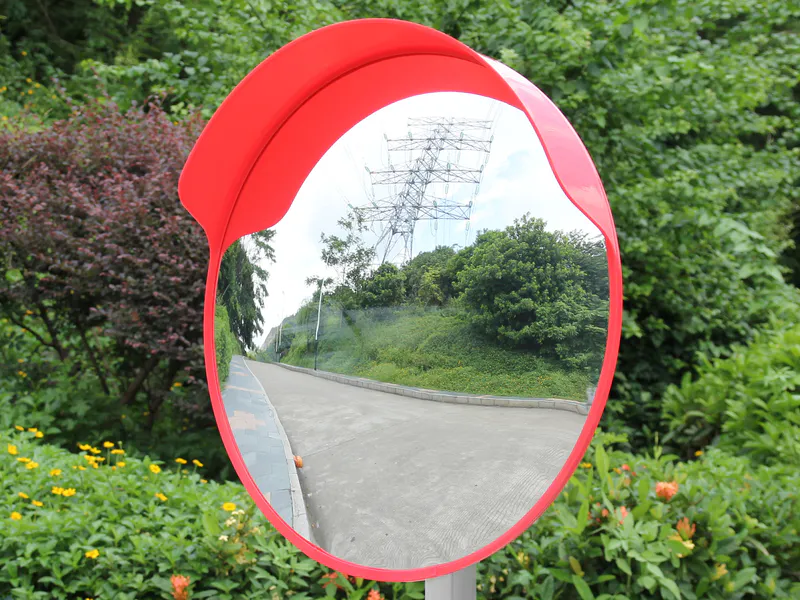
Both can be used for safety observation, but their advantages differ when it comes to impact resistance, surface maintenance, and outdoor applications.
Generally speaking, acrylic convex mirrors are more widely demanded in the market. Moreover, outdoor convex mirrors are not always used for safety observation.
If you are planning to purchase plastic convex mirrors, how should you choose between these two materials? That is what I will discuss below.
What’s The Difference Between These Two Convex Mirrors?
We can first determine the differences between acrylic convex mirrors and polycarbonate convex mirrors from the table below:
| Comparison Item | Acrylic Convex Mirror | Polycarbonate Convex Mirror |
|---|---|---|
| Impact Resistance | Can meet many conventional applications, but may still crack under strong impact | Usually has higher impact resistance than PMMA |
| Surface Scratch Resistance | Standard uncoated surfaces usually have good resistance, coatings can further improve it | Standard uncoated surfaces are more prone to scratches, coatings can further improve it |
| Outdoor Weather Resistance | The base material usually has a good foundation for weather resistance | Offers more weather-resistance options for long-term outdoor use |
| Imaging Performance | Can provide clear reflection, with higher light reflectivity than polycarbonate | Produces clear images, but details are slightly inferior to PMMA |
| Procurement Cost | Standard specifications have a cost advantage, while special specifications may cost more than polycarbonate | Higher impact resistance and additional treatments usually result in higher costs |
| Selection Direction | Conventional commercial observation and places with low collision risk | Places with higher impact-resistance requirements |
Overall, acrylic convex mirrors offer more room for customization and upgrading. They can be matched to the level of material performance required for your project.
Polycarbonate convex mirrors, on the other hand, are naturally more suitable for outdoor-oriented environments. Using polycarbonate convex mirrors indoors can be considered somewhat wasteful.
If the convex mirror is intended for indoor use, you can consider acrylic regardless of size. When the convex mirror is used outdoors, prioritizing polycarbonate is usually the better choice.
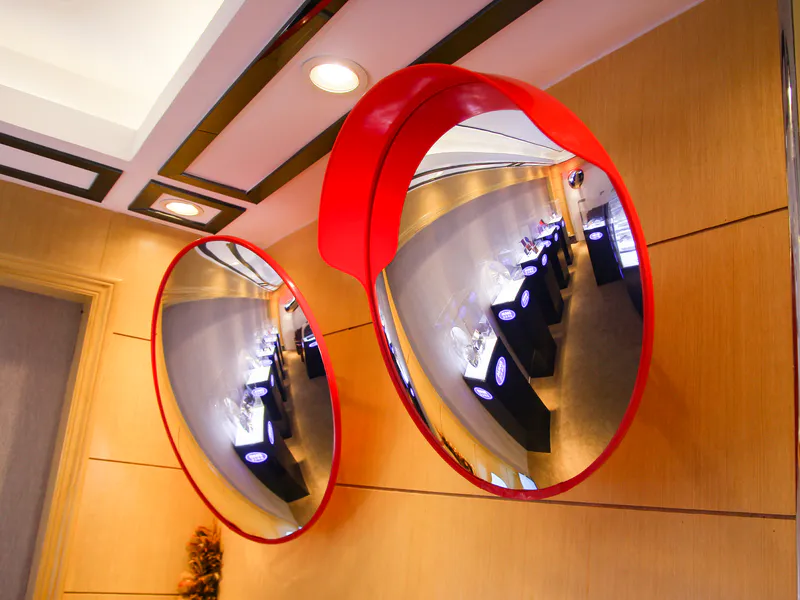
It is impossible to distinguish the material differences of convex mirrors just by eye—it can only be proven through various tests and inspections. This is the only accurate method.
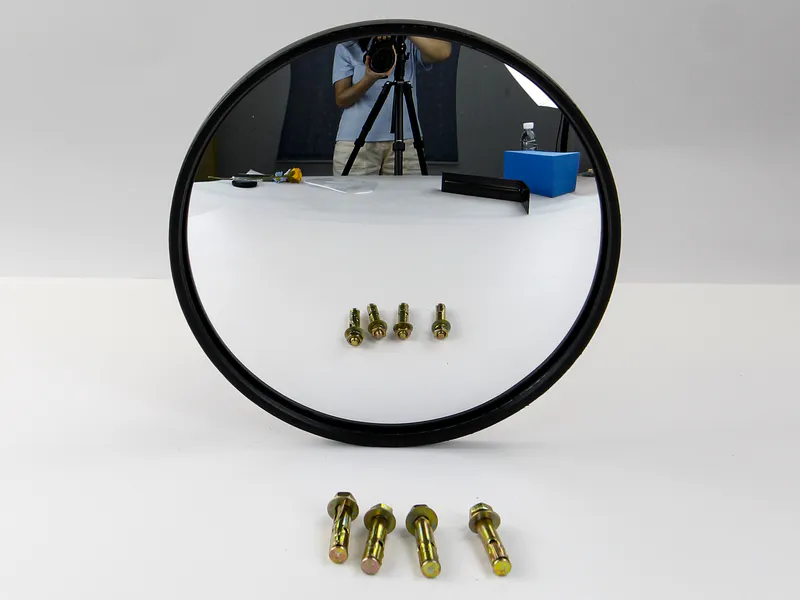
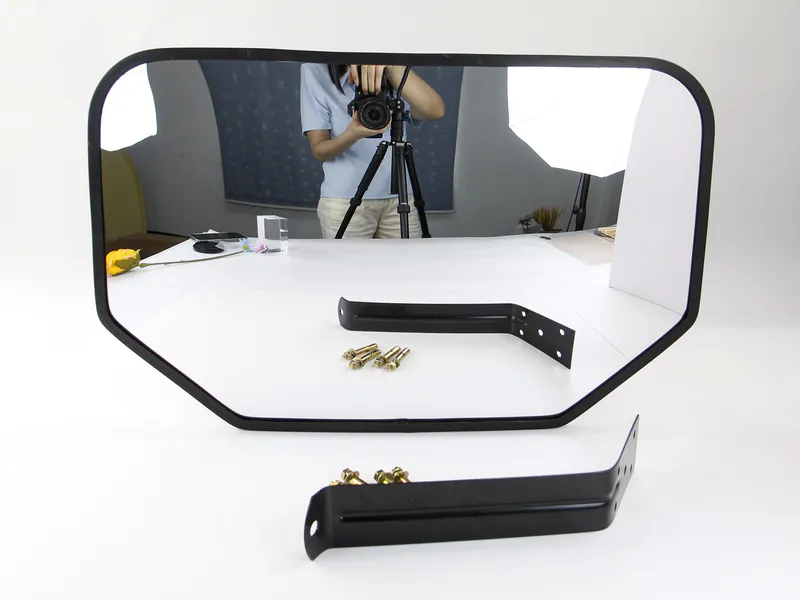
As seen in the two images below, both are convex mirrors produced by us. The circular one on the left is made of acrylic, while the irregular hexagonal one on the right is made of polycarbonate.
When to Choose Acrylic Convex Mirrors
Based on our many years of experience manufacturing and selling these products, the vast majority of acrylic convex mirrors are used indoors. Traffic mirrors are made with acrylic simply because we treat them as complete products rather than just mirror panels.
A complete traffic mirror includes more than the acrylic convex mirror itself. The backing panel and edge-sealing materials are also essential components. Moreover, the acrylic convex mirror used in a traffic mirror differs from a standard indoor convex mirror. The acrylic undergoes rigorous testing to ensure that it is suitable for outdoor use.
If your situation falls into any of the following categories, an acrylic convex mirror may be worth considering:
Indoor use where a wider field of view is needed and the mirror is unlikely to be struck
Store employees may need to monitor aisles between shelves, while staff in an office or facility may need to see people approaching around corridor corners. In these situations, the main purpose is simply to supplement visibility, and one or two acrylic convex mirrors are usually sufficient.
A practical question to ask is: Are there any objects around the mirror that could easily hit it?
If the mirror is positioned away from transport routes, moving equipment, and frequently relocated goods, you can generally choose one based on ordinary visibility requirements. If it is frequently exposed to impact or vandalism, however, you should consider other options—even if the mirror is installed indoors.
Primarily used to monitor the movement of people and objects
When you need to determine whether “someone is in the aisle” or whether “a vehicle is approaching around the corner,” an acrylic convex mirror can provide a clear, supplementary view.
Keep in mind that convex mirrors make reflected objects appear smaller. They are somewhat like a wide-angle camera lens: they capture a broader area, but distant objects appear smaller and show less detail. When selecting a mirror, you need to consider not only its diameter but also its curvature and viewing distance.
Two mirrors may both be 600 mm in diameter, yet the more strongly curved model will generally cover a wider area while making the reflected target appear smaller. A wider field of view does not necessarily mean a clearer view. If you need to identify objects at a greater distance, ask the supplier to recommend the appropriate size and curvature based on the actual viewing distance.
Multiple mirrors are required while keeping costs under control
For chain stores, office buildings, or projects with multiple observation points, differences in the unit price of each mirror become more significant as the order quantity increases.
Standard acrylic convex mirrors typically offer a cost advantage. If the project does not require a high level of impact resistance, they can provide a practical balance between visibility and budget.
When comparing quotations, make sure the mirror size, thickness, protective features, and accessories are evaluated on the same basis. The price of a complete product with a backing panel, edge protection, and mounting brackets should not be directly compared with the price of a bare mirror panel.
The prices vary significantly depending on the back panel and mounting options. Here, we’re sharing some common appearances for back panels and mounting brackets—different choices will all affect the overall cost.
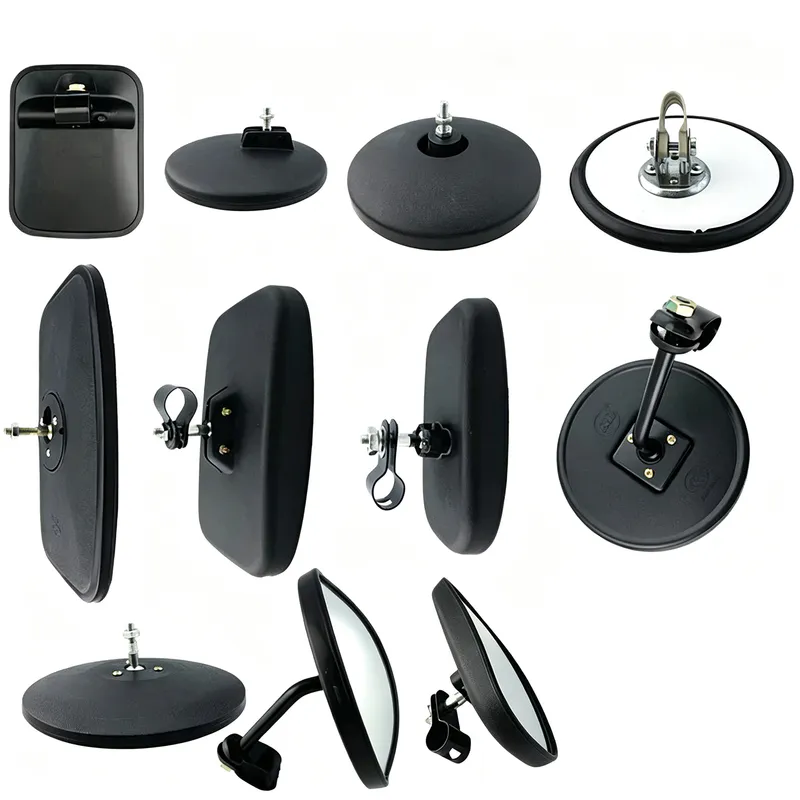
Outdoor use with a complete weather-resistant solution
Acrylic traffic mirrors may also be considered for locations such as parking-lot entrances and exits or corners along roads within industrial parks and campuses. In these cases, choose a finished model specifically rated for outdoor use, and confirm that the supplier can provide information on the following:
- Mirror material: What grade of material is used, and what weather-resistance testing or service data is available?
- Back and edge protection: How is the mirror supported, and how is the reflective layer on the back protected?
- Conditions of use: What environments is the product suitable for, and what are the scope and limitations of its warranty?
“Made with acrylic” is simply a statement about the material. The information above is what helps you determine whether the mirror is suitable for long-term installation at your project site.
When requesting a quotation, tell the supplier where the mirror will be installed, the viewing distance, and the level of collision risk in the surrounding area. This helps determine the appropriate mirror material, size, curvature, and protective configuration at the same time, resulting in a solution that better matches your actual needs.
When to Choose Polycarbonate Convex Mirrors
The primary reason most customers opt for polycarbonate convex mirrors is due to the material’s superior hardness, which naturally gives it better resistance compared to acrylic. However, what many customers don’t realize is that recent advancements in acrylic’s manufacturing processes have made it a viable full replacement for polycarbonate.
Polycarbonate’s standout advantage lies in its toughness. Under comparable conditions, it generally offers higher impact resistance than standard acrylic. This enhanced toughness essentially provides an extra buffer for handling unexpected incidents. Ultimately, the exact level of shock it can withstand still depends on the mirror’s thickness and structure.
Public Areas Require Defense Against Unpredictable Contact
In school activity zones, near sports facilities, and other public areas where people may interact closely with mirrors, instances such as slapping, collision with equipment, or being struck by thrown objects may occur.
These scenarios may not happen daily, but material selection should still anticipate occasional accidents. Due to its high impact resistance, polycarbonate convex mirrors are also suitable for certain indoor applications, perfectly aligning with on-site usage demands.
Outdoor Use Involves Both Impact Risks and Constant Sun Exposure
For outdoor observation locations where risks like flying debris, collisions, or vandalism are present, consider using polycarbonate convex mirrors—be sure to further verify their weather-resistant setup.
Impact resistance and UV durability need to be assessed independently. Polycarbonate’s strength in impact resistance doesn’t inherently replace UV protection. When used outdoors over long periods, it’s important to understand the material grade adopted, the method of UV protection, and how the reflective coating on the backside is shielded. The UV-enhanced polycarbonate material is specifically designed for these needs, offering a compatible solution for long-term exposure.
Convex Mirror Clarity: Size, Curvature, and Installation
Both acrylic and polycarbonate can be used to make convex mirrors that provide clear, effective viewing. However, once the material has been selected, the mirror’s size, curvature, and installation position must also work together to ensure that the area requiring observation can be seen clearly on-site.
Two performance indicators are often confused: the light transmittance of the raw sheet refers to how much light passes through the material, while the mirror’s reflectance refers to how much light is reflected back. They are not directly equivalent. The viewing performance of the finished mirror is also affected by the reflective coating and the quality of the curved forming process.
A convex mirror is like fitting a wide image into a limited mirror surface: it shows a larger area, but the people and vehicles within that area appear smaller. When the mirror size and viewing position are similar, a more pronounced curvature will generally provide a wider field of view, but the target image will also appear smaller.
We can compare convex mirrors and dome mirrors in this aspect. As shown in the figure, a dome mirror can be regarded as a convex mirror with a very large curvature. Comparing them this way, you’ll notice the differences in their fields of view.
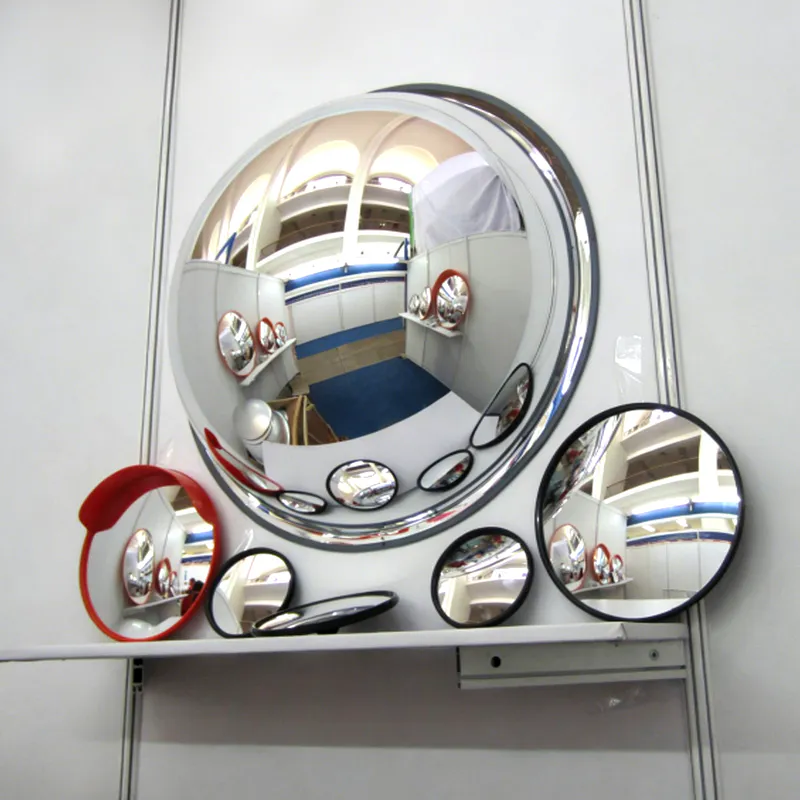
Therefore, spotting that a vehicle is approaching and determining whether someone is beside the vehicle are two different viewing tasks. When selecting a mirror, both the viewing distance and the observation objective need to be considered.
You can begin by assessing the following four aspects of the site:
- Where will it be viewed from? Will the user be standing or sitting in a driver’s seat? How far will the observer be from the mirror?
- Where are the targets located? How far are the passageway or entrance/exit to be monitored from the mirror, and are there any obstructions along the way?
- What needs to be seen clearly? Is the goal simply to detect the presence of people or vehicles, or is more detailed identification required? Does the mirror need to cover multiple directions?
- Is the installation position suitable? Can the height, lighting, and adjustment range of the bracket allow the user to see the key areas from a normal viewing position?
For example, a mirror may provide an excellent field of view when viewed from the center of a corridor, yet part of the view may be blocked by a door frame from the position where staff actually pass by. Therefore, the viewing effect should be assessed from the mirror’s real position of use. If the mirror will also be used at night, it should be checked under nighttime lighting conditions as well.
The relationship between mirror size and viewing distance can be further evaluated by referring to the Acrylic Convex Mirror Size and Application Buying Guide. Once these on-site conditions have been established, the next steps—requesting quotations and selecting samples—will be much more targeted.
Two Key Details When Purchasing Convex Mirrors
Clearly Explain the Site Conditions and Scope of Supply When Requesting a Quote
A site photo, together with the viewing distance and intended use, can help the supplier narrow down the available options. If there are multiple viewing directions, adding a simple floor plan will make communication even more straightforward.
When preparing your quotation request, organize the information in the following order:
- Application environment. Specify whether the mirror will be used indoors or outdoors, the viewing position and distance, and whether it may be exposed to impacts, prolonged sunlight, or frequent cleaning.
- Scope of supply. Confirm whether you need the mirror panel only or a complete product including the backing panel, frame, and mounting bracket. For a complete mirror, also specify whether it will be wall-mounted or pole-mounted, along with any required accessories.
- Dimensions and curvature. Distinguish between the product’s overall dimensions and the actual usable mirror surface. Any thickness requirement should also clarify whether it refers to the original sheet thickness or the thickness after forming.
- Material and protection. Specify whether you prefer acrylic or polycarbonate, and whether you require scratch resistance, UV protection, protection for the rear reflective coating, or edge protection.
- Quantity and delivery. Provide the purchase quantity, sample requirements, and expected lead time. Also confirm the protective film and packaging method.
- Acceptance and warranty. Agree in advance on requirements for dimensions, appearance, viewing performance, and the scope of warranty coverage.
If the dimensions or curvature have not yet been finalized, you can first provide the site information and ask the supplier to recommend suitable options and samples. For custom mirror panels that need to fit into an existing housing, provide drawings showing the key mating dimensions and allowable tolerances.
Putting all these requirements into a single quotation package also makes it easier to compare offers from different suppliers.
Test Samples Under Actual Operating Conditions
Samples should be as close as possible to the intended mass-production configuration. If you are purchasing a complete mirror, inspect the full assembly, including the backing panel and mounting bracket. If you are purchasing mirror panels only, install them in the housing or support structure planned for actual use and test them there.
First, check that the dimensions, surface condition, and accessories meet the requirements. Then verify the adjustment range after installation. Next, have observers stand in their normal viewing positions while people or vehicles pass through the target area under controlled conditions. Check whether key areas are clearly visible, whether the images move smoothly, and whether there are any abrupt local waves or distortions.
Don’t look only at the center of the mirror. When the mirror is used to monitor around a corner, the most important object may appear right at the edge of the reflective surface. Every direction that needs to be covered should be checked during sample testing.
If the project has specific requirements for scratch resistance, impact resistance, or outdoor weatherability, agree separately on the test methods and acceptance criteria. When reviewing test reports, distinguish whether the test subject was the raw material or the finished product, and confirm that the material grade, thickness, and protective features match the purchasing specifications.
Once the sample has been approved, record the confirmed requirements in the specification sheet and retain the sample or acceptance records acknowledged by both parties. This gives subsequent batches a common reference and helps prevent disputes such as, “The sample looked good, but the delivered products are different.”
For projects where you will install the mirror panel yourself, you can start with custom convex mirror panels to confirm the material, dimensions, and curvature. For projects requiring a backing panel and mounting accessories, see traffic convex mirrors. Provide the site photos, viewing distance, and purchase quantity, confirm the solution with the supplier, and then use samples to verify the actual performance. This will give your bulk purchase a much more reliable basis.