If you’ve shopped for a plastic mirror sheet recently, you’ve probably noticed the same product sold under at least three different names. One supplier calls it acrylic mirror. Another lists it as Plexiglass mirror. A UK site refers to it as Perspex mirror. A specialty supplier might describe theirs as PMMA mirror, mirrored acrylic, or even acrylic glass mirror.
The short answer to the question in the title: yes, these are essentially the same product. The longer answer — which is what this post covers — explains where the names came from, when the differences actually matter, and how to interpret what a supplier is selling when they use one term versus another.
This is a useful piece to read before placing an order, particularly if you’re sourcing from suppliers in different regions or comparing prices across listings that don’t use the same terminology.
What All These Names Actually Refer To
The Underlying Material
Every product covered by this post is made from a single material: polymethyl methacrylate, abbreviated PMMA. It’s a transparent thermoplastic — a clear plastic that can be heated, shaped, and re-shaped. According to the Wikipedia entry on PMMA, the polymer was developed in the 1920s and 1930s and has been in commercial production since 1933.
PMMA is the chemical name. “Acrylic” is the generic shorthand. Everything else — Perspex, Plexiglas, Lucite, Acrylite, Optix, Crystallite, Altuglas, and a dozen other names — is a brand. The relationship is identical to the one between “Kleenex” and “tissue,” or “Band-Aid” and “adhesive bandage”: one is a trademarked product name, the other is the generic material.
How the Brand Names Map to PMMA
The major brand names you’ll encounter:
Plexiglas (note the single “s” in the trademark spelling) was created in 1933 by the German chemical company Röhm & Haas. TAP Plastics’ history of the material notes that the brand became so widely used in North America that “plexiglass” — with two s’s — became the generic public term for any clear acrylic sheet. The trademarked spelling still belongs to Röhm GmbH, which markets the material as PLEXIGLAS® in Europe, Asia, Africa, and Australia, and as ACRYLITE® in the Americas.
Perspex is the equivalent name in the UK. It was developed by ICI Acrylics in the 1930s, and the brand is now owned by Lucite International (a subsidiary of Mitsubishi Chemical Corporation). Perspex is the dominant generic-by-association term for clear acrylic in British and Commonwealth markets — when a UK customer asks for “Perspex,” they almost always mean any clear acrylic sheet, not specifically the branded product.
Lucite was originally developed by DuPont in the 1930s and became culturally significant in mid-century furniture and jewelry design. The brand is also now owned by Lucite International.
Other brand names — Acrylite, Optix, Crystallite, Altuglas, Cyrolite, Oroglas, Sumipex — refer to the same material from different manufacturers. The Wikipedia entry on PMMA lists at least fifteen recognized trade names; in practice you’ll only encounter four or five regularly.
The Practical Implication
Anything sold as a “Plexiglass mirror,” “Perspex mirror,” “Lucite mirror,” or “acrylic glass mirror” is built on the same underlying PMMA substrate as the acrylic mirror sheets we cover in our complete guide to acrylic mirror sheets. The construction is identical: a sheet of PMMA with a vacuum-deposited reflective metal coating on one side and a protective backing.
The brand name on the listing usually tells you more about the supplier’s regional market than about the product itself.
Regional Naming Conventions
North America
The dominant terms in the US and Canada are “acrylic” and “Plexiglass,” used roughly interchangeably. Industry suppliers tend to prefer “acrylic” because it’s the technically accurate generic; consumer-facing sites often use “Plexiglass” because that’s what customers search for. T&T Plastic Land addresses this directly: their position is that both terms are acceptable, but “acrylic sheet” is more accurate when speaking to fabricators.
For acrylic mirrors specifically, US suppliers more commonly use “acrylic mirror sheet” or “mirrored acrylic sheet” than “Plexiglass mirror.” The reason is mostly trademark caution — Röhm GmbH actively defends the Plexiglas® mark, and product listings using the trademarked spelling for non-Röhm material risk infringement claims.
United Kingdom and Commonwealth
In the UK, “Perspex” is the dominant consumer term for any clear acrylic sheet. UK suppliers list “Perspex mirror” alongside “acrylic mirror” and treat them as the same product, even when the actual sheets are sourced from manufacturers other than Lucite International. Sheet Plastics, a UK supplier, explicitly notes that they don’t carry the Perspex brand specifically but supply equivalent acrylic sheets — a common arrangement across the UK market.
The keyword search data reflects this regional split. In our research, “perspex acrylic mirror” and related variants generate roughly 2,400 monthly searches in English-speaking markets, with the bulk coming from UK, Australian, and Indian search traffic. By comparison, “Plexiglass acrylic mirror” generates around 250 monthly searches, mostly in North America.
Continental Europe and Asia
In Germany, the original home of Plexiglas®, the brand name is more often used for the actual Röhm product. Other European markets vary — in France, Altuglas is a recognized brand; in Italy and Spain, generic terms like “metacrilato” predominate.
In Asian markets, acrylic mirror sheets are typically sold as “acrylic mirror” in English-language product listings, with Mitsubishi’s Sumipex brand and several Chinese-manufactured equivalents being the most commonly stocked materials.
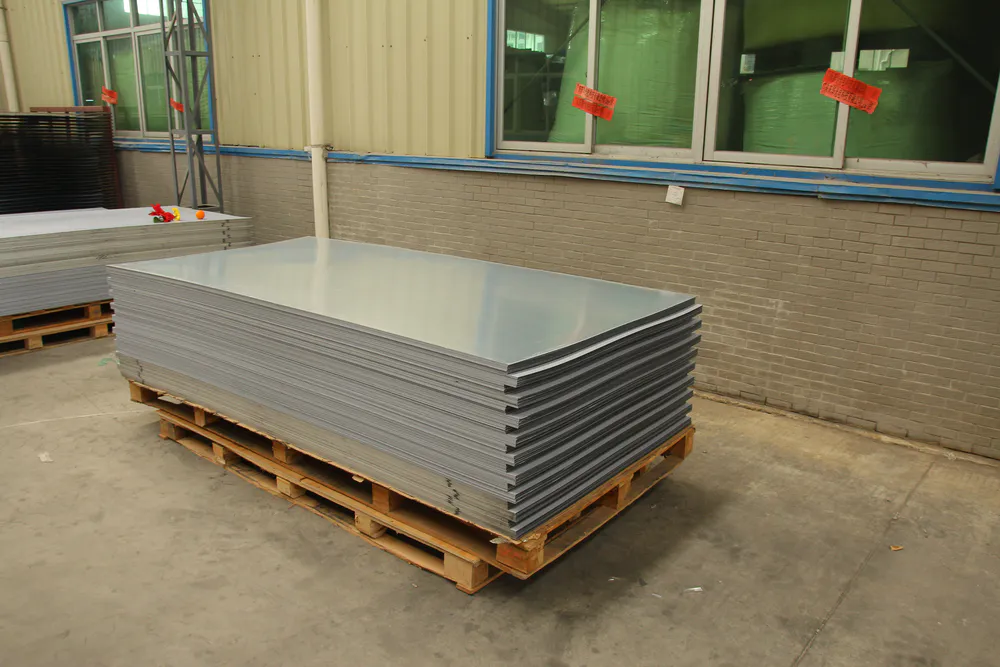
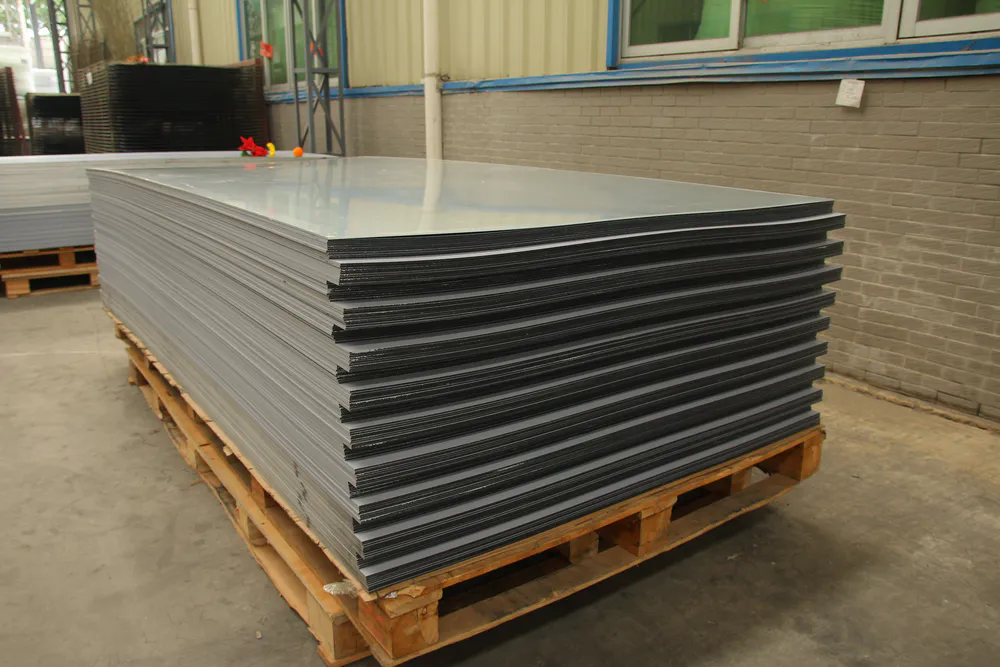
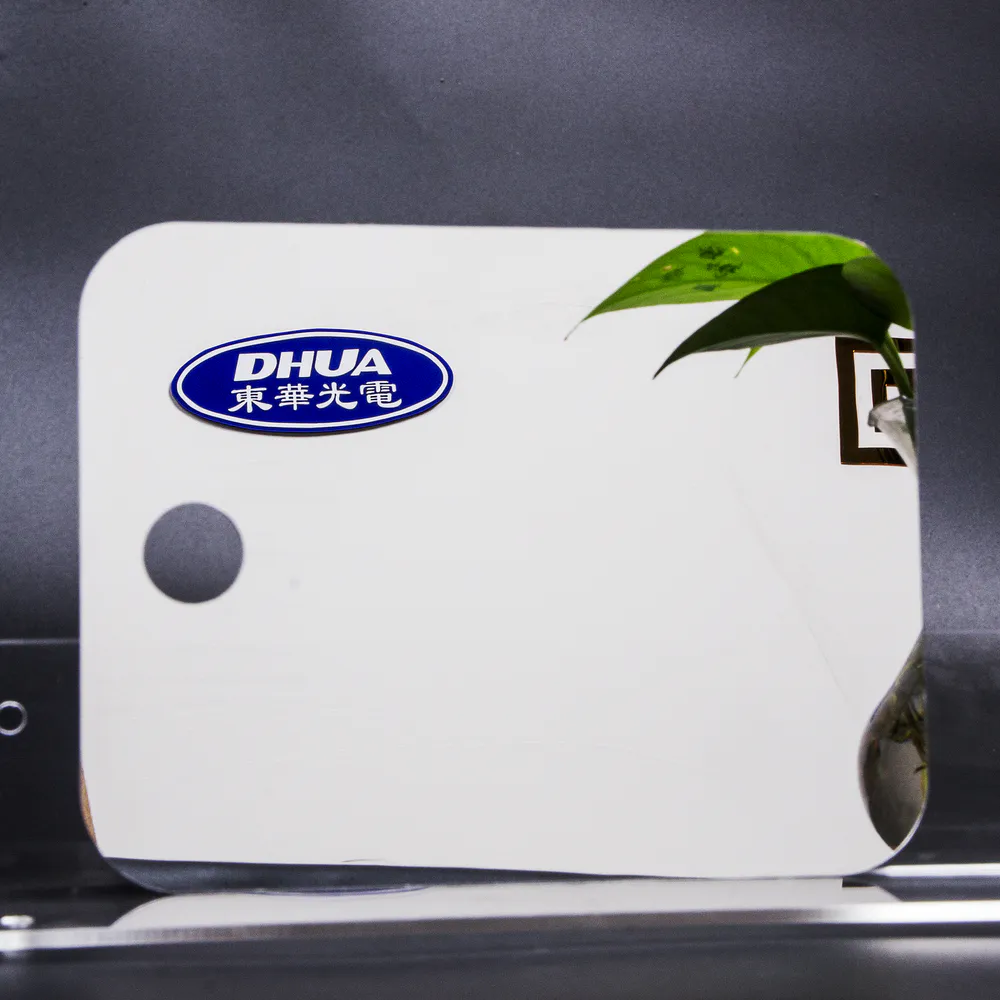
The image shows large mirror sheets produced by our factory. The material is not necessarily acrylic; we also support mirror sheets made of PC, PS, and PETG.
When the Naming Actually Matters
For most buyers, the brand name on a product listing is irrelevant — what matters is the underlying material specification (cast or extruded acrylic, sheet thickness, surface quality, and coating type). There are a few situations where the distinction does matter, and they’re worth knowing about.
Sourcing Specifically Branded Material
Architectural specifications, government contracts, and some industrial applications occasionally call for a specific brand name. A spec might read “Plexiglas SBC-007 mirror sheet, 6mm” — meaning the buyer requires the actual Röhm product, not an equivalent. In these cases, brand specificity is binding, and substitution requires written approval.
If you’re not working from a binding spec, brand specification is rare and usually unnecessary. Most major manufacturers produce material that meets equivalent technical standards.
Quality Variation Between Brands
While all PMMA acrylic mirror is built on the same chemical substrate, manufacturing quality varies. Premium brands — Plexiglas, Perspex, Acrylite, Lucite — generally maintain tighter manufacturing tolerances, better optical clarity, and more consistent color batching than lower-cost alternatives. According to Plexiglass Acrylic Sheets via Sheet Plastics, the difference between branded Perspex and generic equivalents is “very little” in practical applications, but in optical-grade work, signage requiring color consistency, or laser-cutting applications, the premium brands tend to outperform.
For most acrylic mirror applications — wall mirrors, retail fixtures, gym mirrors, signage — the difference between premium-branded and generic acrylic mirror is small enough that price often becomes the deciding factor. For premium decorative or design-driven work, brand-name material is sometimes worth the extra cost.
Cast vs. Extruded (More Important Than Brand)
The cast-versus-extruded manufacturing distinction matters more than the brand name. Both Perspex and Plexiglas are produced in cast and extruded versions. Cast acrylic generally offers better optical clarity, surface hardness, and chemical resistance; extruded is more dimensionally consistent and less expensive.
When ordering acrylic mirror, knowing whether you’re getting cast or extruded material is more useful than knowing which brand it is. We covered this distinction in detail in our introduction to acrylic mirrors.
Specific Variants You’ll Encounter
A few product names that come up regularly and can confuse buyers:
Plexiglass Mirror
A standard acrylic mirror sheet, sold under the Plexiglass naming convention. In practice, this could be actual Röhm Plexiglas-branded material, or it could be generic acrylic mirror sold under the colloquial term. For most retail listings, assume the latter unless the supplier specifies otherwise.
Perspex Mirror
The UK equivalent. Available in standard silver, plus the same range of colored finishes (gold, rose gold, bronze, smoked black, and others) covered in our color variants guide. UK suppliers will often stock both Perspex-branded sheets and generic alternatives at different price points.
Acrylic Glass Mirror
A literal description rather than a brand name. PMMA is sometimes called “acrylic glass” because it’s used as a glass substitute, but the term is occasionally misleading — it can refer to either a clear acrylic sheet (no mirror coating) or a mirrored acrylic sheet, depending on context. If you see “acrylic glass mirror” on a listing, confirm with the supplier that it’s actually mirrored.
Lucite Mirror
Less common in current retail listings but appears in vintage and antique furniture contexts. Lucite was a popular furniture material in the 1960s and 1970s, and “Lucite mirror” sometimes refers specifically to mid-century pieces with mirrored acrylic components rather than the modern sheet product.
PMMA Mirror
The technical name, used most often in industrial and engineering contexts. If a supplier markets a product as “PMMA mirror,” they’re typically targeting B2B buyers and the listing will usually include more detailed technical specifications than a consumer-oriented listing would.
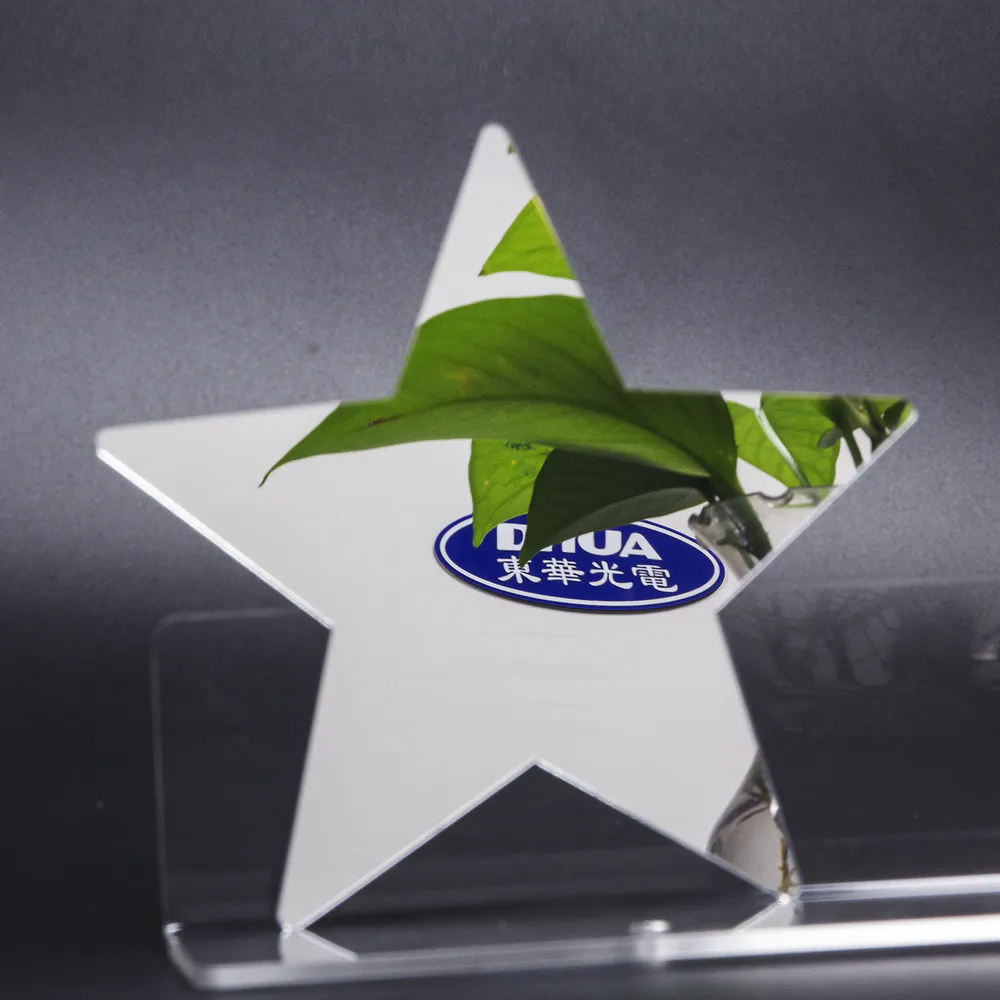
Sometimes, PMMA mirrors do not necessarily refer to sheet materials; ordinary small lenses obtained from cutting mirror sheet materials can also be referred to as “PMMA mirror.
What This Means for Specialty Variants
The naming-convention question affects the specialty acrylic mirror categories as well. The product you’d find listed as a “Perspex two-way mirror” is the same product as a “two-way Plexiglass mirror” or a “two-way acrylic mirror sheet” — all are PMMA with thinner reflective coatings to allow partial light transmission. We cover the optics in detail in our dedicated guide to two-way mirrors.
The same applies across the curved mirror category. Convex mirrors, dome mirrors, and parabolic concave variants are sometimes sold as “Perspex convex mirror,” “Plexiglass dome mirror,” or “acrylic safety mirror” depending on the supplier. The product is the same; the labeling reflects regional convention. Our overview of curved mirrors covers the actual product distinctions.
For environments where humidity is a regular issue, anti-fog mirrors are sold under the same range of regional names. Our large mirror sheets product range uses the standard terminology you’ll encounter across most international suppliers.
Quick Reference: The Same Product Under Different Names
If you’re comparing listings across suppliers, the following terms are essentially interchangeable when applied to a flat mirrored sheet:
- Acrylic mirror sheet
- Acrylic mirror panel
- Mirrored acrylic sheet
- Mirror acrylic sheet
- PMMA mirror
- Plexiglass mirror
- Plexiglas mirror
- Perspex mirror
- Lucite mirror
- Acrylic glass mirror
- Plastic mirror sheet (occasionally)
All refer to the same construction: a vacuum-metallized PMMA panel with a protective backing, available in roughly the same size and thickness ranges across suppliers. Pricing variation between listings is more often driven by sheet quality, custom-cutting fees, and supplier markup than by anything related to the brand name itself.
What to Look at Instead of the Brand Name
When comparing acrylic mirror products across suppliers, the specifications that actually affect performance are:
- Cast or extruded acrylic — affects optical clarity, surface hardness, and tolerance
- Thickness — affects rigidity, flatness, and price
- Reflective coating type — typically aluminum, sometimes chrome or specialty metals
- Sheet grade — premium-graded material has fewer surface defects
- Indoor or outdoor rating — most acrylic mirror is indoor-only
- Cut tolerance — relevant for fitted installations
- Color consistency batch-to-batch — relevant for projects ordering multiple sheets
- Custom cut and fabrication options — relevant for non-standard sizes
These are the questions worth asking a supplier. The brand name is rarely a useful proxy for any of them — premium material is sold under generic names, and lower-quality material is sometimes sold under premium brand names by sellers exploiting the recognition.
Final Note on Spelling
A small but persistent source of confusion: Plexiglas (one s) is the trademarked brand name. Plexiglass (two s’s) is the generic colloquial term in North American English. They refer to the same material, but legally only the one-s spelling is owned. Most consumer-facing listings use the two-s spelling; trademark-conscious industry sites and suppliers tend to use the one-s spelling.
Similarly, Perspex is always capitalized in formal use because it’s a trademark, even when used colloquially. Acrylic is never capitalized because it’s a generic material name.
None of this affects what you actually receive when you order. But it’s useful background when reading specifications, comparing supplier listings, or deciphering what a customer is asking for when they call asking about “Plexi” or “Perspex glass.”