
Stepping out of the shower to check the mirror, only to find the surface veiled in a layer of steam. You reach out to wipe a small patch clear, but within moments, it fudges over again.
At this point, “just getting an anti-fog mirror” sounds like a simple solution, yet when it comes down to actually shopping for one, the sheer variety of products makes it hard to decide.
If you are after something grander, you might need a wall mirror exceeding 1.2 meters in width, which requires a bathroom of a certain size. Smaller bathrooms may only have room for a compact mirror around 30 to 40 centimeters across. Then there are those mounted on cabinet doors, swung open and shut with every daily routine.
Different bathroom environments call for different approaches. Choosing an acrylic anti-fog bathroom mirror panel really only requires you to understand three things: where it will be installed, how it combats fog, and how to maintain its clarity in daily use.
By connecting these three considerations, you’ll easily find the product that is truly right for you.
Common Types of Bathroom Anti-Fog Mirrors
There are three primary types of anti-fog bathroom mirrors available on the market; anything beyond these is essentially custom-made. Anti-fog mirrors lean heavily toward practicality. Unlike standard flat or convex mirrors driven largely by decorative needs, most anti-fog mirrors serve one primary purpose: solving the issue of fogging. Below, I will discuss the three most common types of anti-fog mirrors.
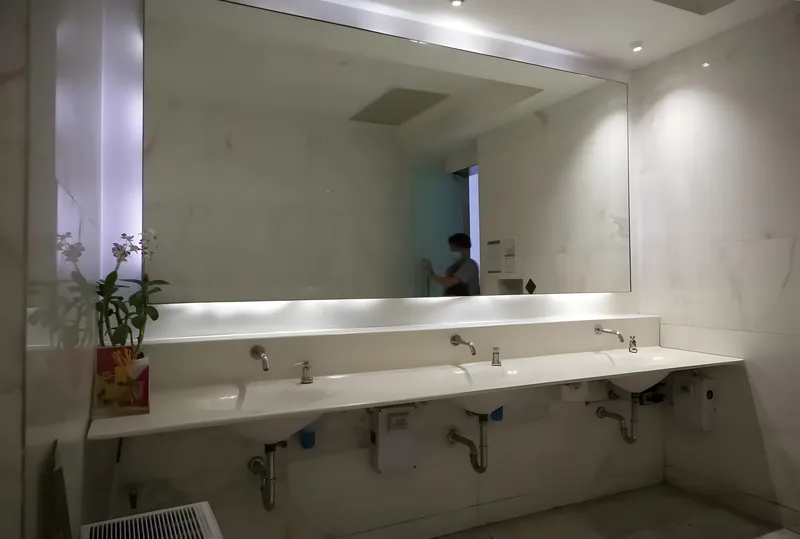
Wall-Mounted Large-Scale Anti-Fog Mirrors
These mirrors typically serve as the primary looking glass in the bathroom, used for grooming, styling hair, and checking one’s appearance. For double vanities or wider washing areas, the mirror surface usually needs to span a broader horizontal range.
For instance, the Salgar ALCOR 1200 Bathroom Mirror measures 1200 × 700 mm. Its product specifications clearly indicate glass construction, featuring integrated lighting and anti-fog functions.
Plastic mirror panels can also be incorporated into large wall mirror designs, though the panel must be carefully evaluated against its backing support structure.
The larger the mirror surface, the more noticeable the surface distortions inherent to plastic materials become. For a primary mirror used daily for close-up viewing, optical flatness directly impacts the user experience.
Why do large-scale plastic anti-fog mirrors exhibit such surface distortion? I have covered this in my previous article, which you can read here: Acrylic Mirror vs Glass Mirror: A Practical Comparison Guide
Anti-Fog Mirrored Cabinets
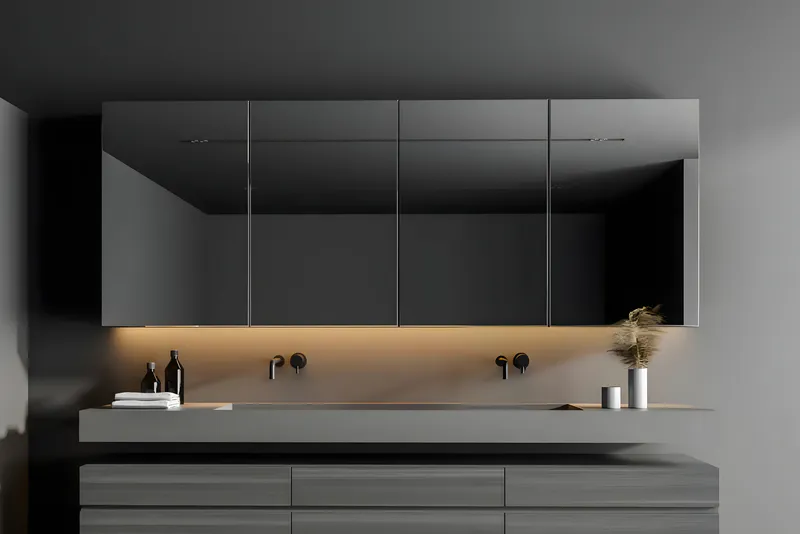
Mirrored cabinets are also very common in bathrooms, seamlessly integrating reflection and storage needs. These anti-fog mirrors are rarely made very large, as the cabinet itself is the primary product, and the mirror dimensions are dictated by the cabinet design.
The Roper Rhodes Steam-Free Cabinet Collection is a prime example of combining glass mirror surfaces with cabinetry, utilizing built-in heating pads to warm the glass and prevent fogging.
From our perspective, when it comes to such mirrored cabinets, we are far more likely to supply anti-fog mirror panels rather than finished anti-fog mirrors. Within the product’s architecture, the anti-fog mirror is merely a small component of the overall cabinet.
However, since we are discussing the types of bathroom anti-fog mirrors available, it certainly deserves a place on the list. Furthermore, some of these cabinets are relatively compact, as bathroom cabinetry does not always require massive storage capacity.
It is worth noting that even when equipped with an anti-fog mirror, such bathroom cabinets may not necessarily deliver robust anti-fog performance.
The key lies in how long the anti-fog effect lasts. Mirror anti-fog performance primarily depends on the surface coating, and the durability of this coating dictates overall effectiveness.
Moreover, marketing for these products typically focuses on the cabinet itself, meaning mirror quality may not be a priority. In such cases, the storage function outweighs the reflection utility.
Small Wall-Mounted Mirrors, Shower Shaving Mirrors, and Portable Mirrors
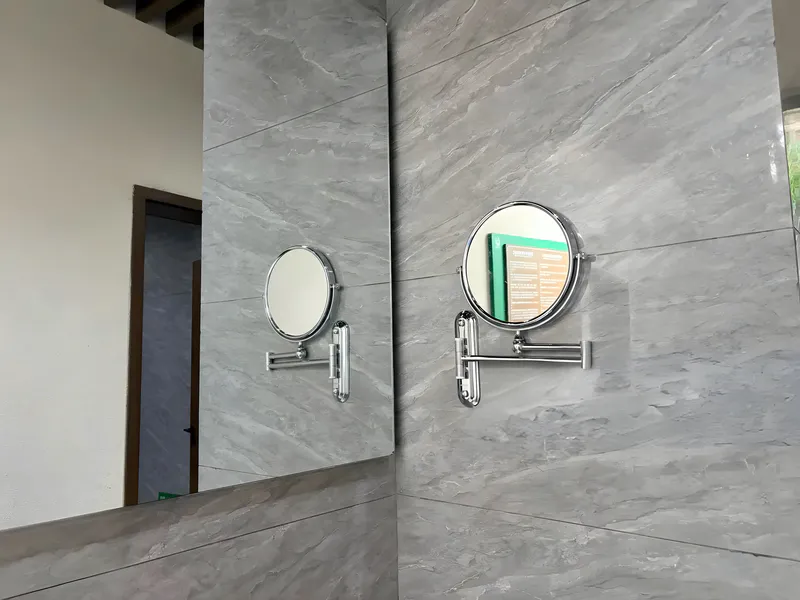
This category represents the most common application for plastic anti-fog mirror panels. These products prioritize portability and convenience, trading a wider field of view to meet specific use cases.
Because small mirrors are typically used at a closer range, users rely on them only for targeted tasks, such as facial cleansing.
Some are mounted beside the vanity, others placed in the shower area for convenient shaving, and some are designed to be frequently detached, moved, or stored away. While they do not need to cover an entire wall, they place a premium on ease of handling, secure mounting, and close-up clarity.
Among these products, you will find clear examples of acrylic anti-fog mirror solutions. For instance, the ToiletTree Fogless Shower Mirror specifies the use of acrylic and requires users to fill a rear water reservoir with warm shower water prior to use, utilizing temperature differential to prevent fogging.
At DHUA, our anti-fog mirror panels rely on high-density hydrophilic coatings to achieve anti-fog performance, utilizing either acrylic or polycarbonate (PC) as the primary material. Furthermore, we specialize in manufacturing the mirror component itself, rather than finished consumer products like ToiletTree.
This also demonstrates that plastic anti-fog mirrors do not necessarily rely on anti-fog coatings. When making a purchase, you should carefully review the actual usage steps rather than assuming suitability based solely on the term “anti-fog.”
For plastic mirrors, applying heat to prevent fogging is generally detrimental to the material itself. The greatest advantages of plastic anti-fog mirrors lie in their shatterproof nature and lightweight design.
Less Common Custom Formats: Irregular Shapes, Recessed, and Combination Mirrors
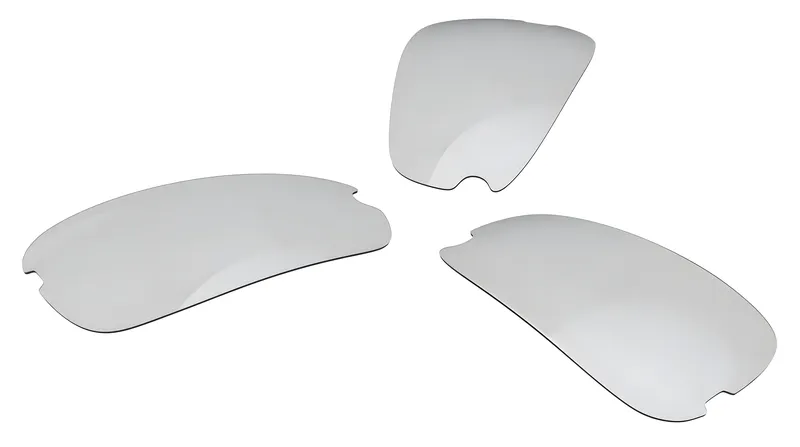
Everything discussed above covers standard types of anti-fog mirrors. However, the market also features designs tailored to specific product requirements: mirrors embedded in custom housings, featuring irregular contours, or integrated into multi-functional assemblies.
These custom bathroom anti-fog mirrors usually serve multiple purposes within the space, where the mirror’s anti-fog and lighting features may be just one component among many.
Such products are best discussed using technical drawings. The choice of materials depends heavily on form factor, mounting methods, and optical imaging requirements, making it impossible to generalize whether acrylic or glass is more prevalent based solely on the standard finished products mentioned earlier.
However, broken down by component, acrylic is generally the material of choice because its lightweight nature greatly facilitates integration.
How to Choose Plastic Anti-Fog Bathroom Mirrors
If you have decided on using a plastic anti-fog mirror for your bathroom, we recommend determining the product format first, followed by a comparison of materials and anti-fog mechanisms. This approach helps prevent the common issue of “buying the right material only to find it doesn’t fit upon installation.” Taking the four types of anti-fog mirrors discussed earlier as examples, let’s look at the key factors to consider for each.
Choosing by Product Type
| Product Type | Recommended Selection Direction | Advantages of Plastic Mirror Panels | Trade-offs to Accept |
|---|---|---|---|
| Large wall-mounted anti-fog mirrors | Prioritize image flatness, support structure, and actual size samples. | Helps reduce the weight of the mirror section and allows processing according to wall or design dimensions. | Potential image distortion or lack of absolute flatness. |
| Cabinets with anti-fog mirrors | Choose based on the cabinet itself, balancing storage and reflection needs. | Lightweight mirrors reduce the weight load on cabinet doors. | Anti-fog performance may be somewhat less pronounced. |
| Small wall-mounted, shaving, and portable mirrors | Select according to specific needs or choose flexibly. | Lightweight and convenient for manufactured assembly. | Limited mirror surface area. |
| Custom-shaped, recessed, and combined mirrors | Tailor choices to specific project requirements. | Plastics are easy to process and facilitate integrating mirrors as components. | Variations in production quality. |
If you simply need a large primary bathroom mirror, you must account for the potential image distortion caused by the lower rigidity of plastic materials. In a bathroom setting, optical flatness is crucial.
Confirming the Anti-Fog Mechanism
The substrate of a plastic mirror does not possess anti-fog properties on its own; this function is achieved through specialized coatings. The market offers various anti-fog solutions for bathroom mirrors, each varying in effectiveness and influencing the daily user experience.
| Anti-Fog or Defogging Method | Basic Function | What to Confirm When Purchasing |
|---|---|---|
| Hydrophilic anti-fog coating or functional film | Facilitates the spreading of condensation into a uniform water film, reducing the haziness caused by tiny droplets. | Anti-fog coverage area, performance after repeated cleaning, and approved cleaning methods. |
| Rear electric defogger | Raises the mirror surface temperature to reduce or eliminate condensation blockage. | Preheating and operating methods, actual defogging area, and compatibility between the heater and the mirror panel assembly. |
| Warm water tank heating | Warms the mirror surface before use by adding warm water to a rear reservoir. | Whether water needs to be added each time, how to drain it, and user willingness to perform these steps. |
At DHUA, our plastic anti-fog mirror panels for bathrooms utilize a hydrophilic anti-fog coating treatment and are available in both PC and PMMA substrates. Their purpose is to help condensation spread more evenly, thereby improving visibility when steaming occurs.
Anti-fog does not mean the mirror surface remains completely dry. A thin water film may still form, and water droplets, soap residue, or limescale can still affect visibility. When testing, evaluate the mirror directly: Is your facial reflection clear? Does it hinder visibility? Can the state of clarity be maintained throughout use?
As mentioned earlier, heating is generally unsuitable for plastic mirrors. Therefore, adding an electric rear defogger is not always the ideal choice; this type of anti-fog heating is better suited for glass mirrors.
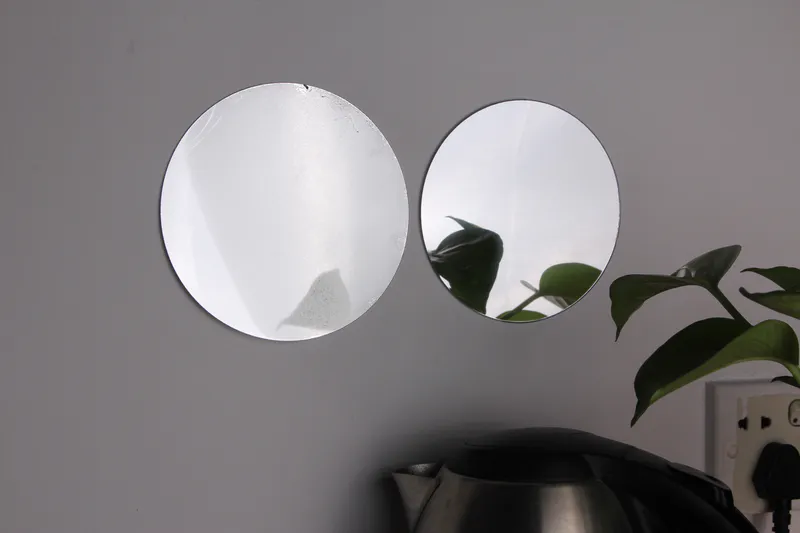
Selecting Thickness Based on Mirror Size and Installation Method
When requesting a quote, the first question is usually, “What is the thickness?” However, a mirror panel of the exact same thickness can perform vastly differently depending on whether it is used as a small inlaid insert or a large wall mirror.
To better determine the appropriate thickness, provide your supplier with the following information:
- Dimensions and viewing distance of the individual mirror panel: Calculate mirror cabinets based on a single door, and large wall mirrors based on the continuous reflective surface. Also specify whether it is for close-up facial viewing or primarily decorative purposes.
- Support and fixing methods: Is it adhered to a flat backing, fitted into a frame groove, or secured via mounting holes? The supporting substrate should also be suitable for a bathroom environment.
- Rear reflective layer and protective structure: Will the mirror panel be directly splashed with water? How are the back and edges protected, and is the adhesive compatible with the backing layer?
- Edge, hole, and assembly requirements: Including rounded corners, cutouts, mounting slot dimensions, and allowable tolerances to prevent forced on-site installation or temporary modifications.
For more on how area, thickness, and support collectively affect the reflected image, refer to Structure and Installation of Acrylic Bathroom Mirrors. Increased thickness generally improves rigidity, but it also adds weight and cannot fully compensate for uneven installation surfaces.
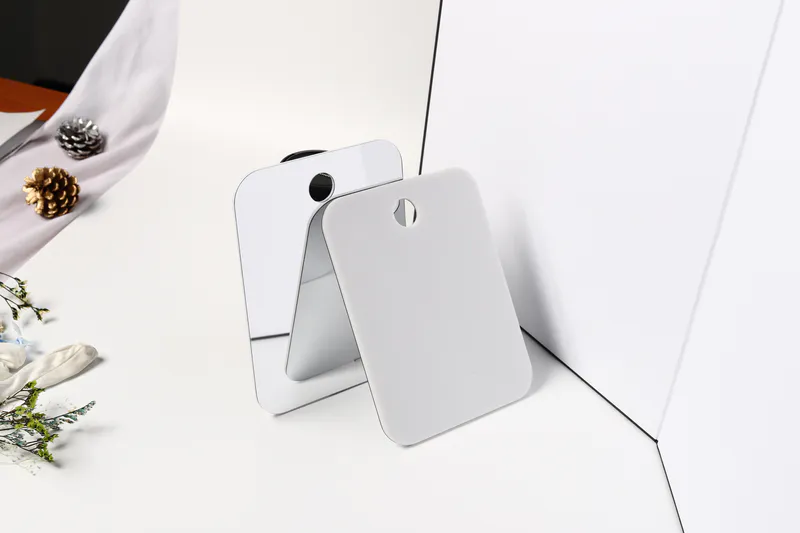
Making the Final Decision Using Samples Close to Real-World Conditions
To evaluate true performance in a bathroom setting, samples that closely replicate the final product are essential. We recommend confirming details in the following order:
- Assess standard reflection first: Install the sample according to the planned dimensions and method, and check facial contours, straight lines, and edge clarity at your actual viewing distance.
- Evaluate anti-fog performance: Operate the product according to the instructions and observe how quickly fogging begins under expected vapor conditions, which areas remain clear, and whether clarity lasts for the duration of your use.
- Incorporate routine cleaning: Use the manufacturer-approved cleaning methods, then observe the anti-fog efficacy and surface condition. For long-term applications, request corresponding durability test conditions and results from the supplier.
- Inspect post-assembly changes: Perform normal opening and closing actions on cabinet doors, or handle portable mirrors to check for looseness, warping, or any abnormalities in the backing layer and edges.
Other selection criteria can be abstract; this method is by far the most practical. Its drawback is that the back-and-forth process takes more time, but as long as the product meets your ultimate standards, it is well worth the effort.
What Are the Benefits of Plastic Anti-Fog Bathroom Mirrors?
In our previous discussion on selection criteria, weight, impact resistance, and ease of fabrication came up repeatedly. These factors also explain why plastic anti-fog mirrors are worth considering for certain bathroom settings.
Lighter Mirrors Offer Greater Convenience
At the same time size and thickness, standard plastic mirror panels are generally much lighter than glass ones. If a shower mirror needs to be taken off its mount daily or frequently packed into a storage bag, this weight difference makes a noticeable difference in daily handling.
When used in cabinetry, reducing the weight of the mirror surface also helps keep the total weight of the cabinet door down. However, the finished cabinet includes other components such as brackets, back panels, and housing, so the total weight of the complete product should always be evaluated. Being lightweight does not mean other factors can be overlooked.
Superior Impact and Shatter Resistance
Bathrooms are environments where mirrors are prone to breakage. Whether caused by an accidental impact or a fall, a mirror that fails to withstand impact simply lacks sufficient toughness.
The lightweight advantage mentioned earlier actually goes hand in hand with impact resistance. To withstand sudden impacts, a material must be both lightweight and resilient.
The same applies to shatter resistance. Unless heavily tempered, glass tends to break into tiny, dangerous shards—an area where glass simply cannot match the safety of plastic.
Plastic mirror materials like PMMA and PC offer breakage characteristics quite different from standard glass, and the options extend well beyond just these two materials.
Greater Customization Flexibility
Fitting a mirror surface into an existing cabinet door or product often requires precise dimensions, rounded corners, cutouts, and screw holes. Plastic mirror panels can be fabricated using methods tailored to the material and surface finish, allowing the mirror to integrate seamlessly as a custom-matched component.
If your product requires a custom contour, you can submit your mirror panel cutting and fabrication requirements in advance for the supplier to determine the appropriate techniques and processing sequence. Different combinations of requirements simply cannot be met with a single fabrication method.
The Drawbacks: Scratching and Distortion
Standard plastic surfaces are generally more prone to scratching than glass; they are also more susceptible to warping caused by uneven supporting surfaces or assembly stress. For a facial mirror, this can result in fine scratches, localized ripples, or unnatural-looking reflections.
As Plaskolite’s Plastic Mirror Fabrication Guide points out, uneven substrates, incompatible adhesives, and humidity fluctuations can all affect the condition and reflective quality of plastic mirror panels. The guide also notes limitations for high-humidity applications, serving as a reminder that standard plastic mirror panels cannot be regarded as ready-to-use bathroom anti-fog products simply because of their material.
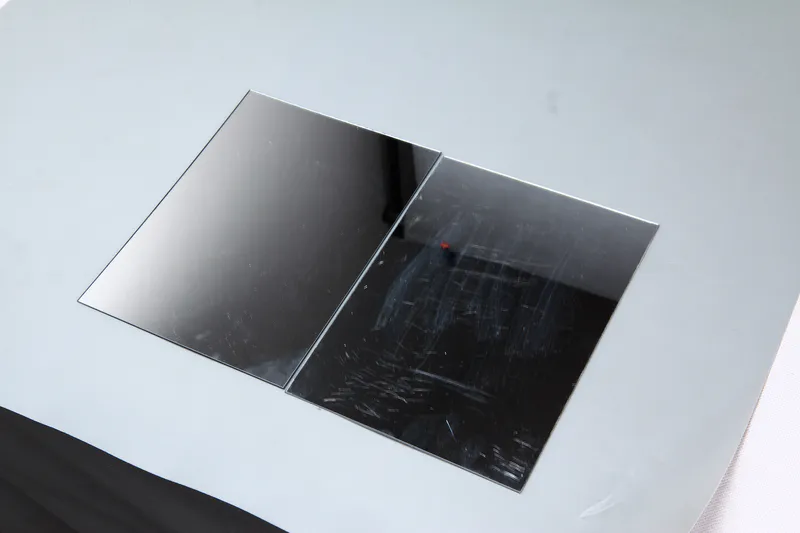
Differences Between Materials Used in Plastic Anti-Fog Bathroom Mirrors
There is a wide variety of plastics available, and anti-fog mirrors made from different materials vary in performance. The base material dictates certain inherent characteristics and advantages of the product. Here, I would like to briefly discuss the differences between them.
At DHUA, our current anti-fog mirror products use PC and PMMA as base materials. Let’s take a closer look at these two materials, along with a few others.
PMMA (Acrylic)
For projects that require a lightweight mirror with customized dimensions, rounded corners, or mounting holes, acrylic mirror material is a compelling option worth considering. It accommodates a wide range of fabrication needs and can be treated with specialized surface coatings to create anti-fog mirror panels.
Its advantages shine in small-to-medium-sized mirrors, cabinet door mirrors with stable rear support, and products requiring specific contours. The material itself is not inherently anti-fog; a specific anti-fog coating must be applied to achieve this function.
Currently, mirrors made primarily of PMMA can achieve a light transmittance of up to 93%, which remains largely unaffected even after applying an anti-fog coating. Furthermore, acrylic offers numerous opportunities for deep processing and customization.
Overall, acrylic offers superior workability. However, this can also be considered a drawback. Why? Because without extensive customization, basic acrylic lacks certain inherent properties found in other materials, which can ultimately drive up costs.
For instance, scratch resistance requires a hardened surface coating, and improving surface flatness and rigidity means the acrylic must be made thicker and treated with a hard coating.
PC (Polycarbonate)
PC mirrors are naturally rigid, which is a major inherent advantage of the material. If the mirror is to be installed in an area prone to impact, the impact-resistant properties of polycarbonate mirror material make it a more compelling choice for specialized anti-fog mirror panels in compact bathrooms.
The primary advantage of PC lies in its impact tolerance. However, its surface hardness is relatively low, making it susceptible to scratches. Additionally, its weather resistance is limited; prolonged exposure to sunlight can lead to yellowing.
The low surface hardness can be mitigated by applying an anti-fog coating, as these exterior treatments often provide a degree of scratch resistance.
PC is not as easy to process as PMMA. Fabrication typically requires careful control of internal stress to prevent deformation or cracking.
Other Materials
In addition to PMMA and PC, several other materials can be used for anti-fog mirrors. PET is suitable for lightweight, flexible anti-fog mirror products, though it may cause image distortion if not adhered smoothly. PVC offers lower maturity in product selection and mirror applications compared to PMMA. SAN boasts excellent transparency, surface gloss, rigidity, and dimensional stability, but its impact resistance generally falls short of PC, and it sees limited commercial application in large-format mirror panels and anti-fog mirrors.