
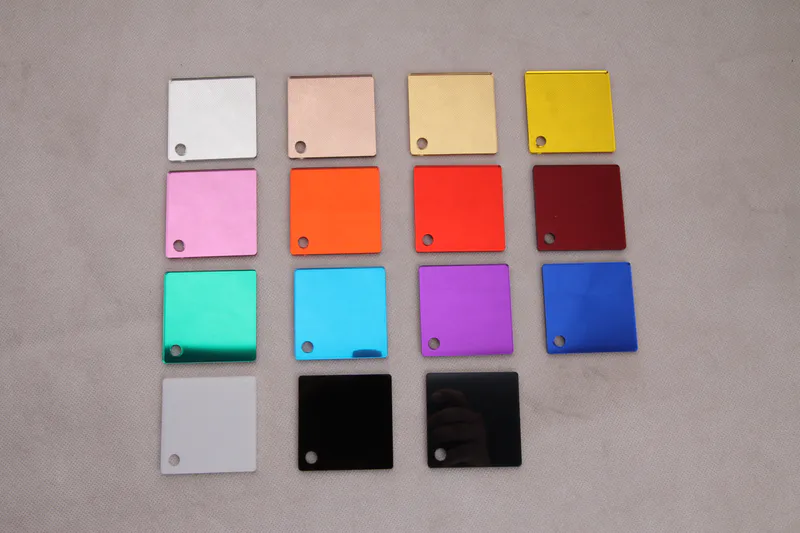
When customers inquire about colored acrylic mirrors, they usually first give us a color name, such as gold, rose gold, black, or bronze. Some customers also send a reference image and hope that we can provide “the same color as in the picture.”
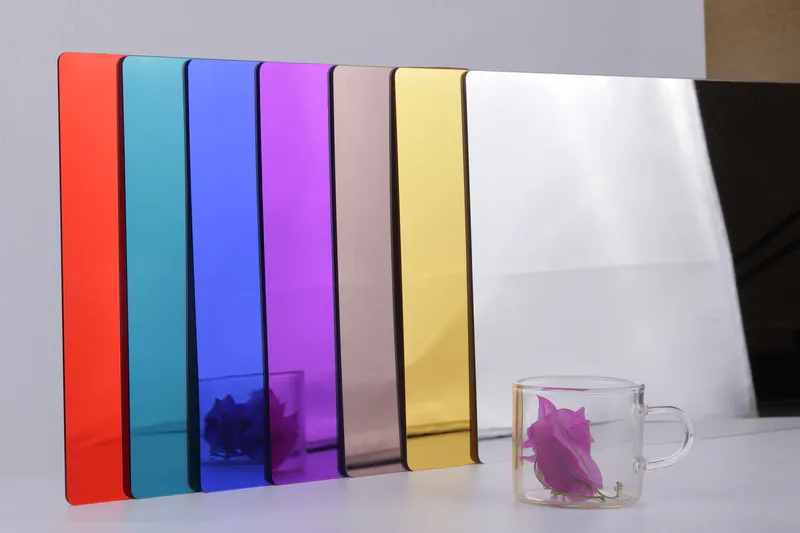
However, for colored mirror surfaces, knowing only the color name is not enough. Mirror sheets that are all called gold may lean more yellow, lighter, or closer to champagne; the same black mirror surface may actually appear black or gray, and after light reflection the visual difference may not be obvious. Mirror surfaces reflect the surrounding environment onto the surface, so the final effect depends not only on the sheet itself, but also on the lighting, background, viewing angle, and nearby materials.
Before recommending a color, we usually first confirm what kind of effect the project requires. Does the customer need a mirror that can normally reflect people, or a decorative surface with color? Will the sheet be made into large wall panels, or cut into letters, logos, and small decorative pieces? Does the finished product need to be photographed, will it be touched frequently, and will it be used together with wood, metal, flowers, or lighting?
Only after confirming these questions can we make better recommendations. But in reality, this is often not the case. Many customers may not want to answer these questions, and at that point, some content that can help communication becomes necessary. This article was created for that reason.
First, determine the desired effect for your project
Colored acrylic mirrors can be used for reflection or for decoration, and these two purposes do not require the same material characteristics.
If the project requires viewing the true colors of people, clothing, cosmetics, or products, we usually recommend giving priority to silver acrylic mirrors. Silver mirror surfaces are standard mirror surfaces, with relatively little impact on product colors, making them more suitable for fitting areas, makeup areas, child-safe mirrors, and spaces that require normal reflection.
If the main purpose of the mirror surface is to add color, create brand identity, or produce a visual focal point, then gold, rose gold, black, bronze, pink, purple, and other highly saturated colors are more suitable. In this case, whether the mirror reflection effect is completely accurate is usually not the primary requirement. Instead, the design effect, text readability, and coordination with surrounding materials become more important.
For cut letters, logos, and patterns, we also consider the viewing distance of the finished product. Thin mirrored letters can look very refined at close range, but when placed in shopping malls, exhibitions, or wedding venues, they may lose their outline because the reflected background is too visually complex.
For large wall panels, we are more concerned about whether the backing board is flat and whether segmentation is required. This is mainly because acrylic is a flexible material, and its rigidity is not as strong as glass. Therefore, reflection distortion may occur.
Below are the cake toppers our company makes for customers. This type of product requires processing mirrors into artistic lettering. Its biggest challenge lies in how to ensure the material’s toughness while maintaining aesthetics. And this is the key point we want to determine.

Confirm the mirror structure
The “colored mirror sheets” on the market are not necessarily the same type of product. Even if the colors look similar, the structure and intended use may be completely different.
Common colored acrylic mirrors are usually sheets with one reflective side and one protective backing side. They are suitable for wall decoration, signage, display racks, furniture inserts, and cut decorative pieces.
If the item needs to be suspended and visible from both sides, a standard single-sided mirror is usually not suitable. For this type of project, you can consider a double-sided acrylic mirror. The purpose of a double-sided mirror is to provide reflective effects on both sides of the sheet, and it is not the same product as a two-way mirror.
A two-way acrylic mirrors allows part of the light to pass through while reflecting part of the light. It is mainly used for smart mirrors, observation windows, and lighting displays. Its effect depends on the lighting difference between the two sides, so it cannot be used as a regular colored mirror surface.
Therefore, we recommend not writing only “gold acrylic” or “colored mirror” when requesting a quotation. A more accurate description should include the color, thickness, whether it is opaque, the number of reflective sides, and the backing structure.
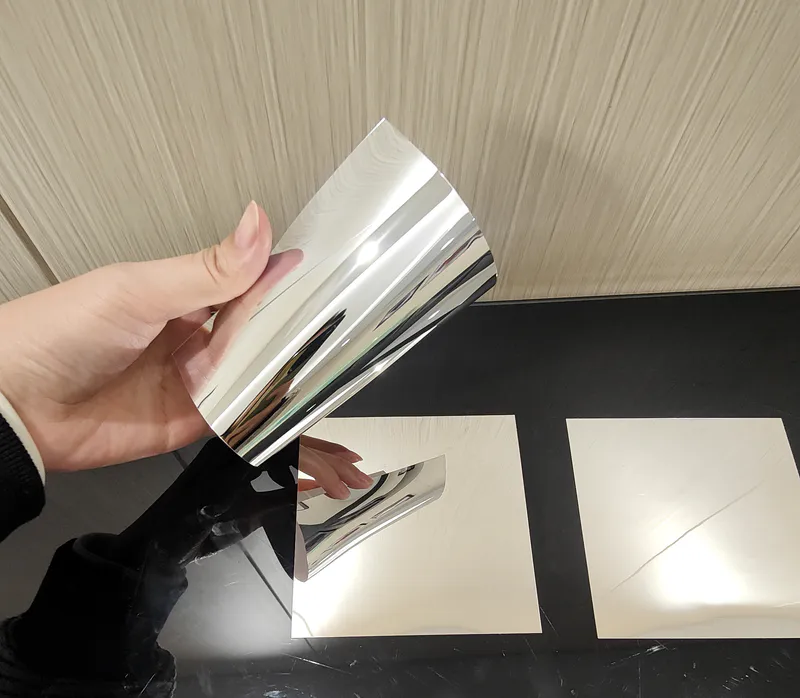
Some customers are also more concerned with mirrors that have strong flexibility; the flexibility here is itself also a kind of structure. As shown in the image below, mirrors that are flexible to this extent are not made of acrylic material; they are more often made of PETG material.
Which Colors Are Suitable for Different Projects
There is no absolute good or bad among different colors; it mainly depends on whether they suit the function and environment of the project. We usually first divide colors into several groups, and then narrow down the range based on the actual effect. Below, we have compiled a table that describes the usage range of different colors, which you can use for reference:
| Color Type | Primary Effect | Common Projects | Points to Consider |
|---|---|---|---|
| Silver | Neutral, clear, similar to a standard mirror | Functional mirrors, signage, display backing panels, children’s safety mirrors | Flatness of large-size panels and surface glare |
| Gold, Rose Gold | Warm, eye-catching, highly decorative | Weddings, retail, cosmetics, gifts, medals, brand logos | Color tone variations, photographic effects, and lighting-induced color shifts |
| Black, Smoky Gray, Bronze | Dark, Understated, Strong Sense of Space | Hotels, Restaurants, Jewelry, Furniture, Dark Retail Spaces | Detail in Shadows, Dust, and Background Reflections |
| Pink, Purple, Blue, Red, etc. | Clear Themes, Strong Brand Recognition | Events, Children’s Spaces, Exhibitions, Cosmetics, Trend-Driven Retail | Text Contrast, Batch Consistency, and Long-Term Restocking |
Silver Means Standard
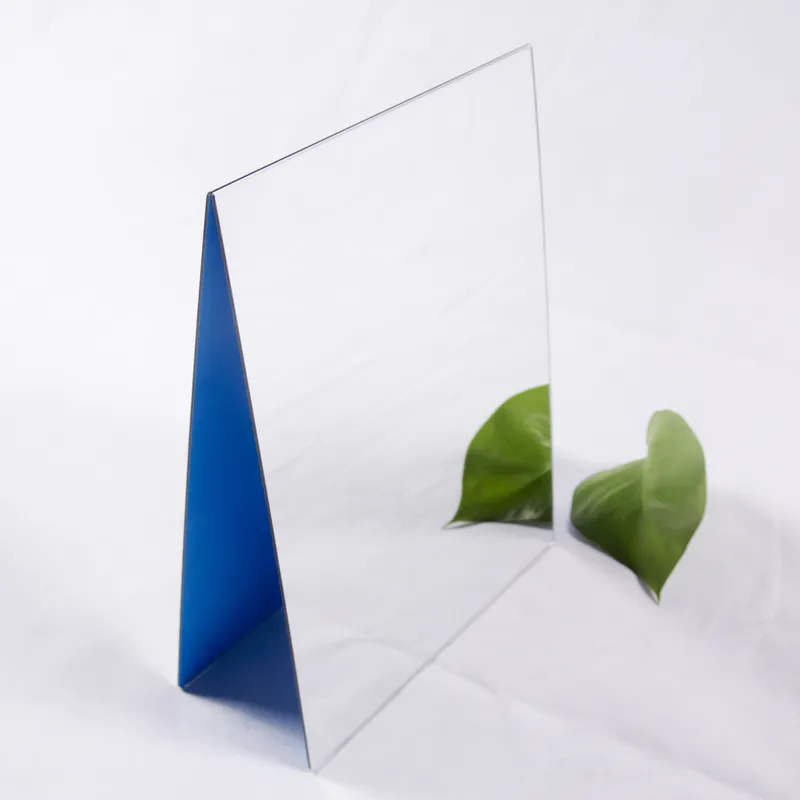
Silver is usually the easiest choice to use, as it can match most colors. If a project requires both functionality and decoration, we often recommend keeping part of the silver mirror surface as the main reflective area, while using colored mirrors to create borders, logos, or partial patterns.
This approach is more reliable than using strong colors across the entire surface. Especially in fitting rooms, beauty, and product display environments, customers can still see relatively normal colors, while the colored sections fulfill the design purpose.
Gold and Rose Gold Are Suitable for Warm-Toned Projects
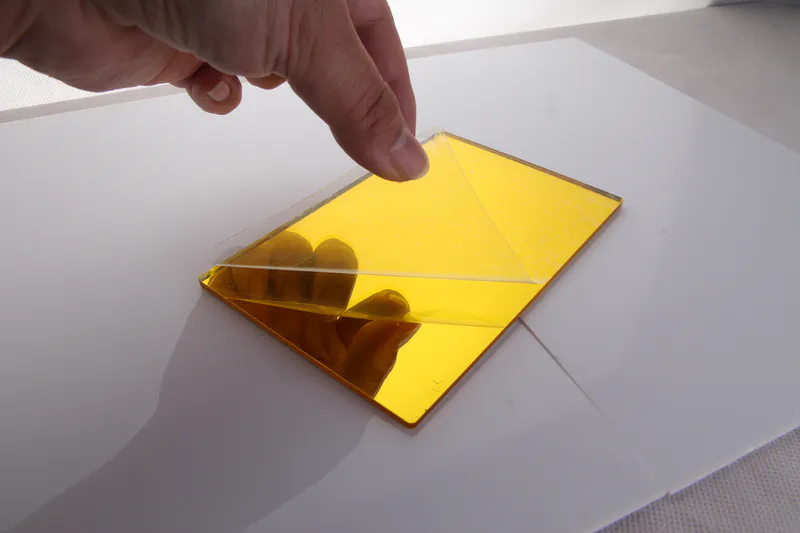
Gold acrylic mirrors are ideal for projects seeking a striking, warm, or upscale visual effect; they are commonly used in retail signage, awards, gift packaging, and event decorations.
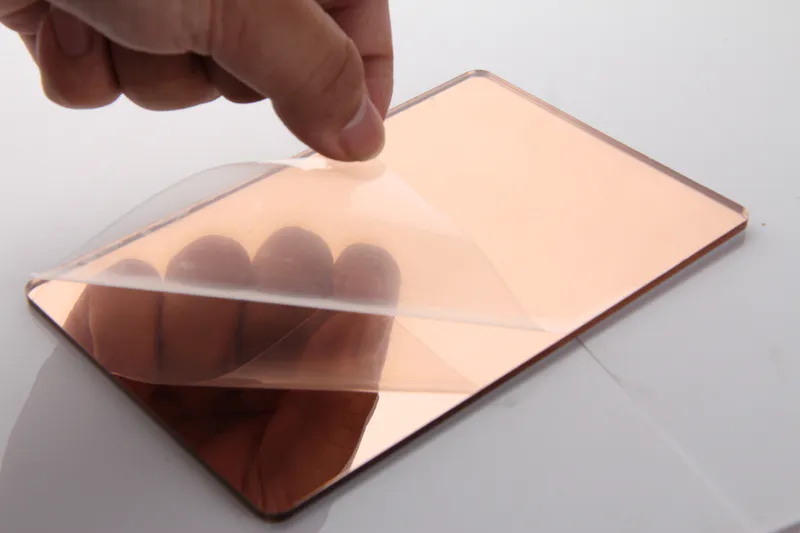
Rose gold acrylic mirrors have a softer hue and pair more easily with pink, beige, white, and floral arrangements, making them a popular choice for weddings, beauty, and women’s consumer brands.
We do not confirm materials based solely on the names “gold” or “rose gold.” Different suppliers’ gold may lean toward yellow, brown, or champagne, while rose gold may lean toward pink or copper. For bulk projects, it is best to use the supplier’s color codes and physical samples as confirmation.
Black, Smoky Gray, and Bronze Are Suitable for Dark Spaces
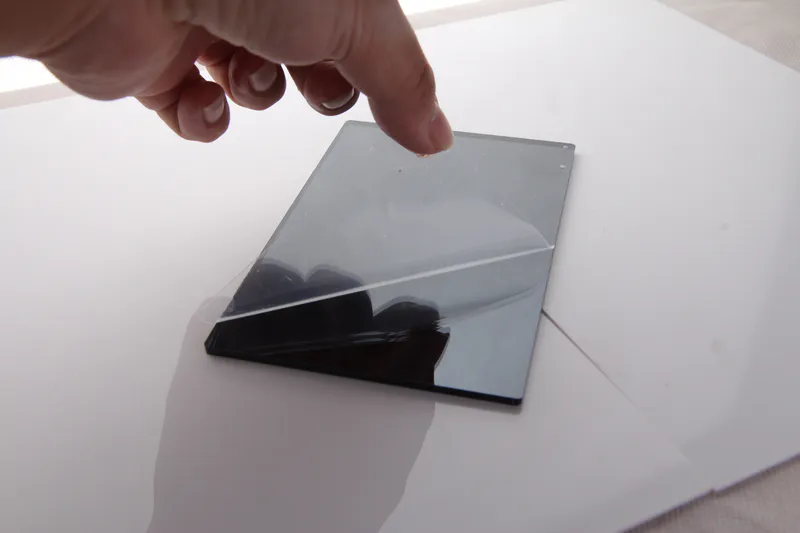
Black acrylic mirrors and smoky gray mirrors are suitable for modern retail spaces, bars, restaurants, exhibitions, and dark-themed brand spaces. They are not as bright as silver mirrors and typically provide a more subdued reflection, making them ideal for use as backdrops, cabinet inserts, or accent wall materials.
Bronze acrylic mirrors have a warmer tone than black and are well-suited for spaces featuring wood, leather, brass, stone, and warm lighting. This color is frequently used in jewelry, hospitality, and furniture projects because it offers the play of light typical of mirrors without being as prominent as bright gold.
The visual effects of these dark-colored mirrors vary noticeably depending on the environment. A black mirror appears brighter when facing a window, while a bronze mirror may take on a brownish hue when placed next to dark wood finishes. We typically ask clients to specify what the mirror is facing directly, rather than just what’s next to it.
Pink, Purple, and High-Saturation Colors Are Suitable for Themed Projects
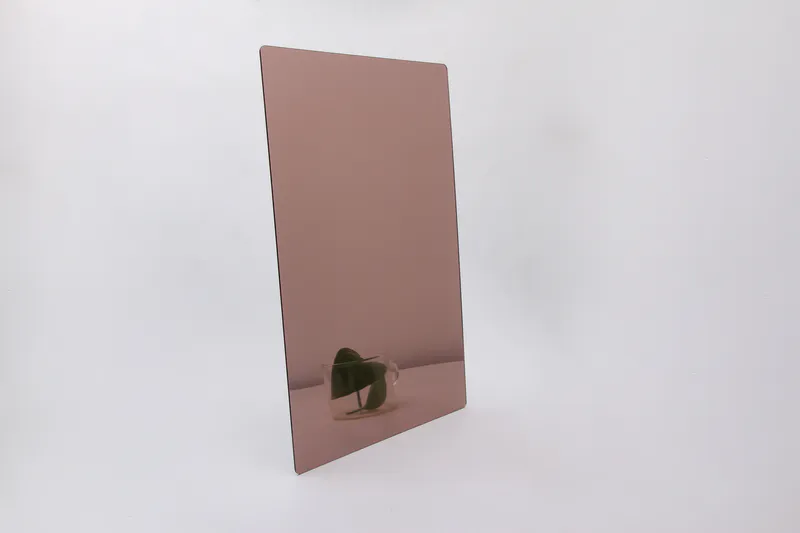
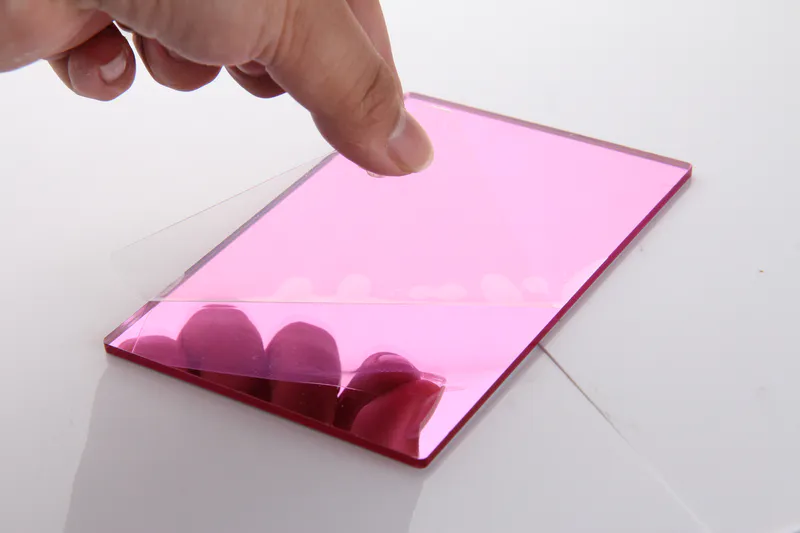
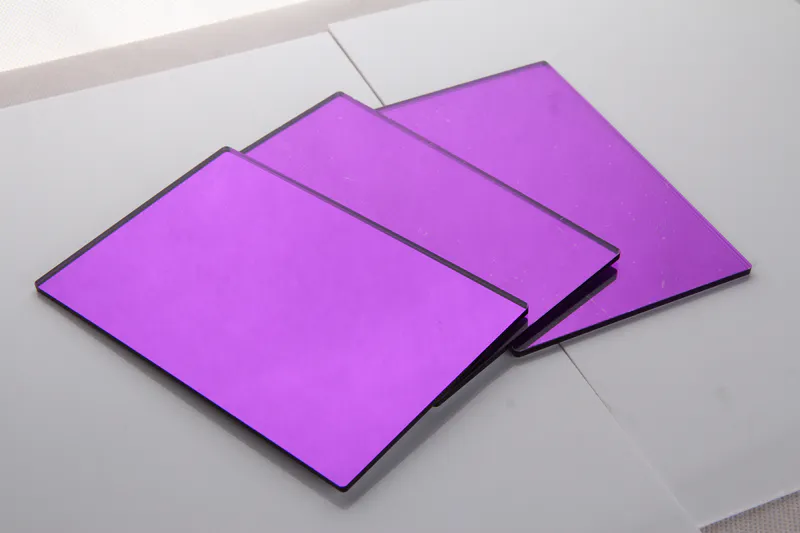
Pink, purple acrylic mirrors are better suited for spaces with a clear theme, such as children’s decor, weddings, trade shows, beauty counters, trendy retail spaces, and art installations.
The advantage of these colors is their high visibility, but they can also more easily affect the colors of people, products, and text. If the mirror will reflect skin, cosmetics, or clothing, we recommend using neutral lighting and a neutral background in the project, or setting up a separate area with silver mirrors.
For non-standard stock colors such as blue, red, and green, it’s also important to confirm minimum order quantities and restocking conditions in advance. This issue isn’t significant for projects requiring a one-time production run; however, if a store may undergo future repairs or expansions, it’s essential to consider whether materials in the same color will be available for future orders.
The Processing Method Affects the Final Result
Using the same color acrylic mirror for a full sheet, cut letters, engraved patterns, or printed panels will produce noticeably different final effects.
We do not recommend using large full sheets of colored acrylic mirror, such as the large mirrors needed for gym walls. For this type of mirror, we recommend choosing glass material. The reflective effect of acrylic material may very likely make you want to return it!
Small letters and pattern engraving are common applications for colored acrylic mirrors. This kind of processing greatly tests a manufacturer’s production capability. The more delicate and complex the design, the more troublesome it becomes for the manufacturer. We have handled similar projects before. One customer wanted text inserts with very thin thickness requirements, product length limitations, and artistic lettering. In situations like this, extremely precise production is required. A slight mistake may ruin a product and cause losses.
Laser cutting will expose the edge of the acrylic portion inside the mirror. Whether this edge appears transparent, tinted, or whitish depends on the substrate color, thickness, and processing parameters. It will not look like the cut surface of solid metal. For letters, plaques, and display pieces where the sides are visible, we will include the edge effect in the sample confirmation.
Mirror acrylic can be engraved from the front side. Trotec states in its Mirror Acrylic Processing Guide that mirror materials can be engraved from both sides, and acrylic parameters can only be used as a starting point for testing. Actual projects still require retesting according to color, thickness, pattern details, and equipment. Generally, engraving on the back side is not recommended, because the back side of most acrylic mirrors is the reflective layer, which is the coating used to provide the mirror reflection. Engraving on it may damage the coating. To engrave on the back side, the coating would need to be on the front side.
Projects for Which Colored Acrylic Mirrors Are Not Suitable
In fact, as long as you are particularly concerned about these two aspects, you basically do not need to consider colored acrylic mirrors.
The first is whether it is easy to get damaged. How should this kind of “damage” be understood? You may have learned from elsewhere about acrylic’s impact resistance, but in many cases, impact resistance does not mean it is very sturdy and difficult to break.
In fact, many people misunderstand what impact resistance means. Here I’ll give a simple and easy-to-understand standard: impact resistance requires an intact flat supporting surface. If this requirement is not met, its impact resistance is of no use.
Glass has lower impact resistance than acrylic because glass itself is rigid. When resisting impact force, the rigidity inside the material directly clashes with the impact force, resulting in shattering. Acrylic, on the other hand, is much more flexible than glass, so the impact force can be dispersed when resisting impact. But the prerequisite for all of this is: thin acrylic must be placed on an intact flat supporting surface, such as a completely level wall or tabletop. The area covered by the acrylic cannot have any protrusions whatsoever, otherwise it also has little impact resistance. The situation described above improves significantly after the acrylic has been thickened or hardened.
The second is the belief that acrylic mirrors have low cost. A common misconception is that acrylic mirrors cost less than glass. In reality, the opposite is true, because acrylic mirrors usually need to be processed before they can be used. Large acrylic mirror sheets produce distorted reflections, and they can only be used after being cut into smaller mirrors. Most of the cost is activated during the processing stage, so the cost is not as low as people believe. Unless you are able to handle the processing yourself.
How to Make Your Final Selection
When choosing colored acrylic mirrors, we usually follow a simple order of judgment: first confirm what function the mirror surface needs to serve, then choose an appropriate color group, then view samples under the actual lighting and background conditions, and finally confirm the finished effect using the real processing method.
When clear reflection is needed, silver is usually the safest choice; when warm tones and a decorative feel are needed, gold, rose gold, and bronze can be considered; when a dark, understated spatial effect is needed, black or smoke gray can be chosen; when a clear theme and brand color are needed, highly saturated colors such as pink, purple, blue, and red are more suitable.
Confirming these factors together in the same sample is usually more effective than discussing separately which color is “best.”