
Buyers sometimes ask whether silver-coated acrylic mirrors are different from standard acrylic mirror panels. However, in most decorative and display applications, these two terms actually refer to the same product: a silver-coated acrylic mirror or mirror panel.
The confusion stems from the word “silver,” because the most common mirrors we see are silver in color, but since we’re more accustomed to calling them simply “mirrors,” we often overlook their “silver” appearance.
“Silver” can describe a functional mirror surface, or it can refer to a metallic silver finish, a gray-toned mirror surface, or an optical mirror coating.
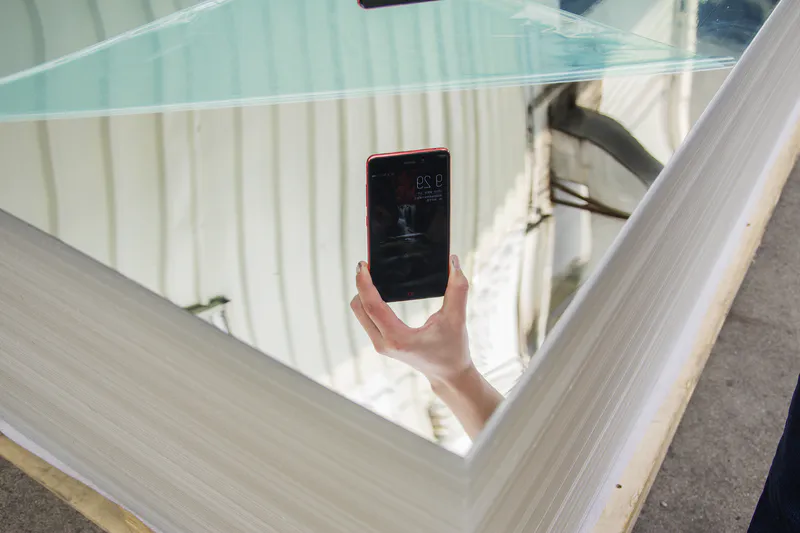
What does silver mirror acrylic mean?
I’ve already covered the relevant definitions when discussing gold acrylic mirrors and rose gold acrylic mirrors, so I won’t go into further detail here. The simplest way to understand this is to think of a standard acrylic mirror or an acrylic mirror in its default color, since mirrors are commonly silver in color.
This is the standard structure commonly used for many decorative acrylic mirrors. The term “silver” describes the neutral appearance of the mirror surface, rather than a specific colored product grade.
The name alone is not sufficient to provide all necessary details; for technical orders, a formal quote should still specify the substrate, thickness, coating, backing, sheet dimensions, and protective film.
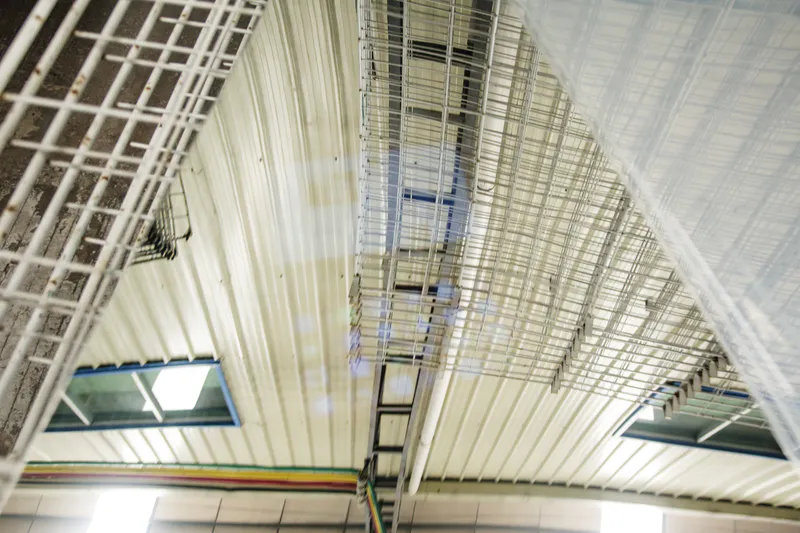
Is silver mirror acrylic different from standard acrylic mirror?
In most signage, display, craft, and safety mirror product lines, “silver mirror acrylic” refers to standard acrylic mirror sheets rather than a standalone product. Gold, rose gold, bronze, and black sheets are the colored variants within this category.
However, different suppliers do not use these terms in exactly the same way. “Silver acrylic” may also refer to a non-mirrored sheet with a metallic finish. Buyers who simply request “silver acrylic” may receive a glossy gray sheet that does not provide a clear reflective surface. The key point is that acrylic sheets are not the same as acrylic mirrors.
| Product name | What the surface does | Common use |
|---|---|---|
| Silver mirror acrylic | Provides a neutral visible reflection | Signs, displays, safety mirrors and decorative parts |
| Metallic silver acrylic | Provides a shiny silver color but limited image reflection | Letters, panels and branded decor |
| Grey or smoked mirror acrylic | Provides a darker tinted reflection | Interior accents and retail displays |
| Silver glitter or foil acrylic | Provides a decorative sparkling surface | Crafts, event decor and packaging |
| First-surface optical mirror | Reflects from an exposed front coating | Imaging, instruments and optical systems |
The last type of product is particularly different. Edmund Optics explains that in a front-surface mirror, the reflective coating is applied to the front surface, whereas a back-surface mirror requires light to pass through a transparent substrate before reaching the coating layer. Standard decorative mirror-finished acrylic is not necessarily suitable for precision optical work. One should not assume that acrylic mirrors are capable of handling optical applications.
What are the advantages of silver mirror acrylic?
It provides a standard mirror reflection effect
Unlike gold, rose gold, bronze, or black mirrors, silver acrylic mirrors do not alter the color of the reflection. It’s the most practical choice when you don’t need a fancy mirror. Essentially, you’re getting a mirror made of acrylic.
It can be used for inspection panels, small vanity mirrors, children’s products, and decorative mirrors in display cases. However, in all applications, it still cannot fully match the reflective smoothness and scratch resistance of glass.
It is easier to cut and handle than glass
Acrylic is lighter and more impact resistant than conventional mirror glass. It can be laser cut, CNC routed, saw cut and drilled into letters, circles, irregular shapes and parts with holes.
Acme Plastics’ comparison of acrylic and glass mirrors also identifies lower weight, impact resistance and easier fabrication as practical acrylic advantages. These properties are useful for suspended signs, portable displays, children’s products and parts that require detailed cutting.
It is widely available in common decorative specifications
Silver is typically the standard mirror finish in acrylic mirror product lines. As a result, suppliers generally offer a wider range of thicknesses and sheet sizes for silver than for less common colors.
This does not mean that every silver sheet is exactly the same. The coating, backing color, flatness, and thickness tolerances may vary. You should confirm the specific specifications rather than make assumptions.
It works with most design colors
Silver mirror finishes can be paired with black, white, clear, and tinted acrylic, printed patterns, wood, and metal. They reflect the surrounding design without adding strong warm or dark tones.
This is particularly useful for product displays where the colors of the merchandise need to remain easily recognizable. Gold or bronze mirror finishes may give the display a warmer tone, whereas silver is less likely to alter the visual balance and is better suited for highlighting the product itself.
What are the limitations of silver mirror acrylic?
The Surface Is More Prone to Scratches Than Glass
The front surface is made of acrylic. Dry wiping, paper towels, abrasive polishes, and dirty cloths can all leave fine scratches. The protective film on the sheet should be left in place during cutting, shipping, and installation.
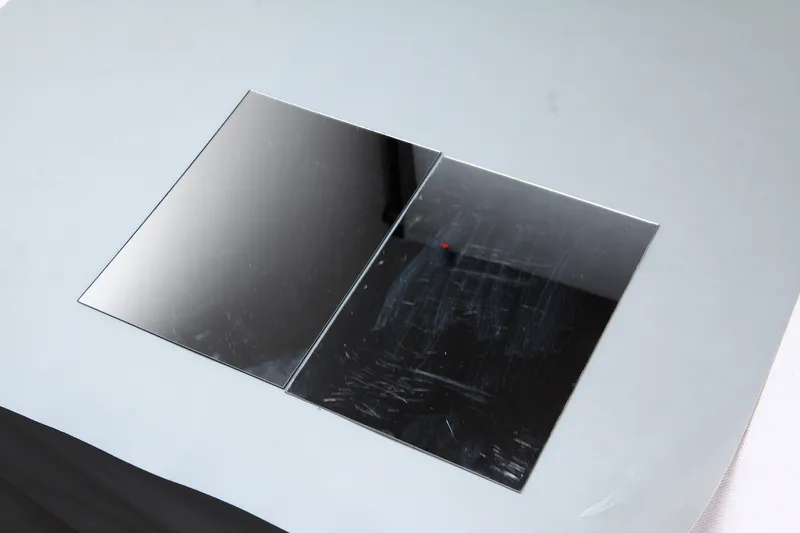
Acrylic surfaces aren’t as rigid as glass, so they aren’t as scratch-resistant. If you want to make an acrylic surface less prone to scratches, you’ll need to apply a coating to it. Coating the surface can effectively reduce scratching.
As shown in the image below, the acrylic mirror on the left, after being coated, is noticeably more scratch-resistant than the one on the right.
Large Sheets May Produce Wavy Reflections
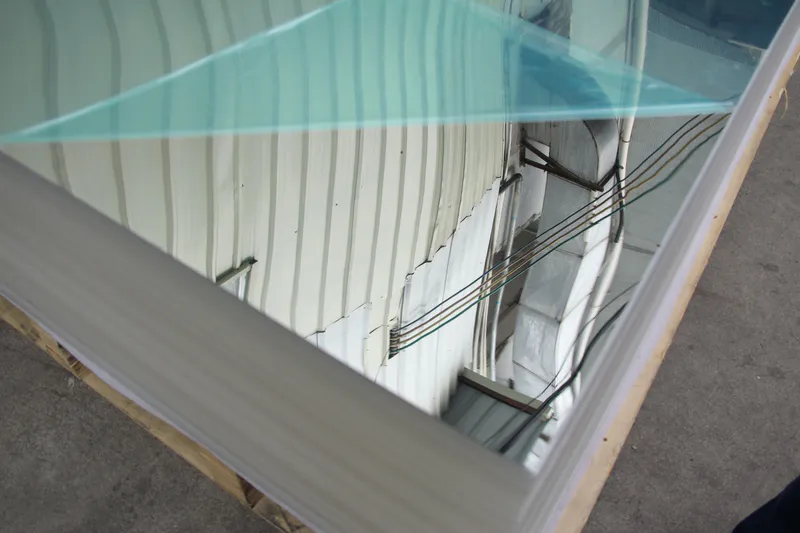
Acrylic mirror panels are flexible. If a panel is installed on an uneven wall, supported by only a few points, or allowed to bend, the reflection will distort accordingly.
Increasing the thickness can improve rigidity, but it cannot achieve a glass-like, flat mirror finish with large-size acrylic panels. The Guide to Large Acrylic Mirrors explains when a rigid backing panel is required and when glass is a better choice. This is an issue we’ve been discussing; here are some actual renderings.
The Mirror Backing May Be Damaged
The reflective coating is typically protected from the back, but incompatible adhesives, moisture at exposed edges, or rough processing can damage the backing. Solvent-based adhesives may cause blackening, lifting, or loss of reflectivity.
Unless there are special requirements, conventional mirror backing layers do not have strong protective performance.
Edges Do Not Look Like Solid Metal
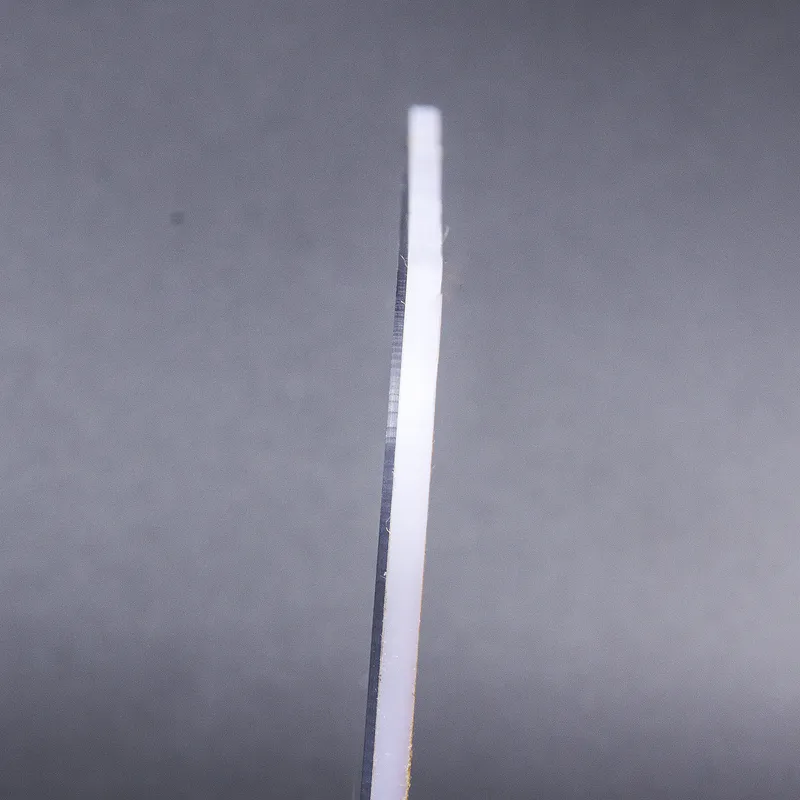
Cut edges reveal the acrylic substrate and coating structure. Their appearance does not resemble polished stainless steel or solid silver metal. The edges may need to be concealed within a frame, covered with other materials, or finished as part of the design.
From the image below, we can understand that since acrylic is being used, its edges should have this kind of plastic texture.
Where is silver acrylic mirror commonly used?
Silver-mirrored acrylic is used for:
- Retail displays and cosmetics display stands;
- Point-of-sale display fixtures;
- Mirrors for children and educational purposes;
- Lightweight safety mirrors;
- Signs, logos, and decorative lettering;
- Theater props and exhibition components;
- Display cases and product display stands;
- Model making and craft projects;
- Small wall mirrors and furniture inlays.
The specific application ultimately determines whether acrylic is suitable. Small display inlays and large gym wall panels have very different requirements in terms of surface flatness, installation methods, and viewing distance.
For large or permanent mirrors viewed at close range, where image accuracy is a primary requirement, glass may provide better results. For lightweight, shatter-resistant, or custom-shaped components, acrylic is generally easier to work with.
Which thickness should you choose?
As a standard acrylic mirror, its thickness can range from 0.5 mm to 10 mm. The most common thickness is 6 mm. Thicknesses exceeding 6 mm require custom production. Thickness requirements vary significantly depending on the specific product application.
Finished dimensions, installation methods, and viewing distance are just as important as the nominal thickness. Before specifying large or unsupported panels, please review the Acrylic Mirror Thickness Guide.
What should you specify before ordering?
A clear purchase request should state:
- Material: PMMA acrylic mirror, not metallic silver plastic.
- Finish: neutral silver mirror finish.
- Mirror sides: one-sided unless a double-sided construction is required.
- Thickness: nominal thickness and acceptable tolerance.
- Sheet or finished size: include cut tolerance.
- Backing: backing type, color and any moisture protection requirement.
- Protective film: confirm which face is protected.
- Fabrication: cutting method, holes, slots, corners and engraving.
- Reflection requirement: decorative, safety, close-viewed or image-sensitive use.
- Installation: frame, rigid backing, adhesive or mechanical fixing.
- Quantity and batch: order adjoining pieces from one batch when consistency matters.
For custom shapes, provide a dimensioned drawing rather than a screenshot. The custom-cut acrylic mirror guide explains the information needed for holes, corner radii and production tolerances.
How should silver mirror acrylic be cut and installed?
During processing, please leave the protective film on the mirror surface. Since coatings and backing systems vary, you should test the laser settings, engraver feed rate, and drilling geometry parameters on the actual sheet material.
For larger sheets, use a flat and sturdy support. If adhesive is required, ensure it is compatible with the mirror backing and apply it in a way that does not pull the sheet toward an uneven surface. Do not use a construction adhesive simply because it bonds to standard acrylic.
Clean the front surface with plain water or an acrylic-safe cleaner and a clean microfiber cloth. Avoid using ammonia-based cleaners, abrasive materials, or dry wiping.