
Most acrylic mirror applications don’t fit a standard size. A fixture needs a specific dimension, a sign needs a particular shape, an installation needs holes in exact positions, or a design calls for something that simply isn’t stocked off the shelf. This is where custom cutting comes in — and it’s one of the genuine advantages acrylic mirror holds over glass, because acrylic can be cut, drilled, and shaped far more easily than glass can.
This post covers how custom cut acrylic mirror actually works: the cutting methods and what each is good for, the tolerances you can realistically expect, the edge finishing options, and the specifications to get right before you place an order. Custom orders are usually non-returnable once cut, so getting the details right at the order stage matters more than for standard sizes. By the end, you should be able to specify exactly what you need and know what questions to ask.
Why Custom Cutting Suits Acrylic
The case for acrylic over glass is strongest when custom work is involved. Glass mirror requires diamond-blade tools, glass-specific drill bits, and edge polishing for any custom dimension — work most buyers won’t attempt themselves and which adds significant cost when done professionally. Acrylic, by contrast, can be cut with tools that fabrication shops already own, drilled with modified standard bits, and shaped into curves and complex outlines that glass can’t economically match.
This is why acrylic dominates the custom-cut mirror market. Signage, retail fixtures, bespoke decorative work, OEM components, and any application needing a non-standard size or shape — these almost always specify acrylic, both for the lower fabrication cost and for the range of shapes that become possible.
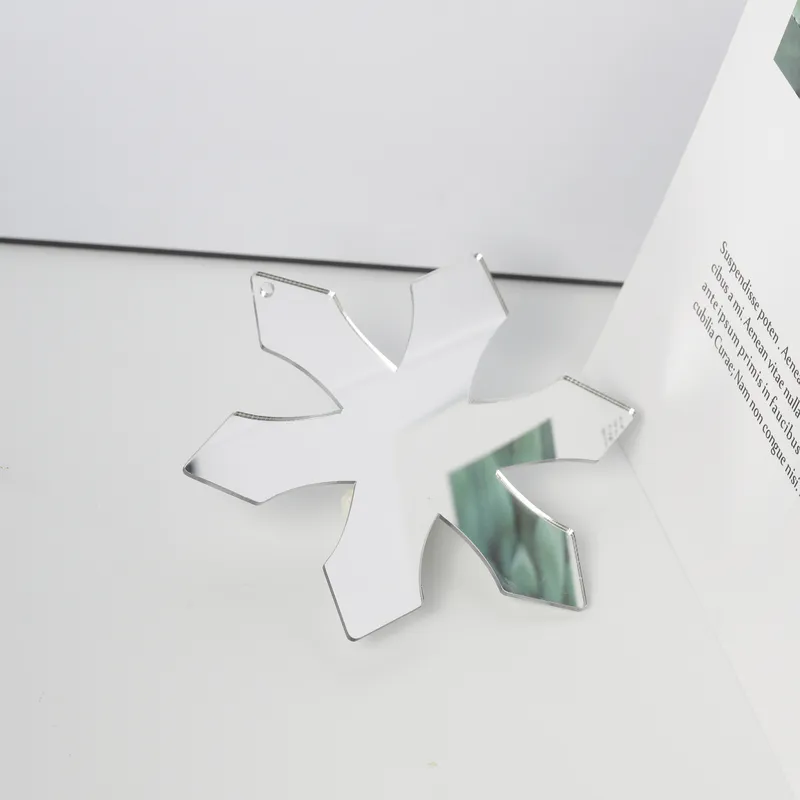
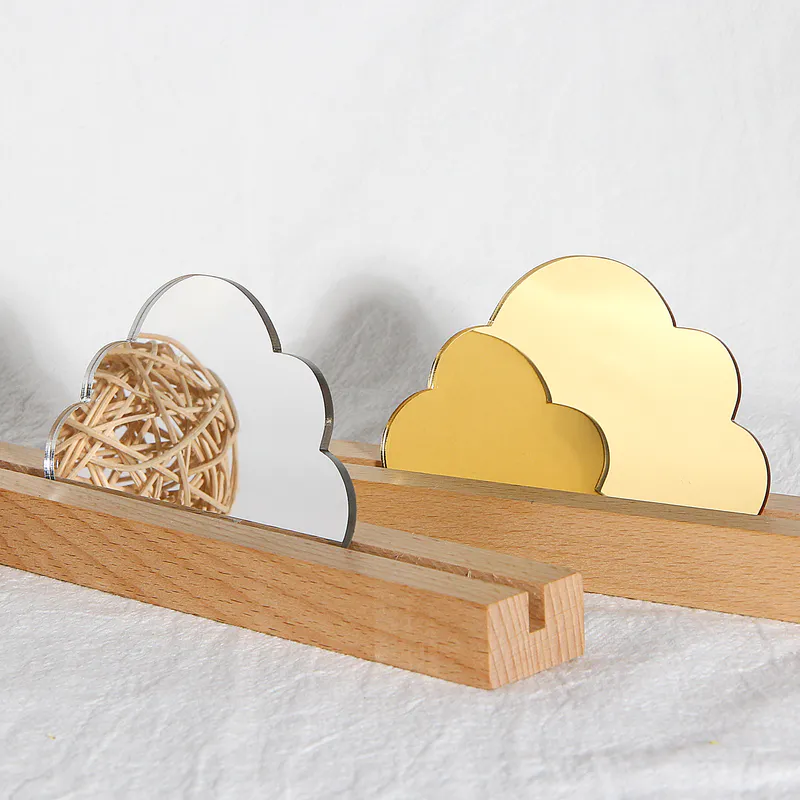
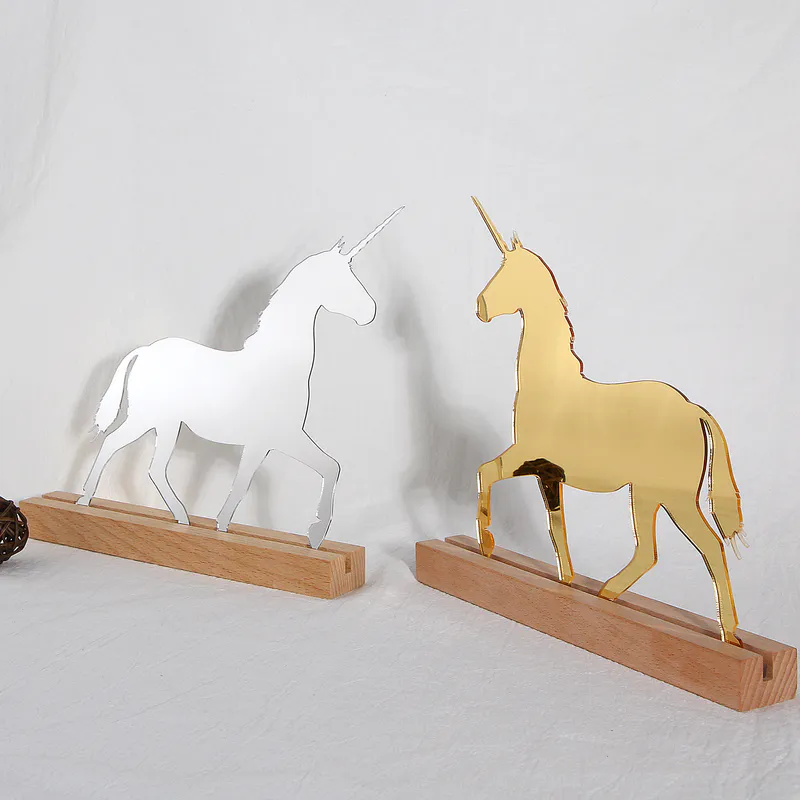
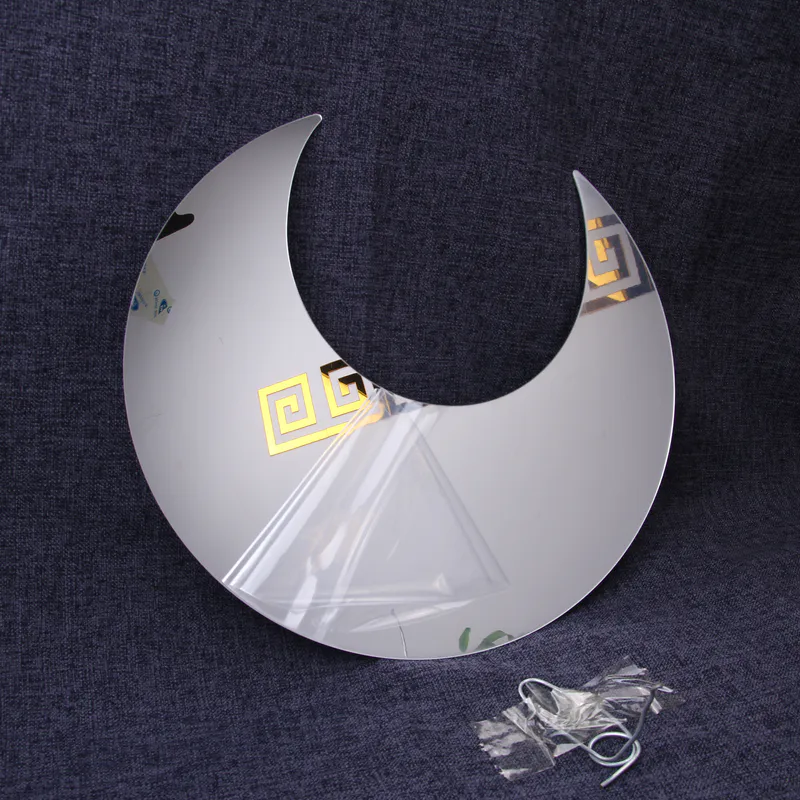
We talked about this before: acrylic’s size-distortion limitation means custom pieces above roughly 60cm in any dimension start to show reflection waviness, so custom cutting works best for pieces that stay within the size range where acrylic performs cleanly. Below are plastic mirrors we have processed into various shapes, among which acrylic materials account for the largest proportion. Our customers prefer to use colored acrylic mirrors to be processed into specific shapes for installation in their products.
The Cutting Methods
There are several ways to cut acrylic mirror to a custom size, and the right one depends on the shape complexity, the thickness, the edge quality you need, and the order volume. The three methods that matter for most custom work are CNC routing, laser cutting, and saw cutting.
CNC routing
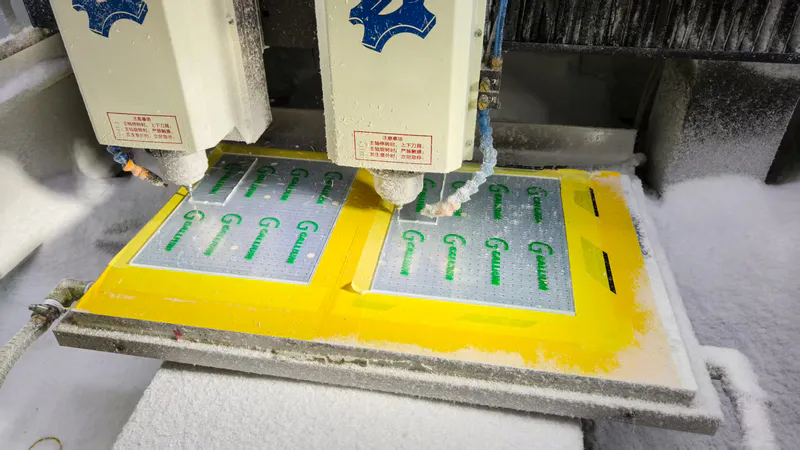
CNC routing uses a computer-controlled router head that follows a cut path defined by a CAD file. It’s the workhorse method for custom acrylic work, and it handles both simple rectangles and complex shapes well.
The precision is excellent — the CNC machining specialists at JLCCNC report typical tolerances of ±0.05mm on critical dimensions for acrylic, which is far tighter than most mirror applications require. CNC is also the only method that handles features that don’t pass all the way through the material, like engraved channels, beveled edges, or countersunk mounting holes.
The one consideration is edge finish: as a CNC machining service explains in their process guide, CNC leaves a smooth but slightly frosted edge that needs a secondary polishing step if you want optical clarity at the edges.
For relatively thick acrylic mirror sheets, we usually cut the acrylic itself first and then carry out the mirror‑coating process afterward. Especially when customers have specific requirements for the shape and openings of the mirror, choosing different processes for different situations is beneficial for production.
Laser cutting
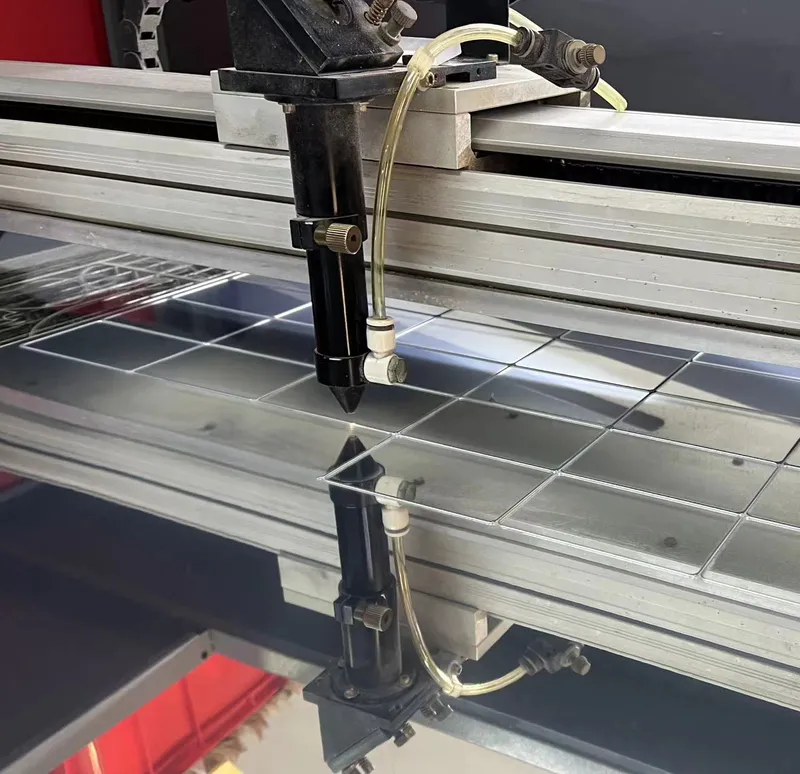
Laser cutting uses a focused CO2 laser beam to cut the material, and its signature advantage is the edge it produces. The laser melts the cut edge as it passes, leaving what’s called a flame-polished edge — clear, glossy, and smooth without any separate finishing step.
As one laser manufacturer’s technical guide notes, this “cut-and-finish-in-one-step” workflow is especially valuable for signage, displays, and retail fixtures where both speed and a premium appearance matter. There’s an interesting detail here worth knowing: the same guide explains that extruded acrylic yields a flame-polished edge under CO2 laser cutting, whereas cast acrylic cuts burr-free but doesn’t produce the same glossy edge — so if a flame-polished laser edge is the goal, the substrate type matters.
The constraint on laser cutting is thickness; most laser cutters work best on material under about 6mm, and dimensional accuracy on acrylic is typically within ±0.004 inches according to laser-cutting tolerance data published by ACCURL.
Saw cutting
Saw cutting is the simplest method, used for straight cuts where edge finish isn’t critical or will be addressed separately. Panel saws and table saws with fine-tooth plastic-rated blades produce clean straight cuts quickly. The edges come off the saw with a matte, slightly rough finish that needs flame or diamond polishing if it will be visible in the finished product. For rectangular pieces that will be framed or mounted with hidden edges, saw cutting is the most economical method.
For most custom mirror orders, the method gets chosen by the supplier based on the shape and quantity — straight rectangles go to the saw or CNC, complex shapes go to laser or CNC, and anything needing optical-clarity edges goes to laser or gets diamond-polished after cutting. You usually don’t need to specify the method yourself, but understanding the options helps you specify the edge finish and shape complexity correctly.
Tolerances: What “Custom” Actually Delivers
A common source of confusion in custom orders is the gap between what the buyer imagines “made to measure” means and what the cutting process actually delivers. Custom doesn’t mean infinitely precise; it means cut to your specification within a stated tolerance.
For most general custom cutting, expect a tolerance of around ±1/8 inch (about ±3mm) on overall dimensions. This is fine for the majority of applications — wall mirrors, fixtures, signage, decorative work — where a few millimeters either way doesn’t matter. For applications where the mirror has to fit precisely into a pre-machined frame, slot, or housing, tighter tolerances are available (CNC can hold the ±0.05mm precision mentioned above), but you need to specify the tighter tolerance when ordering and expect to pay more for it.
There’s a separate tolerance that catches people out: thickness tolerance. The acrylic sheet itself varies in thickness from its nominal value. As the fabrication team at Canal Plastics notes in their cast acrylic guide, cast acrylic typically carries a thickness tolerance of around ±15% — a nominal 1/4-inch sheet can range from roughly 0.190 to 0.253 inches in actual thickness. Their practical advice is to measure each sheet before cutting, especially in thicker gauges, for any application where the fit is critical. For custom mirror orders that slot into a precise housing, the thickness tolerance matters as much as the dimensional tolerance, and it’s worth confirming the actual measured thickness rather than relying on the nominal figure. We covered the nominal-versus-actual thickness issue in the thickness guide as well.
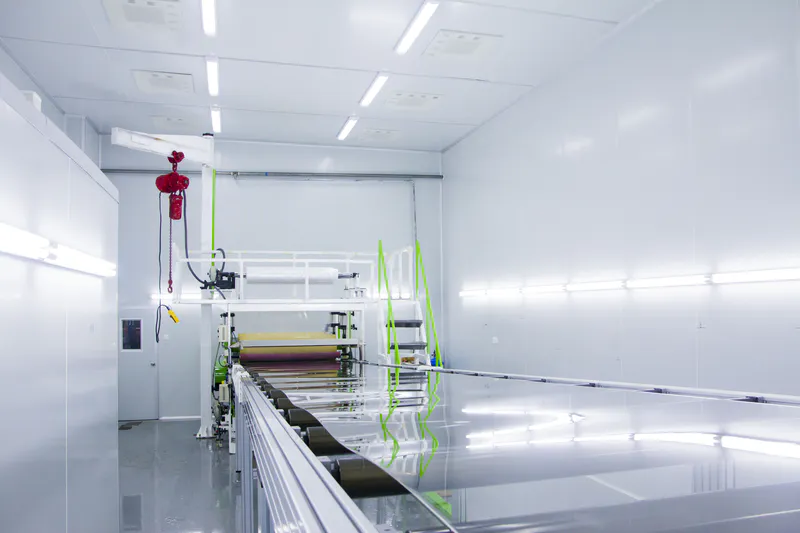
We mainly use the extruded‑board production method, which is efficient and low‑cost. Extruded boards have certain advantages in terms of tolerances, and among the customers we have served, there have been almost no complaints about tolerance issues.
Edge Finishing Options
The edge finish is one of the specifications that most affects how a custom mirror looks in the finished application, and it’s often overlooked at the order stage.
A raw cut edge — straight off a saw or CNC router — has a matte, slightly rough appearance with visible tool marks. This is perfectly fine for edges that will be hidden behind a frame, mounted against a wall, or otherwise not visible. For exposed edges, there are two main finishing options.
Flame polishing passes a flame across the cut edge, melting the surface slightly to produce a clear, glossy finish. It’s the standard finish for laser-cut acrylic (where it happens automatically as part of the cut) and a separate step for saw-cut or CNC-cut edges. Flame polishing produces an attractive transparent edge and is the common choice for displays, signage, and decorative work.
Diamond polishing uses a specialized machine with a diamond-tipped cutting tool to produce the highest-quality glossy edge. As a UK acrylic fabricator explains in their edge-finishing guide, diamond polishing achieves a high-quality, crystal-clear finish, but there are two practical constraints worth knowing: polished edges can’t be added to sheets larger than a certain size, and once an edge has been diamond-polished, it can’t be glued — so if your application involves edge-bonding the mirror to another piece, the polishing has to come after the bonding, not before.
For most custom mirror orders, the edge finish decision comes down to whether the edges will be visible. Hidden edges: leave them raw and save the cost. Visible edges: specify flame polishing for general work, diamond polishing for premium applications. Worth deciding before you order, because adding edge finishing to an already-cut piece is harder than specifying it upfront.
Holes, Cutouts, and Shapes
Custom cutting isn’t only about overall dimensions — a lot of custom mirror work involves holes for mounting, cutouts for fixtures or fittings, and non-rectangular shapes.
Mounting holes are a common custom specification. Specify the hole diameter, the position (dimensionally, from named edges — “25mm from the left edge and 25mm from the top edge” rather than vague descriptions), and the quantity.
- Acrylic mirror should be drilled with bits suited to plastic to avoid cracking, and the fabricator handles this as part of the order. For mirrors that will be screw-mounted, holes should be drilled slightly oversize to allow for the thermal expansion of acrylic — a point we covered in the thickness guide, since acrylic expands and contracts more than glass with temperature change, and a rigidly constrained sheet can crack.
Cutouts — openings within the body of the mirror, for fixtures, switches, fittings, or design features — are handled by CNC or laser. Specify the cutout dimensions and position the same way as holes. Internal cutouts with sharp corners are easier by laser; cutouts with specific corner radii or that need beveled edges are CNC work.
Custom shapes — circles, ovals, arched tops, irregular outlines, letters — are where acrylic’s advantage over glass is greatest. For these, the supplier usually wants a CAD file (DXF or similar) or a clear dimensioned drawing. The more precisely you can specify the shape, the closer the result matches what you intended. For complex or organic shapes, providing an actual template or digital file removes ambiguity.

Specifications to Confirm Before Ordering
Pulling together the specifications that matter for a custom order:
The dimensions and tolerance — overall size plus how precise it needs to be. Standard ±1/8 inch for general work, tighter if it has to fit a precise housing.
The thickness — 1.5mm, 3mm, or 6mm per the application logic in the thickness guide, with attention to the thickness tolerance if the fit is critical.
The cast or extruded substrate — relevant if laser cutting with a flame-polished edge is the goal (extruded gives the glossy laser edge), or if optical clarity and surface hardness matter (cast is slightly better). We covered the distinction in the introduction to acrylic mirrors.
The color and finish — standard silver or one of the tinted options. For multi-piece orders in colored finishes, single-batch ordering keeps the color consistent across pieces.
The edge finish — raw, flame-polished, or diamond-polished, depending on whether edges will be visible and whether the piece will be edge-bonded.
The holes and cutouts — dimensioned positions, diameters, and quantities, with oversize drilling for screw mounts.
The shape — for non-rectangular work, a CAD file or precise dimensioned drawing.
The quantity — single piece or multiple. For multiple identical pieces, the per-piece cost drops significantly because the setup cost is shared across the run.
Lead Times and Pricing
Custom work takes longer than standard stock. Where a standard sheet might ship same-day or next-day, custom cutting typically adds several days to the order — more for complex shapes, edge finishing, or large quantities. If a project has a deadline, mention it when ordering; rush service is sometimes available.
Pricing for custom cut acrylic mirror is usually built up from the material cost (based on the area of the parent sheet the piece is cut from), plus a cutting charge (based on the cut complexity and method), plus any finishing charges (edge polishing, hole drilling). For a simple rectangular piece, the cutting charge is modest. For a complex shape with finished edges and multiple cutouts, the fabrication cost can exceed the material cost.
One practical point on cost: for a single small piece, custom cutting carries a setup cost that makes it relatively expensive per piece. For multiple identical pieces, that setup cost spreads across the run and the per-piece price drops substantially. If you need several of the same custom piece, ordering them together is far more economical than ordering them individually.
Usually, the most frequent issues that arise in communication with suppliers concern the final processing cost. It’s recommended that when communicating with them, you make sure everything is confirmed before discussing it.
Specialty Custom Work
A few specialty categories worth knowing about for custom orders.
Colored custom mirror is widely available — gold, rose gold, bronze, smoked black, and other tints can all be custom cut the same way as silver. The cutting and finishing processes are identical; only the substrate color differs.
- For decorative and signage work where a colored mirror finish is part of the design, custom cutting colored acrylic mirror is a common order.
Curved custom work is a different process. The flat-sheet cutting methods discussed here don’t apply to curved mirrors, which are thermoformed from cut blanks rather than cut from finished curved stock. For custom curved mirror — non-standard convex or concave shapes — the process involves custom mold work and is generally only practical for production volumes. The curved mirrors guide covers those products and the constraints on customizing them.
Common Mistakes With Custom Orders
During our communication with customers, we summarized the following common mistakes:
Vague specifications.
- “About 20 inches” or “roughly square” leaves too much room for interpretation. Custom work is only as precise as the specification. Provide exact dimensions, named reference edges for hole positions, and a CAD file or drawing for shapes.
Forgetting the edge finish.
- Buyers specify dimensions perfectly and then receive pieces with raw saw-cut edges they expected to be polished. Decide the edge finish at the order stage.
Ignoring thickness tolerance for fitted pieces.
- A custom mirror that has to slot into a precise channel needs the actual thickness confirmed, not just the nominal figure. The ±15% tolerance on cast acrylic can be the difference between a piece that fits and one that doesn’t.
Ordering custom when standard would do.
- If a standard size works for the application, it’s cheaper and faster than custom. Custom cutting earns its cost when the application genuinely needs a non-standard dimension or shape, not when a standard size is close enough.
Expecting custom-cut acrylic to solve the large-mirror problem.
- Custom cutting doesn’t change the material’s properties. A large custom piece has the same distortion as a large standard piece. Custom solves shape and dimension problems, not the fundamental size limitation.
Final Summary
Custom cut acrylic mirror is one of the genuine strengths of the material. The ease of cutting, drilling, and shaping that acrylic allows — compared to the specialized work glass requires — makes custom acrylic mirror practical and affordable for applications that simply wouldn’t be economical in glass. Signage, fixtures, bespoke decorative work, OEM components, and any non-standard size or shape are all well-served by custom acrylic mirror.
The key to a good custom order is precision in the specification. Exact dimensions, the right tolerance, the correct edge finish, dimensioned hole and cutout positions, and a clear shape file for non-rectangular work. Custom pieces are usually non-returnable once cut, so the time spent getting the specification right pays off directly. When the specification is clear and the application fits within acrylic’s size range, custom cut acrylic mirror delivers exactly what the project needs.