
Traditional mirrored home décor mainly uses glass materials. Modern decoration, considering the scalability of decorative applications, also uses plastic mirrors, with acrylic mirrors being the primary choice. Acrylic mirrors are lightweight, shatter-resistant, and suitable for processing into decorative components for interior and retail installations. These characteristics make them worth considering when a project involves custom shapes or repeated parts.
As a factory producing acrylic mirrors, we move a project forward by considering the finished product dimensions, supporting surfaces, exposed edges, installation methods, and expected quality. In previous blog posts, we repeatedly mentioned the issue of “reflection distortion occurring in acrylic mirrors.”
We do not intend to ignore this inherent characteristic of acrylic mirrors. Likewise, when explaining it, we will make every effort to clearly define the boundaries that should be maintained during its application.
Before getting started, let’s first look at the differences between decorative acrylic mirrors and ordinary mirrors. Then, we will briefly list 16 creative applications and expand on them according to usage scenarios, transitioning from home settings to events, commercial spaces, and interactive installations. Each solution can be adjusted in scale, color, and installation method, making it suitable both for one-time home decoration and for development into a replicable commercial display system.
Difference Between Decorative Acrylic Mirror and Ordinary Mirror
The biggest difference between decorative acrylic mirrors and ordinary mirrors is their sense of design. Ordinary mirrors focus more on practicality and do not necessarily require an attractive design. Acrylic mirrors used for decoration, however, place greater emphasis on product design.
This is where their advantage lies. Acrylic mirrors come in a rich variety of colors to meet design needs. When a wall decoration is not affected by the mirror’s default “silver” color and the overall visual impression remains cohesive, the advantages of using it as a decorative element become immediately apparent.
The spacing between pieces, engraved areas, layered materials, colored surfaces, and custom contours can all become part of the design. Therefore, it is more like a “decorative product with mirror functionality” rather than a direct replacement for traditional glass mirrors.
Depending on the specific specifications, acrylic mirrors can undergo CNC engraving, laser cutting, drilling, carving, printing, or be fitted with adhesive backing. If you need to compare full sheets, mirror tiles, and small decorative pieces, you can first read the Acrylic Wall Mirror Planning Guide; when choosing colors, you can refer to the Colored Acrylic Mirror Guide.
Following this line of thinking, let’s take a look at the creative possibilities it offers!
Decorative Acrylic Mirror Applications in Living Rooms and Entryways
Living rooms and entryways usually have large wall spaces and often include furniture such as console cabinets, fireplaces, and low cabinets. Decorative Acrylic Mirror can be processed into different shapes according to wall dimensions, and then installed as single pieces, combinations, or modular arrangements.
1. Sunburst Mirror
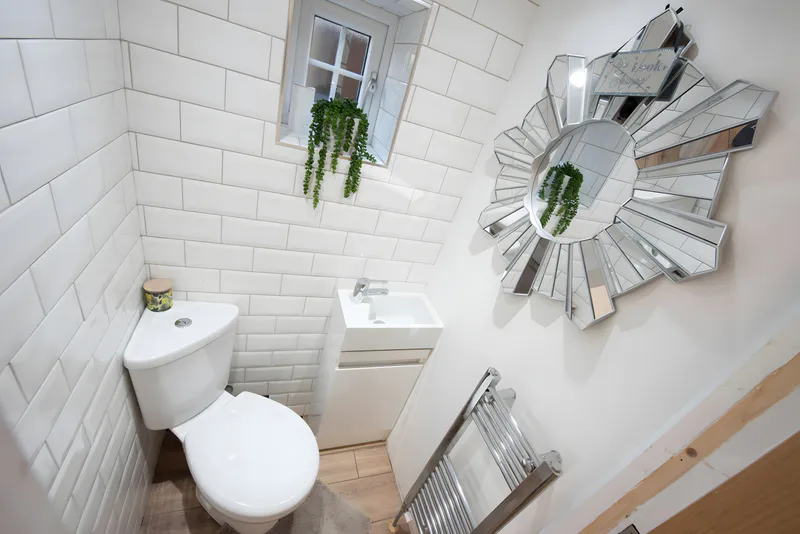
Using a circular mirror piece as the center, acrylic mirror pieces of different lengths in tapered or elongated shapes can be installed around the perimeter to form a radiating structure. The mirror pieces can use silver, gold, bronze, or other colors, and the overall diameter can be adjusted according to the actual wall size.
A sunburst design laser-cut from gold mirror acrylic, when placed above a sofa or entryway table, can immediately create a strong mid-century modern dramatic effect.
Because acrylic is very lightweight, you can confidently choose large sizes—90 cm or even larger—without worrying about drywall anchors failing under the weight.
2. Geometric Patchwork Wall
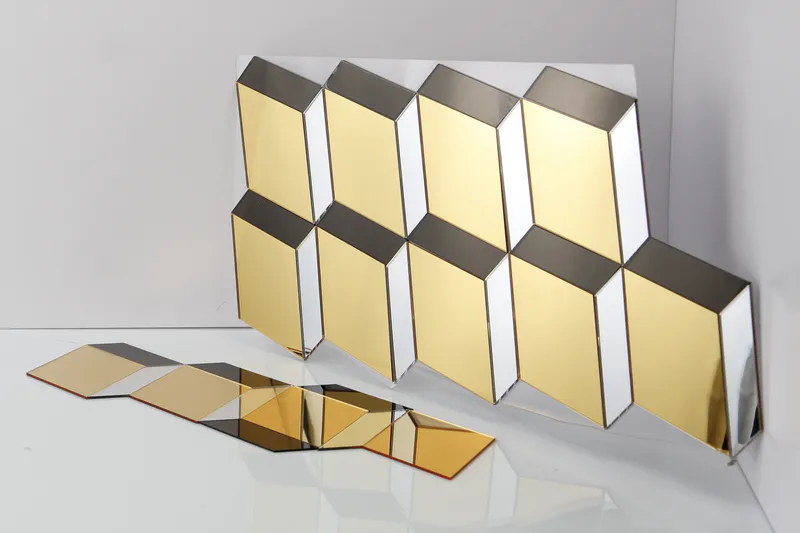
Arrange five to seven hexagonal or triangular acrylic mirror tiles into a loose honeycomb-style composition. Standard silver can be mixed with one or two pieces of colored acrylic mirror—such as rose gold or bronze—to enhance layering. You can look at the following group of images; when combined together, they form a honeycomb-shaped decoration.
3. Leaning Wall Decorative Mirror
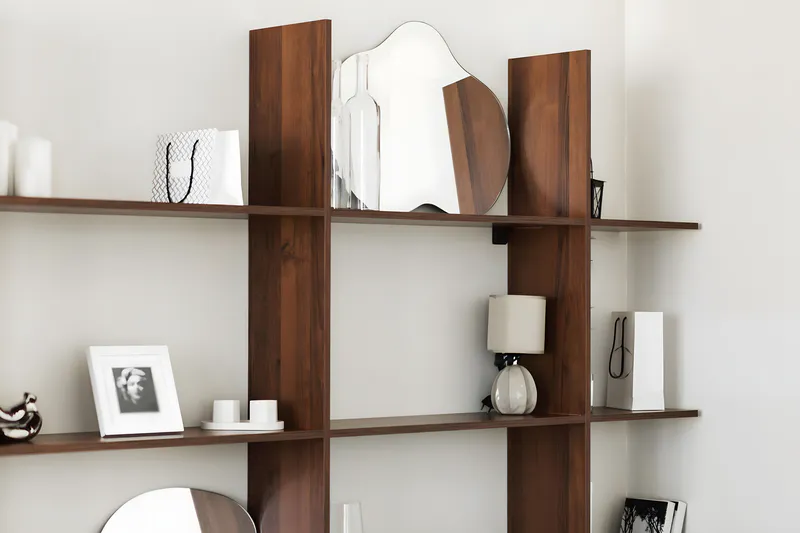
Install a full acrylic mirror sheet into a slim oak or matte black frame, and place it leaning against the wall at a slight angle. This adds a gallery loft-style aesthetic without drilling a single hole. It is especially suitable for renters.
It should be noted that the size of this mirror panel is best kept within 80 cm to avoid reflection distortion.
4. Arched Window Mirror
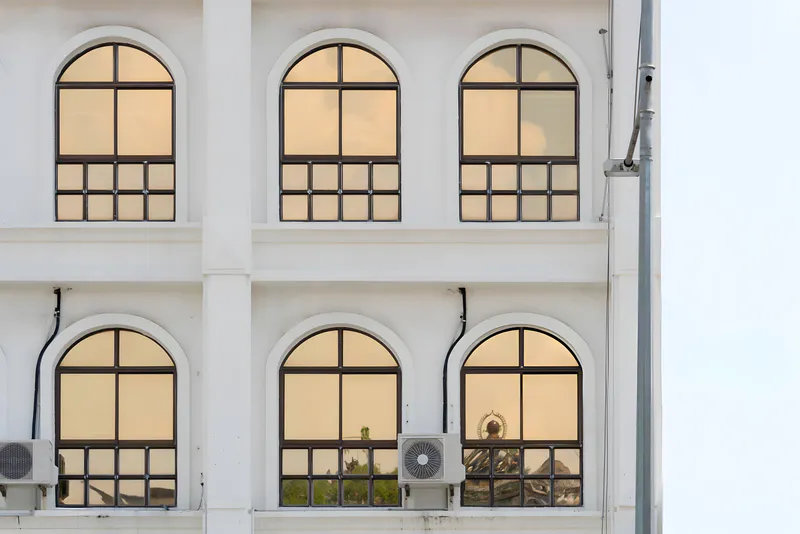
Use a 3 mm acrylic mirror sheet laser-cut into an arched outline and decorate it with a thin brass frame. Its shape imitates Palladian windows and can make rooms with lower ceilings appear taller.
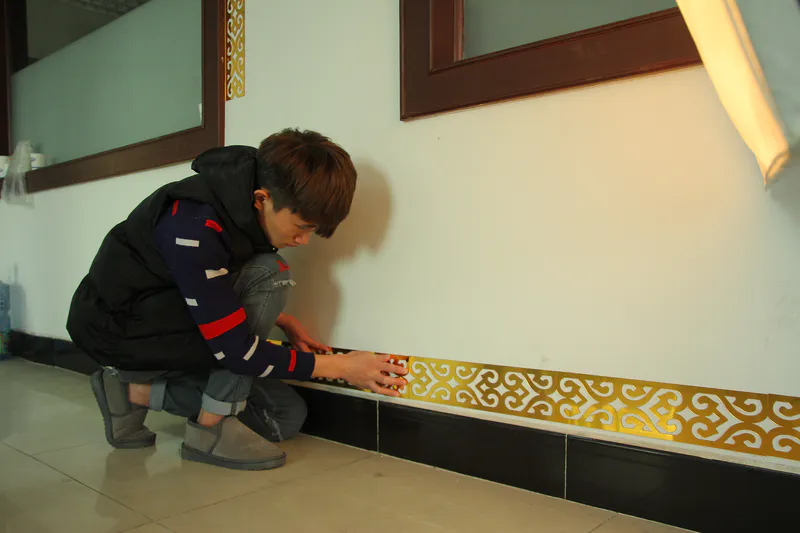
5. Waistline Mirror Wall Stickers
Narrow hallways can use waistline acrylic mirror decorations in rectangular, wavy, diamond, or other repeating shapes. They can be continuously arranged at fixed intervals. They are suitable for hallways connecting different bedrooms, and the effect is even better when paired with colored mirrors.
Decorative Acrylic Mirror Applications in Bedrooms and Personal Spaces
Decorative Acrylic Mirrors can also be used in bedrooms, wardrobe areas, vanity areas, and children’s rooms. Some products can retain normal mirror functionality while adding customized shapes or other acrylic components around the edges.
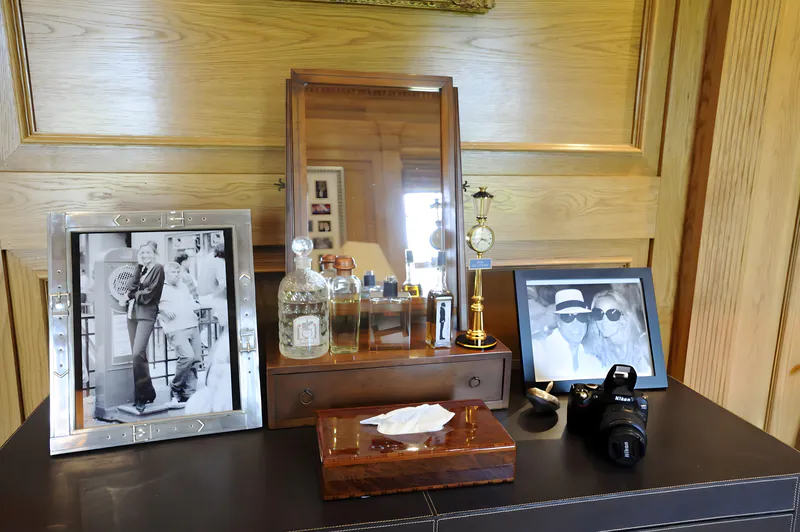
6. Vanity Mirrors
Vanity mirrors can be said to be the most suitable application scenario for acrylic mirrors. As long as it is a small tabletop vanity mirror, it can basically use an acrylic mirror. Even mirrors in different colors can be used.
Except for those large standing vanity mirrors combined with a tabletop, as long as the mirror is an independent item and has a stylized product appearance design, it can be considered a decorative acrylic mirror.
7. Embedded Mirrors in Wardrobe Doors
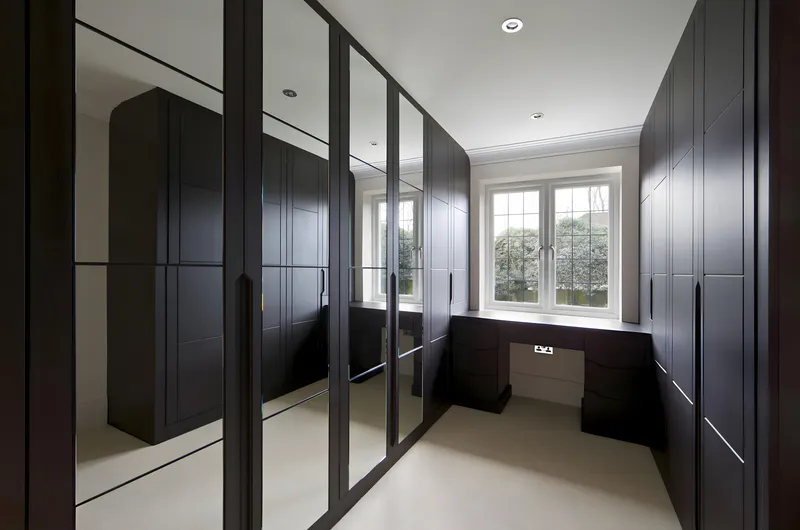
The doors of wardrobes and other furniture can be made of solid wood, or a mirror can be embedded into the solid wood as decoration. In general, this type of application requires the mirrors to be cut to the same size, and each should not exceed 60CM. This is done to prevent reflective distortion in the acrylic mirror.
Because the usage scenario of this type of product usually requires attention to reflection image quality, if a whole mirror panel is directly embedded into a wardrobe, reflective distortion will appear once the wardrobe door exceeds 1 meter.
Limiting the size within a certain range and increasing the thickness can effectively avoid reflective distortion problems.
8. Ceiling Hanging Mirrors
Allowing some mirror decorative products to hang from the ceiling in a room is also a good choice. Common examples include disco mirror balls, combined with mirrors of different colors to form a colorful ball.
Replacing outdated ceiling medallions above light fixtures with laser-cut acrylic mirror floral decorations can capture the light from the fixture below and reflect it throughout the room. This idea is also very suitable as an acrylic mirror ceiling design element.

9. Bubble Mirrors for Children’s Rooms
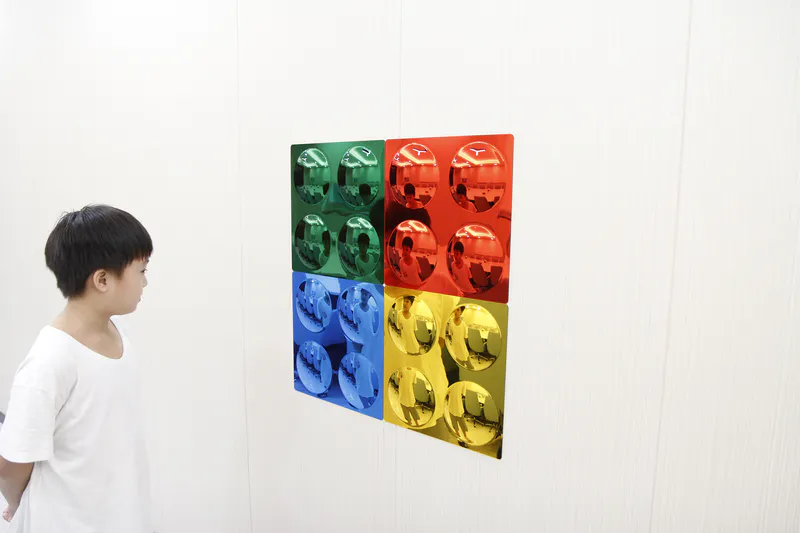
Bubble mirrors are unique to acrylic decorative mirrors; glass materials usually cannot produce this kind of product. Essentially, it is a convex mirror, but because the product has gained popularity, it has its own separate product name.
Installing bubble mirrors on the walls of children’s rooms can both stimulate children’s curiosity for exploration and better decorate the entire room.
Bubble mirrors are generally composed of multiple colors. Our bubble mirrors are available as single pieces or four-in-one versions. For details, see:
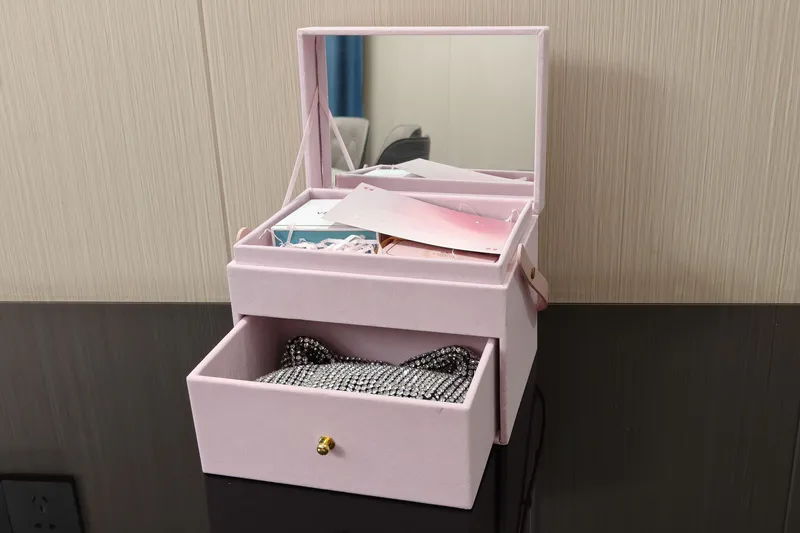
10. Embedded Mirrors in Makeup Cases
Makeup cases and mirrors are a perfect match. A makeup case filled with cosmetics can have a mirror embedded inside the lid, making it convenient to open and apply makeup at any time. Makeup cases are also usually placed in personal spaces such as bedrooms, making the combination highly compatible.
Portable makeup cases can also have a mirror embedded inside, and considering portability and weight, this type of mirror usually uses acrylic mirror only.
Decorative Acrylic Mirror Applications in Dining, Events, and Hotels
Restaurants, hotels, weddings, and event venues are ideal places to use decorative acrylic mirrors, with colored acrylic mirrors usually being more favored in these settings.
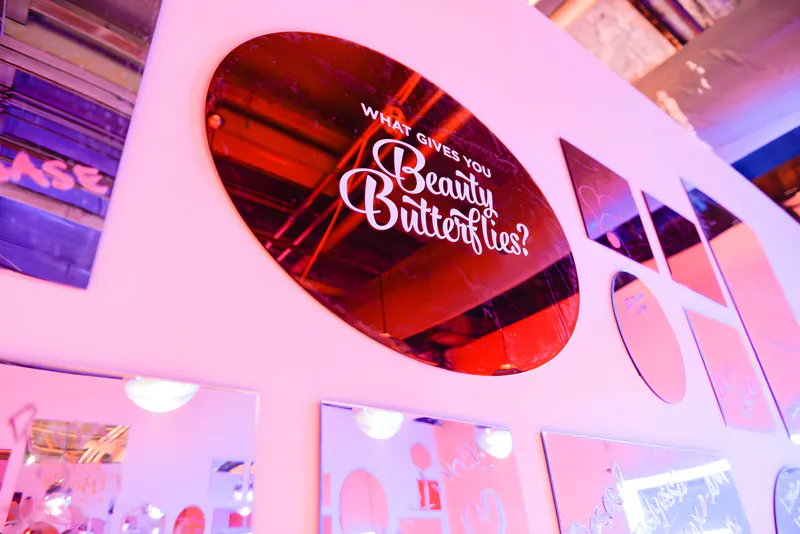
11. Mirrored Acrylic Signage
Use colored mirrored acrylic—such as gold, rose gold, or black—to cut store logos or promotional slogans, and install them behind the checkout counter or at the entrance. It serves both branding and decorative purposes. The signage can be hung or adhered.
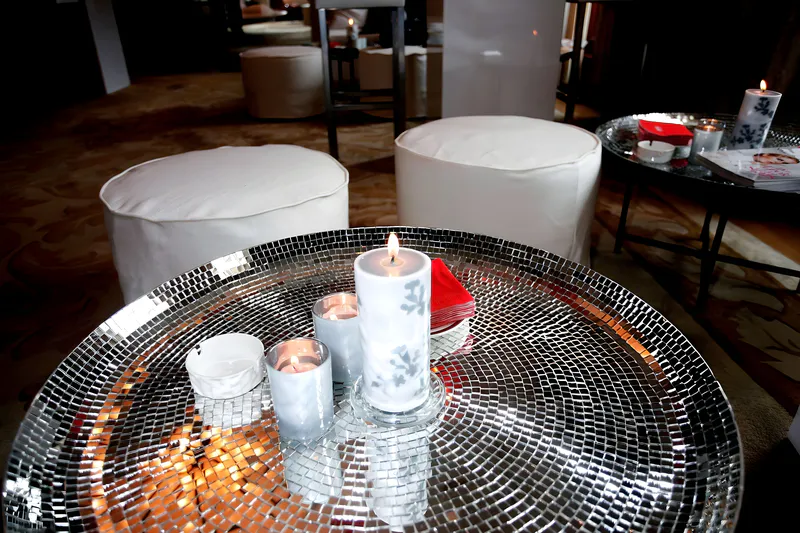
12. Mosaic Mirror Coffee Tabletop
Cover a flat tabletop with irregular pieces of mirrored acrylic in different surface finishes—silver, gold, bronze—and grout them like traditional tiles. The final effect is a functional artwork that captures light from every angle.
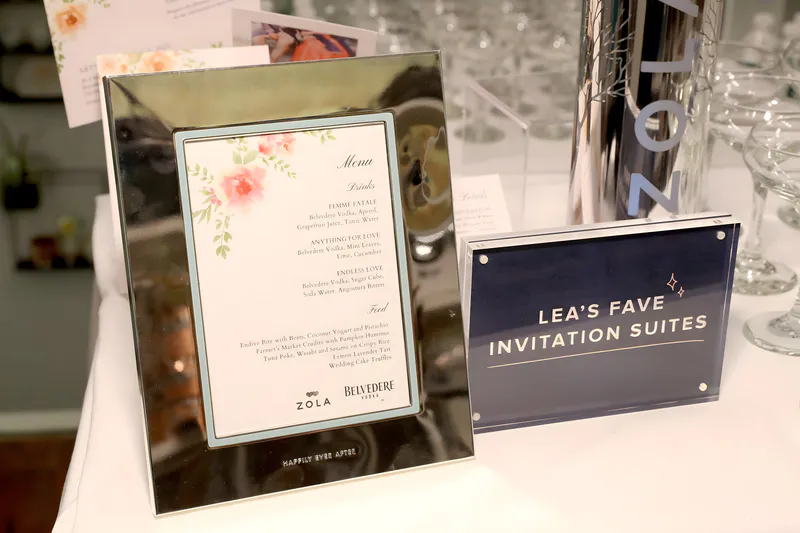
13. Wedding Seating Mirror Signs
Gold, silver, or rose gold acrylic mirror sheets can be used to create wedding seating charts, welcome signs, and event directional signage.
Guest names and other text can be produced through UV printing, screen printing, engraving, or overlay application. For larger panels, it is recommended to use them with a rigid backing board or freestanding support, and to confirm sufficient contrast between the text and the mirrored background before production.
Creative DIY Decorative Acrylic Mirror Projects
In addition to applications in specific spaces, you can also create some decorative acrylic mirror projects yourself and use your imagination.
14. Hanging Decorations
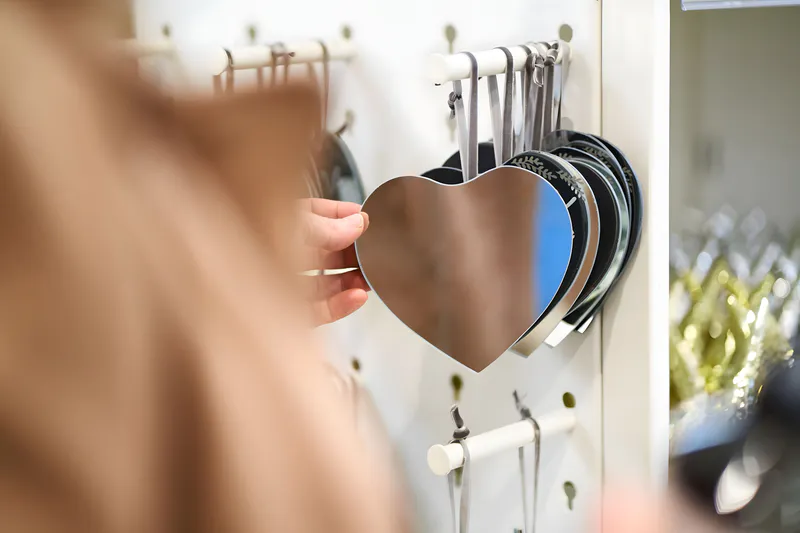
Use thin (1.5 mm) mirrored acrylic cut into any abstract shapes, and connect them with fishing line to create hanging decorations. When they rotate, they scatter reflected light throughout the room. This is clearly different from the ceiling-hung mirrors mentioned in point eight, as it does not need to extend down from the ceiling; it is directly a type of mirrored hanging decoration.
15. Infinity Mirror
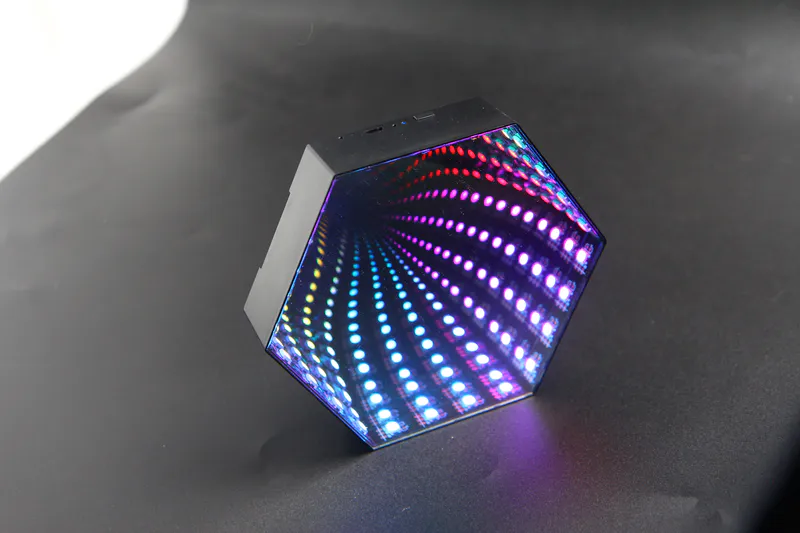
Decorative acrylic mirrors definitely cannot do without the presence of two-way mirrors. Infinity mirrors made with acrylic two-way mirrors are a type of product very suitable for decoration. The creation of an infinity mirror usually needs to be achieved inside a light box.
A tunnel mirror is a standard application of an infinity mirror. It can make a light box look like it has a very long tunnel, just like in the image below.
16. Cake Topper
Acrylic mirrors can be made into cake toppers and can be reused repeatedly. Although it is called a cake topper, it can actually be used in many places. It requires laser cutting the acrylic mirror sheet, and laser cutting is the most suitable choice for smoother edges. CNC engraving can also achieve this, but the edges will be rougher.

Workflow for Producing Decorative Acrylic Mirrors – Frequently Asked Questions
Most factories generally have an R&D and design department, and this department can help customers solve problems. If the requested product has been made before, efficiency will be higher because there is something to reference. If it is a completely new product, then you will need to provide at least one concept image or reference image.
A concept image usually only requires a sketch. If you do not yet have a suitable sketch, then I recommend using AI to generate one. Based on our experience, customers usually prefer providing reference images. Drawing a sketch has a certain barrier to entry, but providing reference images is much less troublesome. Another advantage of providing reference images is that you can judge whether the factory you are working with has the capability to realize the product.
Usually, if an idea can be turned into a product, then that product can also use different colors. Color-related issues are not more complicated than figuring out how to manufacture the product itself. By default, silver mirrors are used when making samples, and customers can choose the corresponding color after seeing the sample.
There is one issue that needs to be clarified here: factories that produce acrylic mirrors usually cannot provide decorative materials. If you want the other party to directly deliver a finished decorative mirror product to you, then the decorative materials used during production will incur additional charges. Also, because the factory itself does not produce these materials, outsourcing their purchase results in higher costs. Otherwise, the labor and material costs of producing the finished product would result in a loss.
If you are certain that you want to make decorative mirror products mainly using acrylic mirrors, then you should avoid considering large-sized mirror decorative products. It is best to limit the maximum size to 80 cm. Beyond this range, you usually need to accept issues with distorted reflected images.
Precautions for Installing Decorative Acrylic Mirrors
When installing Decorative Acrylic Mirrors, be sure to work on a flat wall surface, especially when installing acrylic mirrors that mainly feature different shapes and come in large quantities, such as irregularly shaped acrylic mirror wall stickers.
A flat wall surface is intended to prevent distortion in mirror reflection imaging. Aside from excessively large sizes, this is also one of the triggers that causes acrylic mirror image distortion. The surface should be smooth, dry, and stable, and you should confirm that the adhesive is compatible with both the wall and the backing layer of the mirror at the same time. Textured walls will reduce the contact area and may also cause reflection deformation.
If additional drilling is required during installation, it is recommended that you use suitable drilling equipment. If the mirror is especially thin, incorrect drilling may directly cause the mirror to crack. Drilling near the edge is better than drilling on the inner side of the mirror. Problems with the outer acrylic layer are less concerning than damage to the inner metallic film.
Regarding the protective film, remember not to peel it off before installation; it should only be removed after installation is complete. Colored mirror surfaces do not necessarily need to have the film removed, as leaving the protective film on the surface can provide additional protection. You can ask the factory how long the protective film is expected to last, as the quality of protective films used by different manufacturers varies slightly.
Why Designers and Retailers Prefer Decorative Acrylic Mirrors Over Glass
In decorative applications, the shift from glass to acrylic is not just about safety—although shatterproof properties are an important factor in schools, gyms, and retail spaces. It is also about creative freedom.
Acrylic can be laser-cut into any shape without the risk of breakage associated with glass processing. It weighs about 50% less, so large installations do not require reinforced walls or heavy-duty hardware. And according to Plastics Technology, cast acrylic can achieve up to 92% light transmission, comparable to optical glass—meaning reflective quality is not compromised.
For retailers, the calculation is simple: lower shipping costs, faster installation, lower liability risk from breakage, and more design options at a lower cost.