
At our factory, shipments of convex mirrors account for 40% of the total annual volume. Counterintuitively, customers use these convex mirrors for a wide variety of purposes. Based on our existing understanding, convex mirrors are used more often for road traffic and store surveillance.
These scenarios have one common need: allowing people to see areas that would otherwise be difficult to see at an earlier point. Convex mirrors solve this problem precisely by taking advantage of their wide-angle view.
The outward-bulging surface of a convex mirror can bring a relatively large area of the surroundings into view, so it is commonly used for observing stores, warehouse cross aisles, parking-lot corners, and vehicle-assisted visibility. In interior design, the same curved-surface reflection can also serve as a decorative effect.
This blog will discuss the uses of convex mirrors, making it easier for more people to determine where convex mirrors are suitable and when another solution should be chosen. Let us begin with common applications of plastic convex mirrors.
Common Uses for Convex Mirrors
While the applications of convex mirrors might seem varied at first glance, they can actually be categorized by their observational purpose: monitoring activity within an area, watching for cross-traffic, expanding field of view, and creating visual effects through curved surfaces. Determining what you need to see is the first step in making the right choice regarding materials and dimensions.
Stores and Retail Spaces: Monitoring Wider Areas from a Fixed Position
Cashiers often need to stay in one place. To prevent shoplifting and maintain security, they require a comprehensive view of the store.
When installed in optimal locations, security convex mirrors reflect peripheral and blind spots into the cashier’s line of sight, allowing them to monitor customer movement, activity near entrances, and areas requiring attention.
Ultimately, convex mirrors serve as tools to help in-store staff manage the premises more effectively. This application is ideal for convenience stores, small supermarkets, retail counters, and other spaces where multiple areas must be monitored simultaneously.
Requiring no power source, these mirrors allow observers to simply look up to check their surroundings. They are far more cost-effective than modern security cameras, which entail ongoing maintenance and management costs that often outweigh the initial investment of a convex mirror.
During installation, the angle must be adjusted based on the cashier’s actual standing position. If an employee has to walk right underneath the mirror just to see the target aisle, the mirror fails to solve the challenge of monitoring from the register, no matter how prominently it is hung.
Does this mean convex mirrors are a silver bullet for retail security? Absolutely not. Convex mirrors only offer the advantage of an expanded field of view, helping staff observe better; they do not provide evidence or recording capabilities.
For uncontrollable situations, the deterrent effect of security cameras far surpasses that of convex mirrors.

Warehouses, Factories, and Corridors: Anticipating Cross-Traffic
Intersections in internal hallways, blind corners in manufacturing plants, and corridors frequently used by carts carry the risk of people approaching from opposite directions without seeing each other. In these scenarios, safety convex mirrors bring movement from the opposite direction into view much earlier.
This is arguably the most common application for convex mirrors—one that most people readily recognize. Interestingly, all these settings share a common trait: they are high-traffic, fast-paced environments with heavy pedestrian and vehicle flow.
Though found in different types of buildings, these environments share very similar observational needs:
- Warehouse Aisle Intersections: Watch for forklifts, pallet jacks, and pedestrians in intersecting pathways.
- Factory Floor Passageways: Monitor the movement of personnel and vehicles on the other side of equipment or partition walls.
- Hospital, School, and Office Building Corners: Observe approaching crowds, carts, or transport equipment around blind bends.
When multiple corridors converge from different directions, dome observation mirrors can be considered depending on the layout. Dome mirrors also use outward-curving reflective surfaces to expand the field of vision, though visibility from all approaches must still be verified from actual transit points.
In these scenarios, the value of a mirror depends entirely on whether a person can spot potential hazards before entering the intersection. Bringing order to chaotic traffic flow is the greatest value a convex mirror provides.

Parking Lots and Private Driveways: Enhancing Lateral Visibility at Corners and Exits
Translating these observational needs to the outdoors brings new challenges, such as parking garage pillars, ramp turns, and boundary walls flanking private driveways. These obstacles obstruct a driver’s direct line of sight, but a properly positioned convex mirror provides a clear view of the opposing direction.
For instance, as a vehicle slowly approaches an obstructed exit, the driver can use the mirror to check for oncoming traffic or pedestrians. This is why wide-angle reflective mirrors are so ubiquitous at road corners: they bring unseen angles directly into the driver’s field of view. This practical need gave rise to the traffic mirror, one of the most popular categories of convex mirrors.
While the underlying purpose remains the same as indoor applications—providing extra visibility for specific needs—outdoor applications alter product requirements. Rain, sun exposure, backing protection, and bracket stability must all be taken into account.

Auxiliary Vehicle Observation: Expanding Peripheral Vision in Limited Mirror Spaces
Standard automotive side mirrors are flat, but a small convex mirror is often attached to the bottom-right corner. Unlike wall-mounted products, these are designed to solve a specific challenge: supplementing the driver’s rear-side blind spots within a very limited surface area.
While compact in size, these mirrors must be engineered with careful consideration of the driver’s eye line, mirror curvature, installation angle, and vibration resistance. Vehicle-specific mirrors must be selected according to precise mounting and visibility requirements; standard wall-mounted safety mirror specifications cannot be applied directly.

Decoration and Spatial Display: Integrating the Environment into Design
Convex mirrors can also double as striking decorative pieces. Their rounded, protruding surfaces capture interior scenery within a warped, curved frame; as people walk by, the spatial relationships within the mirror shift dynamically, adding a sense of movement to plain walls.
This effect works wonderfully in entryway backdrops, commercial displays, art installations, and modular mirror walls. A large convex mirror can serve as a dramatic focal point, while multiple mirrors of varying sizes can create a rhythmic arrangement. Designers can also incorporate colors, frames, and negative space to seamlessly blend the mirrors into the overall interior architecture.
Here, the distortion caused by the curved surface becomes a design language in itself. The evaluation criteria for decorative mirrors shifts from “can I see approaching traffic?” to “does the reflected imagery align with the visual intent?” If a set of mirrors also serves a daily surveillance function, each viewing angle must be checked individually; practicality cannot be judged by decorative appeal alone.
Decorative convex mirrors are currently trending in high-traffic public areas, often placed along specific walkways for pedestrians to enjoy. Passersby frequently stop to take photos, captivated by the playful and intriguing effects of wide-angle reflection.

Should You Choose Plastic or Glass Convex Mirrors for These Applications?
Convex mirrors are predominantly made from two materials: plastic and glass. None of the aforementioned applications are exclusive to a single material. The wide-angle imaging of a convex mirror is dictated by its surface curvature; switching between acrylic, polycarbonate, or glass primarily alters weight, impact resistance, scratch resistance, and manufacturing methods. The table below outlines the key differences among these three materials:
| Mirror Material | Key Advantages to Consider | Factors to Keep in Mind During Application |
|---|---|---|
| Acrylic Mirror (PMMA) | Relatively lightweight, easy to thermoform and cut to size; ideal for observation mirrors and decorative curved surfaces. | Cleaning methods, surface scratching, and mounting support affect performance; outdoor suitability depends on the specific finished product specs. |
| Polycarbonate Mirror (PC) | Generally offers superior impact resistance; well-suited for projects where durability against heavy impacts is paramount. | High impact resistance does not equate to scratch resistance; surface treatments and environmental suitability must still be verified. |
| Glass Mirrors | Harder surface offers greater scratch resistance; ideal for projects prioritizing long-term surface durability under favorable installation conditions. | Requires careful evaluation of weight, mounting structure, and safety measures in the event of breakage. |
For projects that require minimizing installation loads, creating complex curves, or customizing shapes, plastic convex mirrors are often the more compelling choice. While materials help the mirror adapt to its environment, the curvature is what ultimately delivers the view.
To truly understand why these applications work, one must return to the core value of convex mirrors: the enhanced security born from superior visibility.
The Most Important Use of Convex Mirrors: Security
For everyday convex mirrors in shops, warehouses, and driveways, security covers two kinds of needs: one is monitoring activity in an area, and the other is helping people moving through it spot potential conflicts earlier. Both require seeing more of the surroundings from a suitable position.
Why are convex mirrors suitable for expanding the field of view?
Comparing common mirror types side by side makes it easier to understand the advantages of convex mirrors in this context:
| Mirror type | Image characteristics in ordinary viewing | Significance for observation |
|---|---|---|
| Plane mirror | Forms an upright virtual image the same size as the object | Suitable for viewing shapes more naturally; with the same mirror size and viewing conditions, its coverage is usually smaller than that of a convex mirror |
| Convex mirror | Forms an upright, reduced virtual image of real objects in front of the mirror | Can include a larger area of the surroundings in a limited mirror surface, making it suitable for wide-angle viewing |
| Concave mirror | The image varies with object distance; when the object is within the focal length, it can form an upright, magnified virtual image | Suitable for magnified viewing at specific distances, but difficult to use directly for the same wide-angle viewing task |
These differences are described in OpenStax’s explanation of image formation by mirrors. For security observation, the advantage of a convex mirror is that when the aim is to detect someone or a vehicle approaching from a particular direction, a wider field of view provides useful information.
A wider view also means that each target appears smaller in the image
When a mirror includes more of the surroundings, people and vehicles may take up a smaller part of the image. A user may be able to see someone in an aisle without being able to make out what they are carrying; they may notice a vehicle, but cannot accurately judge how far away it is based only on its size in the mirror.
This is why convex mirror size and viewing distance need to be considered together. After the mirror is installed, whether targets are sufficiently noticeable should be assessed from the actual viewing position. A target that is clear from a nearby position may not be noticeable enough from farther away.
A curved surface cannot see through an obstruction, either. If goods block the reflected light path between the target and the mirror, the target will still not be visible in the mirror. The installation point, the arrangement of goods, and the layout of the aisle often need to be considered together.
For this issue of seeing more while targets appear smaller, the impact on traffic mirrors is limited. People usually use convex mirrors to check the risk of a collision around a corner; their purpose is to establish whether such a risk exists. The distance of the other party generally becomes a concern only when vehicles are moving fast.
But indoor security observation is different. If you can spot a customer’s movements in advance through a wide-angle reflection, you are more likely to be able to prepare ahead of time and protect yourself. Therefore, the purpose of a convex mirror should be determined according to the specific situation, and its specifications should be selected to suit that purpose.
Security mirrors need to be used alongside on-site management
The UK HSE’s guide to checking workplace traffic routes and visibility recommends avoiding blind bends where possible; when they cannot be avoided, measures such as mirrors can be considered to improve visibility. The guide also addresses speed control, separation of pedestrians and vehicles, traffic arrangements, and lighting. This shows that security mirrors should be used alongside other on-site measures.
For a specific project, the following three steps can be used to check whether the mirror has actually resolved the visibility problem:
- Stand at the actual viewing position. Check the mirror from behind the checkout counter, from the driver’s seat, or from the position where a pedestrian approaches the corner, and confirm that viewing it feels natural.
- Move the target along the actual route. Check whether a person or vehicle can be seen before entering the conflict area, and whether the target is noticeable enough in the mirror.
- Check again during the actual hours of use. Note whether changes in lighting, glare, rain, or temporary storage affect the image, and adjust the installation and maintenance arrangements accordingly.
When these characteristics—expanding the field of view and changing the image—are used for teaching or specialized imaging equipment, they give rise to another set of applications.
Special Applications of Convex Mirrors
Beyond everyday safety and observation, convex mirrors are also utilized in optical demonstrations and specialized imaging systems. The purpose of these applications has shifted: people now study the reflection itself or design devices capable of capturing images formed by curved surfaces.
It is worth noting that employing convex mirrors in the field of optics demands an exceptionally high level of manufacturing precision—a capability that most factories simply do not possess.
In this regard, plastics fall short compared to glass, which boasts a much higher degree of maturity for such applications.
Educational Equipment
In classrooms or science exhibitions, flat, convex, and concave mirrors of comparable sizes can be displayed side by side, allowing observers to compare how the exact same object appears in different reflective surfaces.
For instance, a color-coded model can be used as the subject. By varying its distance from the mirror, observers can compare the reflected image against the visible background.
Demonstrations like this naturally prompt several intriguing questions: Why do certain mirrors capture a broader background? Why do some reflections undergo dramatic changes depending on the object’s position?
Here, the convex mirror plays an educational role. Plastic lenses can serve as candidate materials for demonstrations; however, if the experiment requires focal length measurement or the verification of quantitative relationships, one must ensure that the mirror’s surface geometry and optical quality meet the necessary standards.
Optical Imaging
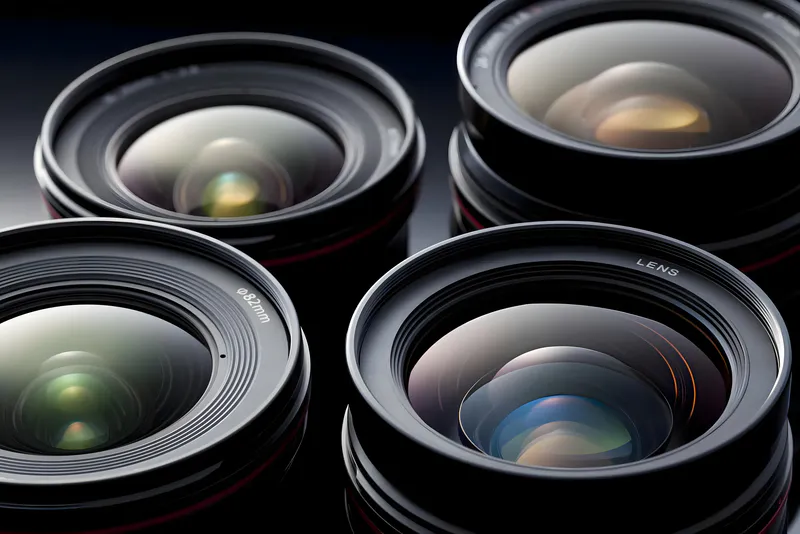
When it comes to optical imaging, the most demanding application for convex mirrors is camera lenses. These products serve as the benchmark for advanced convex mirror manufacturing techniques. As mentioned earlier, many factories are equipped only to produce standard mirrors rather than components of this caliber.
The root cause lies in the fact that the optical precision of their mirror surfaces falls far short of the rigorous standards required for camera lenses. Strictly speaking, the optical imaging applications of convex mirrors should never be lumped together with ordinary mirror reflections.
Conclusion
The uses of convex mirrors revolve around their curved surface: they bring more of the surroundings into view while changing the size and proportions of the reflected image. Stores, warehouses, corridors, parking lots, and vehicle-assistance applications value their wide-angle view; decorative design makes use of their curved appearance; and teaching and specialized imaging systems apply their optical properties further.
When choosing a plastic convex mirror, start with three questions: Who will be looking, from where, and what needs to be seen clearly? Then match the answers to the material, size, curvature, and installation environment to make a more informed product choice.
If you’re planning a specific project, first review the plastic convex mirror products and customization options. Then gather the intended installation location, viewing distance, directions that need to be covered, and photos of the site, and submit your project requirements to DHUA to discuss suitable mirror and accessory solutions.