
A mirror intended for long-term outdoor use must withstand far more than simply maintaining a bright reflective effect. Continuous exposure to sunlight on clear days, sudden rainfall, temperature changes between day and night, as well as windblown sand and dust in the air, can all damage the mirror surface, substrate, and structure.
To determine whether a mirror is suitable for outdoor use, it is not enough to look only at whether it appears attractive when first installed; more importantly, it is necessary to consider whether it can maintain stable performance in actual usage environments.
When talking about outdoor mirrors, we usually think of traffic safety mirrors at road bends, wide-angle mirrors at parking lot entrances and exits, and mirrored decorative elements on the exterior of commercial buildings.
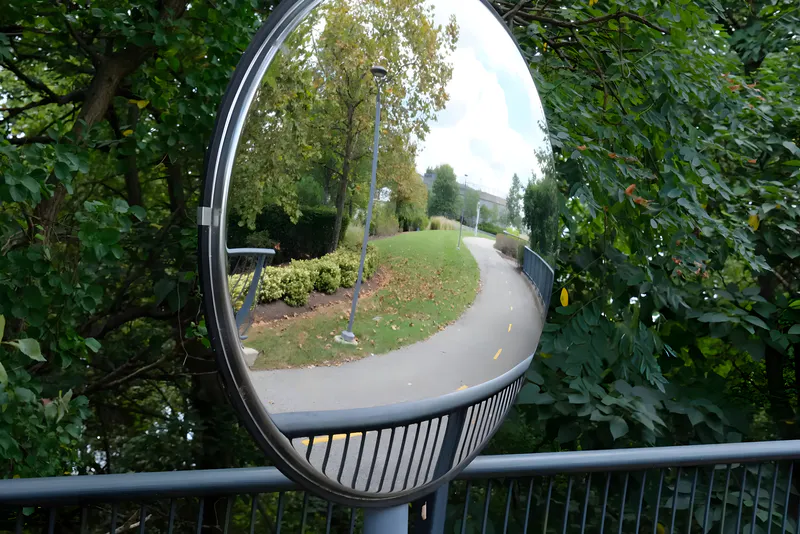
Although all of these applications make use of reflective surfaces, they have different usage requirements: some focus on expanding the field of view, some emphasize decorative effects, and others must balance weight, processing methods, and installation convenience.
As an acrylic mirror manufacturer, we are often asked:
“Can acrylic mirrors be used outdoors?”, “Will the mirror surface change after long-term exposure to sunlight and rain?”, “What special considerations should be taken into account when selecting materials and installation methods?”
These questions are very necessary, because although “acrylic materials have a certain degree of weather resistance,” this does not mean that all finished acrylic mirror products are suitable for long-term outdoor exposure.
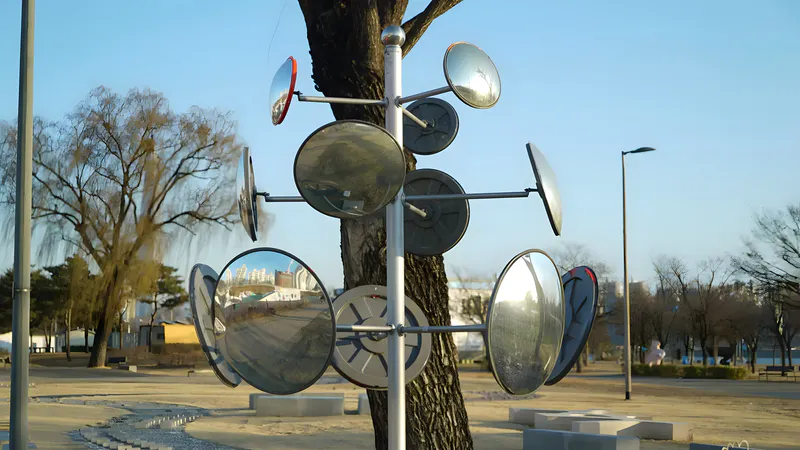
Today, from the perspectives of production and application, we will discuss the suitable application scenarios for outdoor acrylic mirrors, the key factors affecting outdoor durability, and the details worth paying attention to when making a selection, helping you find a more suitable solution for your project.
What Are the Common Types of Outdoor Acrylic Mirrors?
Outdoor acrylic mirrors can be used to observe traffic blind spots and can also serve as decorative elements. Based on their applications and product forms, common outdoor acrylic mirrors can be divided into the following categories:
Outdoor Acrylic Convex Mirrors
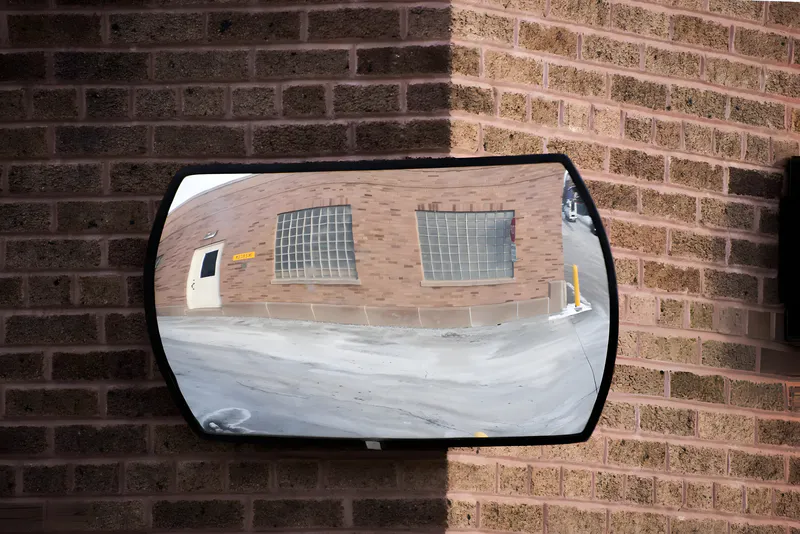
Outdoor acrylic convex mirrors have a surface that curves outward, allowing a wider range of scenery to be reflected in the mirror and helping users observe areas that are difficult to cover with direct line of sight.
These products are also commonly referred to as acrylic traffic mirrors, driveway safety mirrors, or outdoor wide-angle mirrors. They are often used at parking lot entrances and exits, private driveways, building corners, and factory passageways.
Depending on the installation location, the products may use round or rectangular designs and can be paired with wall-mounted or pole-mounted brackets. Here I referred to the description of this type of mirror from DuraVision Outdoor Convex Mirrors. Although our company also offers similar products, we do not list as many varieties as they do.
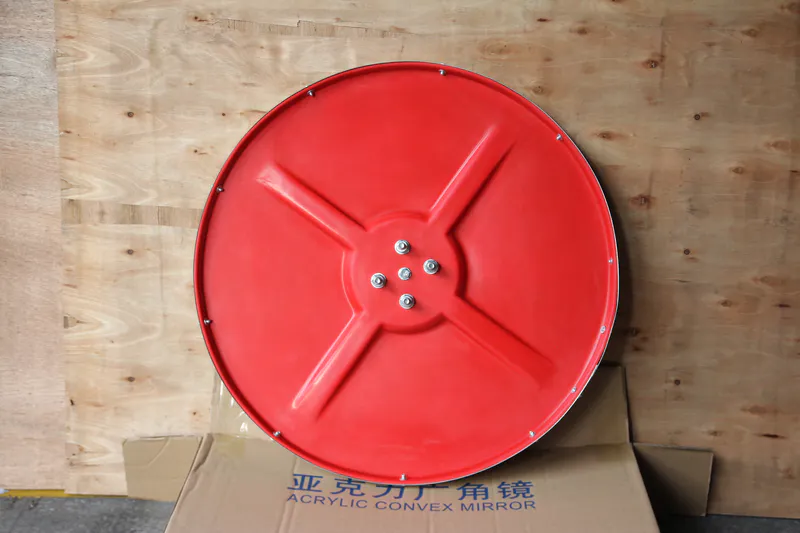
When selecting this type of mirror, the main considerations should be viewing distance, mirror size, and installation angle, rather than only the appearance of the mirror. Convex mirrors used outdoors also need backing panels, frames, and mounting structures suitable for the intended environment.
When purchasing, it is important to confirm whether the entire product is suitable for the intended outdoor location, rather than judging its durability solely based on the “acrylic mirror surface.” The quality of the accompanying accessories should also be considered.
Garden and Patio Acrylic Mirrors
Garden acrylic mirrors usually use flat reflective surfaces and are mainly intended to reflect plants, garden landscapes, and surrounding decorative elements, adding visual depth to a space.
Compared with convex mirrors that focus on field of view, these outdoor decorative mirrors place greater emphasis on the reflected image and how the mirror matches the surrounding environment.
Common shapes include round, rectangular, arched, and rounded-corner mirror panels. They can serve as standalone wall decorations in a garden or be combined with frames to create a window-like visual effect.
The reflected scenery can increase the sense of spatial depth, so these mirrors are also commonly used in the decorative design of small gardens. A blog titled A Guide to Garden Mirrors describes similar application scenarios.
These outdoor acrylic mirrors are usually produced using a combined assembly process, where a complete product is made from multiple acrylic mirror pieces. Therefore, reflective distortion and deformation are less likely to occur.
If planning to use larger garden mirrors, factors such as sheet specifications, rear support, and installation conditions should also be considered, and suppliers should be consulted regarding the product’s suitability for humid and exposed outdoor environments.
Custom Outdoor Acrylic Decorative Mirrors
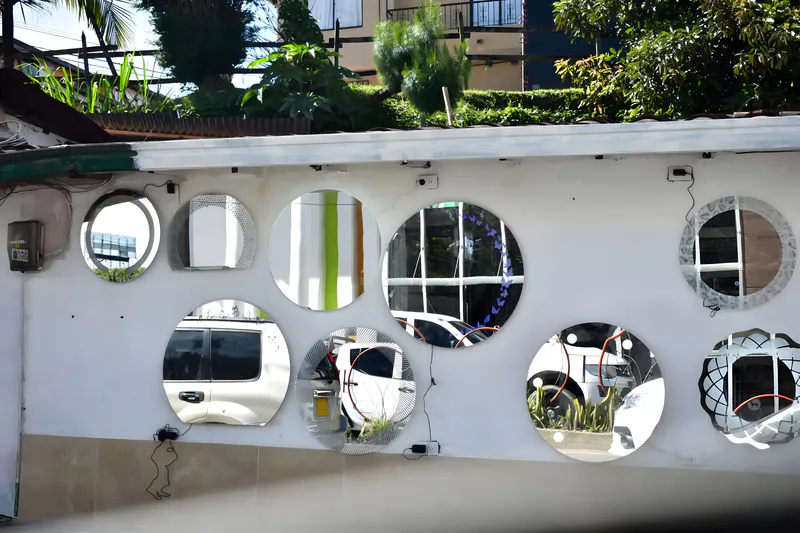
For some outdoor decorative mirrors, reflective distortion is not always a major concern. When standard sizes and conventional shapes cannot meet design requirements, custom outdoor acrylic decorative mirrors can be considered.
Acrylic mirror sheets are easy to cut and shape, allowing production in different sizes and contours according to design needs, providing more options for garden decoration, display backdrops, and creative installations. Common custom forms include:
- Mirror panels cut to size: Processed according to the actual dimensions of the frame or decorative area.
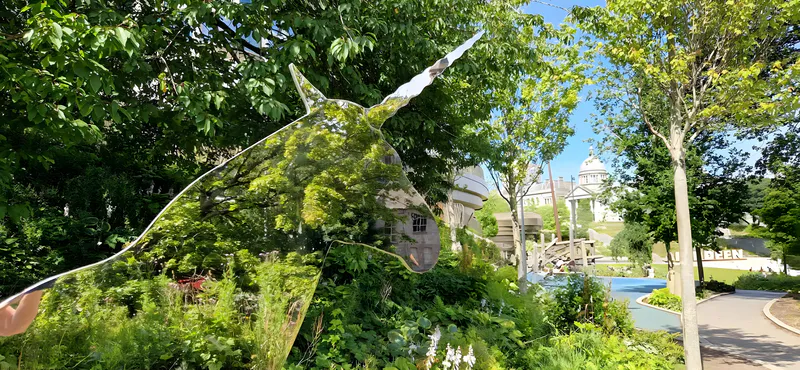
- Shaped acrylic mirrors: Made into geometric patterns, plant outlines, or other custom shapes.
- Modular mirror decorations: Multiple individual mirror pieces arranged into continuous patterns or decorative displays.
These custom forms already have processing and supply solutions for garden mirrors, but specific shapes, hole positions, and installation designs still need to be confirmed according to the project.
It should be noted that “customizable” describes processing capability and does not directly mean the product has stronger outdoor weather resistance.
Customization and outdoor resistance need to be discussed separately. As long as it is acrylic, customization is certainly possible. However, when considering outdoor resistance, such as UV resistance, specialized production methods and strict testing are required for confirmation.
Choosing an Outdoor Acrylic Mirror: First Understand Its Installation Environment
After understanding the common types, we can initially determine, based on the intended use, whether a convex safety mirror, a flat garden mirror, or a custom decorative mirror is needed. But to further decide which product is suitable for a specific project, one more practical question must be considered: where will this mirror be installed?
“Outdoor” includes many different usage conditions.
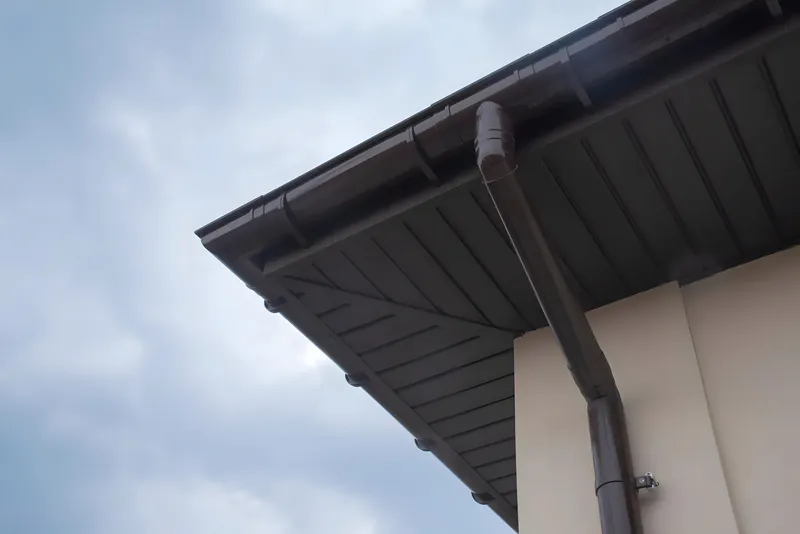
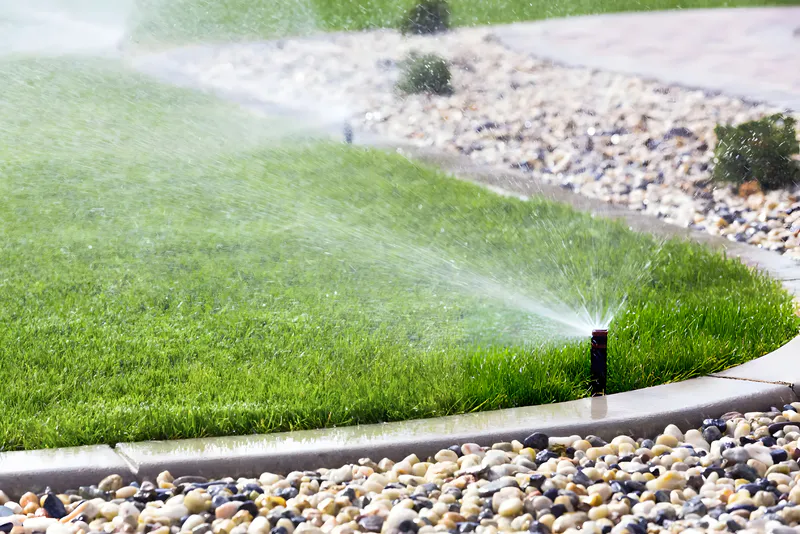
Installing a mirror on a courtyard wall protected by an eave is different from installing one in an open parking lot exposed to long-term sun and rain. Even for the same garden decoration purpose, a location near automatic sprinklers and a location that is ventilated and dry should be evaluated differently.
Therefore, when selecting an outdoor acrylic mirror, we recommend first clarifying the exposure conditions of the installation location.
- Positions protected by eaves or canopies: These locations can reduce some direct sunlight and rainfall, but they are still outdoor environments. When selecting a product, it is necessary to confirm whether it is suitable for semi-outdoor use and to consider the possibility of wind-driven rain entering the area.
- Completely open-air locations: The mirror will be directly exposed to sunlight, rainfall, and weather changes. During procurement, this condition should be explained to the manufacturer, and it should be confirmed whether the mirror surface, rear protection, and mounting accessories can withstand this type of weather exposure for long-term use.
- Locations near sprinklers or frequently exposed to water: For acrylic mirrors installed near garden irrigation areas, the frequency of water exposure should be clearly specified, as well as whether water is likely to accumulate on the back or edges, so the manufacturer can evaluate appropriate protection and installation solutions.
In addition to weather exposure, surrounding usage activities are also worth considering.
For example, if the mirror is installed in a location where people can easily touch it, daily contact and cleaning requirements should be considered. If it is installed in an area with vehicle traffic, the viewing direction, installation height, and mounting position should all be taken into account. For larger outdoor acrylic mirror panels, it is also important to understand in advance what kind of support the wall or frame can provide.
As a manufacturer, if a customer only tells us that “this mirror will be placed outdoors,” the information we have is still limited. If they can further describe the installation site, whether there is shelter, the expected size, and the intended use, it becomes much easier for us to provide targeted product recommendations.
This also gives “durability” a more specific basis for evaluation: a weather-resistant acrylic mirror needs to adapt to the actual environment faced by the project, and these requirements ultimately affect the choice of substrate material, reflective layer protection, and installation structure.
The Importance of Back Protection for Outdoor Acrylic Mirrors
After determining the installation environment, we also need to further understand how the reflective layer of an outdoor mirror is protected. If you are not yet familiar with the basic structure of acrylic mirrors, you may first learn about the roles of the substrate, reflective layer, and protective layer.
When selecting outdoor acrylic mirrors, people often focus on the brightness, color, and reflective effect of the front surface. In fact, the protective structure on the back of the mirror is also an important factor in evaluating long-term performance.
Reflective Coating and Protection
Using the common back-coated acrylic mirror (with a protective film coated on the back) as an example, the transparent acrylic sheet serves as the substrate, the metallic reflective layer creates the mirror effect, and the protective coating on the back protects the reflective layer.
In its FABBACK acrylic mirror sheet technical data, PLASKOLITE explains that this product series achieves a reflective surface through the vacuum metallization of aluminum and uses a protective back coating to help reduce damage during fabrication.
This also explains why, when purchasing outdoor acrylic mirror sheets, it is necessary to understand both the substrate and the coating protection. The performance of the sheet itself is only one part of determining whether the entire mirror is suitable for the project.
It is also important here to distinguish between two concepts that are easily confused:
- Back protective coating: This is part of the mirror sheet’s own protective structure and relates to the protection of the reflective layer.
- Mounting backboard: This is usually used to support or secure the mirror, and its material and structure need to be determined according to the finished product design.
Clearly distinguishing these two aspects during product communication can help manufacturers understand project requirements more accurately.
Notes on Back Protection Performance Testing
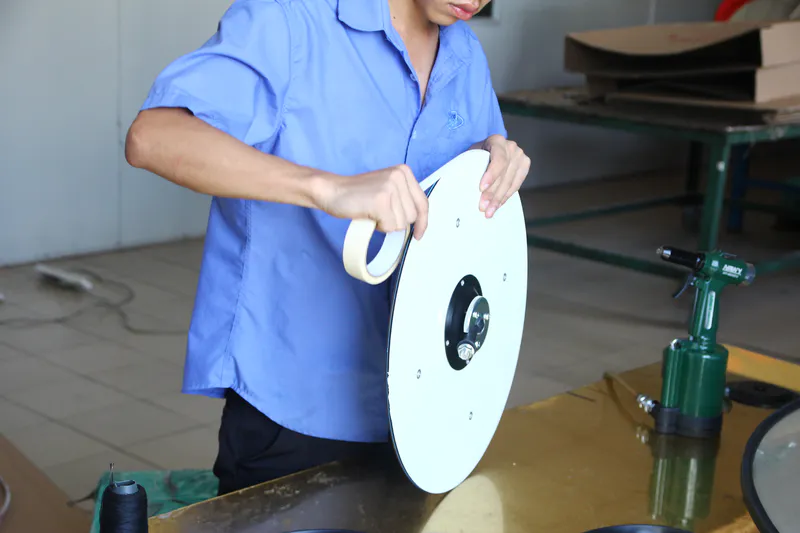
For decorative acrylic mirrors that may be exposed to humid environments, the adhesion performance of the back protective layer is especially worth understanding.
For example, in its Reflections mirror backing performance information, ACRYLITE describes hot water immersion, saltwater immersion, and corrosion tests conducted on the protective backing of this product series, and explains the adhesion performance of the backing under hot and humid conditions.
This type of information provides a valuable evaluation perspective: understanding what kind of protective design is used and what tests the manufacturer uses to evaluate its performance.
However, the test results of a particular product series have their own scope of applicability. When evaluating your own outdoor mirror project, it is still necessary to confirm whether the specific product model being purchased uses the same protective structure and whether the manufacturer explicitly supports the intended use environment.
As a manufacturer, we recommend confirming the following details for the specific product before placing an order:
- Protection configuration: What type of back protection does the selected mirror sheet use, and is there corresponding technical documentation?
- Fabrication requirements: After cutting or drilling, do the edges or holes require additional treatment?
- Usage scope: Is the product suitable for sheltered semi-outdoor environments, or does it support continuous outdoor exposure?
- Testing basis: Are the relevant tests conducted on the substrate, the protective coating, or the complete mirror product?
This information can make the requirement description for an “outdoor acrylic mirror” more specific and also make it easier to compare whether different solutions meet the same project requirements.
Once the mirror sheet and its protective configuration are determined, the installation method becomes the next key factor: back support, fixing accessories, and installation materials all need to match the selected product.
How Should You Evaluate the Resistance Properties and Certifications of Outdoor Acrylic Mirrors?
After understanding the substrate material and rear protective layer, we also need to connect these product structures with actual performance.
For outdoor acrylic mirrors, “durability” can be further broken down into specific characteristics such as UV aging resistance, resistance to heat and humidity, impact resistance, and abrasion resistance. Different performance characteristics correspond to different application needs, and they should also be evaluated through the appropriate technical documentation and test results.
Resistance Properties Worth Paying Attention To
When selecting weather-resistant acrylic mirrors, you can focus on the following aspects according to the project environment:
| Performance Area | Significance for Outdoor Use | Key Points to Review in Documentation |
|---|---|---|
| UV aging resistance and weatherability | Whether the material’s appearance and mirror effect remain stable after exposure to sunlight and weather | Exposure conditions, test duration, and changes in color, appearance, and reflective performance before and after testing |
| Resistance to heat, humidity, and temperature changes | The condition of the sheet and protective layer after exposure to moisture and temperature fluctuations | Temperature and humidity conditions, number of cycles, and whether deformation, bubbling, or coating separation occurs |
| Impact resistance | How the material performs when subjected to impact | Test method, sample thickness, notch conditions, and whether the test object is a complete finished product |
| Abrasion resistance | The surface’s ability to resist friction damage | Whether an abrasion-resistant coating is used, as well as abrasion conditions and optical changes after testing |
For example, the ISO 4892-2 xenon arc exposure method specifies laboratory exposure methods for plastic samples under light and moisture conditions, providing a basis for evaluating material aging performance.
Impact resistance can be evaluated according to the specific test methods used for the material, such as the ASTM D256 plastic Izod pendulum impact test. These types of tests evaluate sample performance under specified conditions, so when comparing different products, it is also necessary to review sample specifications and testing conditions. For more information about the impact resistance and shatter-resistant performance of acrylic mirrors and their selection in different scenarios, you can further refer to our safety guide.
Abrasion resistance should also be considered in relation to the specific surface configuration. PLASKOLITE’s abrasion-resistant coated acrylic mirror technical data lists haze change data after abrasion testing. Such documentation helps in understanding the performance of a specific coating, but it cannot be directly applied to standard mirror sheets without the same coating.
The Difference Between Test Standards, Test Reports, and Certifications
When reading product descriptions, you will often encounter standard numbers, testing organization names, and certification marks. Each provides different types of information.
- Test standards describe the evaluation methods used. For example, even if a product is tested according to a certain exposure standard, the specific conditions, evaluation indicators, and results must still be considered in order to assess product performance.
- Test reports record the test results of a specific sample under specified conditions. When purchasing, you should verify the sample name, model, thickness, and coating configuration to confirm that they match the actual outdoor acrylic mirror sheet being ordered.
- Certification certificates should be understood in relation to the certification object and scope. For example, ISO 9001 quality management system certification focuses on a company’s quality management system and can serve as a reference for understanding a supplier’s management capabilities; however, the specific outdoor weather resistance of a mirror still requires corresponding product performance documentation.
If a supplier provides third-party product certifications, you should also further verify the covered models, certification basis, validity status, and scope of application to ensure that the certification corresponds to the actual product being purchased.
Statements such as “tested for a certain number of aging hours” should also be considered together with the complete testing context. Q-Lab, a manufacturer of weathering test equipment, points out in its explanation of accelerated aging time and outdoor service life that there is no universal conversion factor between the two that applies to all materials and environments.
When evaluating outdoor acrylic mirrors, performance data, environmental suitability information, and warranty conditions should all be considered together. Documentation that can be clearly matched to a specific product is more helpful for determining suitable materials and supply solutions for a project.
Choosing the Right Outdoor Acrylic Mirror for Your Project
When choosing an outdoor acrylic mirror, you can start with a specific goal: matching the product’s application, performance, and actual usage environment.
Whether it is a convex mirror used for observing driveway blind spots or a garden acrylic mirror used for courtyard decoration, you can gradually narrow down your options through the following steps:
- Clarify the purpose. Determine whether you need to expand the field of view or create a landscape and decorative effect, then choose the corresponding mirror type, shape, and size.
- Describe the environment. Inform the supplier whether the installation location is sheltered, whether it is exposed to sunlight and rain for long periods, or frequently exposed to humid conditions.
- Verify the product configuration. Understand the substrate material, reflective layer, and rear protection of the specific model, and confirm the supported usage scope provided by the supplier.
- Review the corresponding references. Match the performance descriptions with the actual ordered model, mirror sheet thickness, and coating configuration, while also confirming the testing conditions, certification scope, and warranty terms.
As an acrylic mirror manufacturer, we recommend providing the intended use, expected dimensions, quantity, and photos of the installation location when requesting a quotation. For custom projects, you can also attach shape drawings or design renderings so both parties can discuss processing requirements and product selection more accurately.
When comparing different quotations, it is also worthwhile to review this information together. Outdoor acrylic mirror panels of the same size may use different protective configurations, and the supported usage conditions may also vary. Only by clarifying these differences can you determine which solution better meets the project requirements. If you also need to compare the cost differences caused by size, thickness, and processing methods, you can further learn about the factors affecting acrylic mirror sheet prices.
A product solution with real reference value should clearly answer three questions: Where is it suitable for use, what performance evidence supports it, and what usage support and warranty does the supplier provide? With these questions in mind, you will be more likely to find an outdoor acrylic mirror suitable for your project.